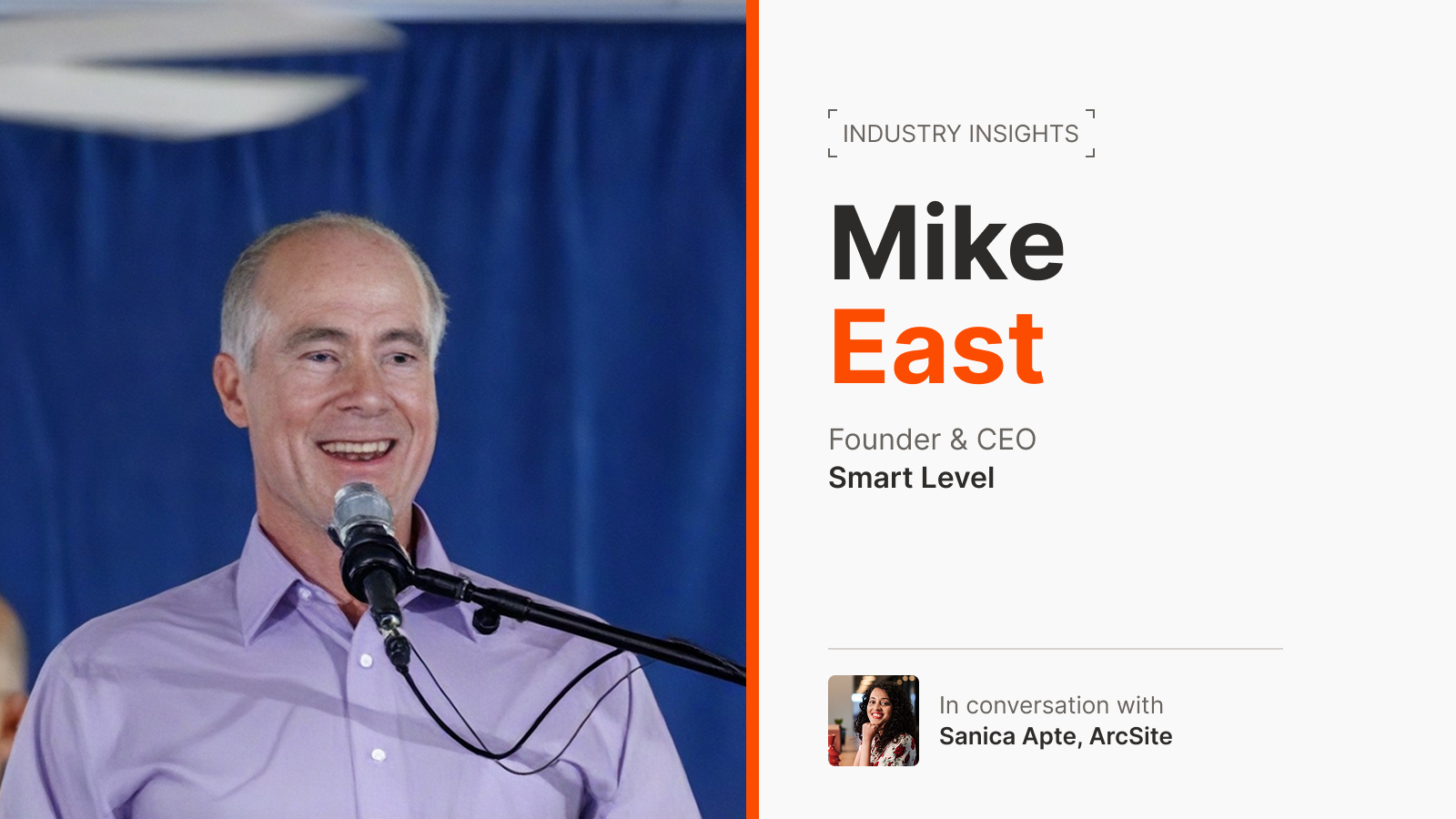
All right. Well, Mike, thank you so much for joining me here today. We'll start off nice and easy. Can you just introduce yourself with your name and what you do? Okay. I'm Mike East. I'm the owner of Smart Level. And as we just discussed, this month marks 30 years that I've been in business. You know, everybody says it goes by fast. And it does. Although I can tell you where every minute of every month went. It's been quite a journey. It's been fun. We started making Smart Level. It was basically what we have now is a very complicated system. Well, not complicated it does. It has a lot of functionality built into it. We've kept it very simple. The one of my main designers worked with Apple for a while, and I said, I want I want people to think this is a product of Apple because I have no problem using the Apple with BlackBerry and Android. It's the wrong side of my brain, and I have a lot of problems with those. So I was very fortunate in getting, Beyat Azarino to do a lot of the designing with me. And if you're if you can use an iPhone, you can you can work through the Smart Level it's designed part of it was designed by one of an engineer that worked with those guys. That's amazing. I know I was looking at some of the videos on your website, and it's just is so simple to use and understand, like the way that the tubing works, but I'll get into that in a second. I actually want to go way back. I was looking at your website again and saw that you actually have a background in nuclear energy. So how did you go from that
life to starting? I have worn a lot of different hats in my lifetime. Some people think that, well, he must be making this up, but no, I've got photos and witnesses to all of these things. I worked for Lockheed at a uranium enrichment facility in Kentucky. It was a fascinating place to work. It. It was actually designed and built during and before and during the Cold War. So I had a secret security clearance while I was there, and everything was built and operated to confuse the enemy, the cell panels, instead of going one through ten, they went one, three, five, seven, nine, eight, four, six, two, zero. Green meant stop. Red meant go. Everything in the facility was designed to confuse the enemy at that time, and it was an extremely unique place to work. I've been very fortunate. I worked worked in a coal mine, strip mines for a while. Crane operator I'm still a certified crane operator, so I've worn a lot of different hats in my lifetime. That's amazing. Wow. I confused the enemy. I'd be confused working there. I'd be like, I'm not the enemy, but I'd be confused. Literally. There was about a two year learning curve. Most of the folks that had been there when I started had been with the facility for 35 or 40 years. It wasn't a place where you just walk into and and grasp the concepts. It was designed that way intentionally.
And when they hired you, they intended to hire you for a lifetime. It was a cool place to work. That's amazing. So how did you go from being in that facility or working there to then starting Smart Level? Where did the idea come from? Well, electronics was a huge hobby of mine. It was a back burner. I wished I had switched early on and gone into microelectronic engineering, but the paths that I took in the in the world just didn't lead me that way. So I had actually had a major hobby as as micro. It was basically microelectronic engineering. I was building a digital boat speedometer in my spare time because 30 years ago, the speedometers on boats were all analog and the few that were digital were horrible. They did a lousy job of actually telling you how fast your boat was going. So as I was working on this, I was working with a pressure sensor, and that pressure sensor was exactly what I needed to build a construction altimeter. I watched a construction company across the road from where I was living at the time, and they were using a regular water level. It was a tube filled with antifreeze and both ends of the tube. The water, the antifreeze would come to the same height and it would give them level. It's basically the way they leveled the pyramids three, 4000 years ago. And I thought, I can build a better mousetrap. And in the next morning I started working on it. In about an hour, I had it geared up to where
if you raised the pressure sensor an inch, you would get a volt differential. If you raised it eight inches, you'd get eight inches eight volts differential. I thought, I am going to be a millionaire. It didn't work that way. It takes a long been a long road to get to where I am right now, but it's been fun. But anyway, so that was basically the way the device started. And the original Smart Level sold for $149. It's been 30 years ago, and it had a plus or minus range of about 40in, where now we've got 30ft and we didn't have any of the Bluetooth functionality built in. It just gave you a digital readout on how high or how low one end was compared to the other. It was it's been fun getting from there to here, and it's really fun now with all of the computer functions that we have built into smart, Smart Level's, not just an analog device. You know, the competition out there, whenever you buy their device, what what you buy is what you get. That's it. Smart Level is actually a digital computer, and it learns as we evolve. So if we come out with a new function, you just upgrade it like you upgrade your laptop. It's really cool the way that works. And I love getting out with different folks in the field, in the various industries, and learning the new tricks that some of these people come out with. It's, you know, people come out with things that it's like, well, I wish I'd thought of that.
Well, you know, I'm in a position where if enough people like one of these little niches, we just add the functionality to Smart Level and anybody in that group has got that. It's it's fun. It's it's as you can tell, I've been doing this for 30 years and I'm still excited about it. It's still it's still cool. That's how you know you're in the right business. That's how you know you're in the right. They say if you if you work for yourself and you get into the right niche, you never work a day in your life. Well, I've worked some days in my life. There's some tough days too. But. But the fun part makes up for it. Exactly, exactly. So for folks watching this that maybe don't have an idea of what Smart Level is, how is it different from a laser device? The tubing technology is really interesting as I was raising. Yes, yes. And like I say, I've done this alone. Sometimes I forget to go back to the basics. Okay, so. Well, the lasers are fantastic for what they do. I don't say throw your laser away, you'll never need it again. But if you don't have a Smart Level or a construction altimeter, you only have half of the package of the tools in your toolkit that you need with a laser. For one thing, you have to have a clear line of sight to determine elevation. If you have building walls in the way. In our industry, what we're doing mainly is mapping flooring, and if you need to go from one room to another, you have to move your laser. Every time you move that laser, you've lost your benchmark and you have to re-establish a benchmark. Lots of room for error there. The advantage with the tubing on a construction altimeter is anywhere I can take that tube around over behind, anywhere I can snake that tubing, I get a valid reading so I can set the base
or reel up in a central location and go in and out of multiple rooms on the same benchmark. Another advantage is of course, the Smart Level is lit so you can go into dark areas or areas that aren't lit very well, where that laser beam bounces around sometimes, and it's kind of hard to tell with the laser beam. Actually, if you're out in sunlight, it's very difficult to see in the sunlight. Also, with the laser, if you have any glass around that, it will deflect the laser beam and give you erroneous readings. You don't get into that with Smart Level. With a laser, you've got either a story pole or a tape measure, and as your grade goes down, your tape measure gets longer and you've got to write those readings down on something with Smart Level, you get a digital readout anywhere I zero the level. All of my readings on that project will be in relation to that zero or that reference point. And it simply says, if you're an inch and a half high, it'll simply say one and one half inch or 1.5in. Plus, if you're 3/16 of an inch low, it'll say minus three-sixteenths of an inch. It takes all the math and all the figuring out of it. So there's several advantages to using Smart Level over a laser. And a lot of crews still use lasers, and a lot of will continue to do so. It's hard to teach an old dog new tricks. I'm I'm in that that time, that mindset myself. So I was these guys. Absolutely. So tell me a little bit about your customers. What are some of the industries that Smart Level is perfect for, and then any anecdotes that you've heard of,
just like time saved on the job site, more accurate readings, that sort of thing. Well, we're in several different industries. I'm in, of course, foundation repair, home inspection, forensic engineering, and what have you is where I've run into ArcSite and where you really shine. The new AR that you come out with for mapping a room is phenomenal. I knew we would eventually be there. I didn't know how long it would take, but we're there now. ArcSite has got that refined to where that's that's that's pretty much bulletproof. And, you know, it's cool stuff. It's really cool stuff. So what you can do with the Smart Level and our integration into ArcSite, you can take and build your floor plan with ArcSite. And then you don't even have to use the Smart Level app. Smart Level will connect directly to the ArcSite program, and you can drop your elevation readings directly into ArcSite as you're designing your floor plan. Really cool stuff, and that's going to save a lot of time and mistakes. Right now, most folks are having to write that down. Some of the folks that are using lasers aren't only having to write it down, they're having to figure the differentials and do the math either in their head or in the little calculator, and then put it in. There's a lot of room for error in that. And a lot of times, say, when you just pop up, when you just hit a cursor and drop that reading directly in. Yeah, now I'm in some and this may be one of the things that you might want to cut out, I don't know. ArcSite is actually going to attend the hardscape
North America in October, and we're exploring the possibilities for ArcSite in the hardscape industry, as well as pool industries and some of the other industries. These industries work really well for me because with hardscape and pool design, a lot of the outside the terrain, you'll have elevation differentials of several feet, sometimes ten, 15, sometimes 20ft. If you're on a lakefront lot, it's very difficult to shoot those elevations with a laser and shooting them with a laser. Then you're going to have to add that to your design program manually by hand, which is very difficult to get them in the right locations. With the Smart Level, we can actually take a drone image, put that image into our app, and as we walk the property, drop those readings directly into that image. Now with ArcSite, as you design this site plan in ArcSite, you'll be able to drop those readings directly into ArcSite as well. So I don't know how many customers ArcSite has in pool design or hardscape right now, but I know you're exploring that both avenues, and I've been doing this for eight years or so, and they've got a lot of good connections in those industries. So I'm going to be really excited to see what nooks and crannies ArcSite will fit into in these different industries, because there's nothing out there that's doing what you're doing right now. Absolutely. Well, we appreciate you saying that. And exactly it's got such a nice symbiotic relationship with being able
to use Smart Level and ArcSite and just being able to save a lot of time, do more jobs in a day, be more accurate while you're doing those jobs. It just offers a lot more progress for our customers. It does. And anytime you can create an SOP or a standard way of operating, you know, with the hardscape industry, the designers that may be in a separate state, they could be in a separate country, for that matter, and you'll have all of these different customers that are gathering the data in different formats and sending it into the designer. And that's so confusing. One of the things that Smart Level's done in hardscape and the pool design is we've we've created a standard operating procedure for gathering your elevation data. And that's put in a standard format that's the same no matter who does it. It's the same. So that once a design company comes on board with us, once they see one of our designs come in, or one of our templates come in, they've got it. For everybody else that does that, which is where ArcSite would come in and then streamline the process. Once you streamline the process and you take the individual thought and decision making out of it and make it a repetitive system, you've first, you've made it much more efficient because you can work out all the kinks that shouldn't be there, bringing people in and training them. You're training them on the same system. So you've created a system that you're bringing people into that works and you know it works, and you don't have to second guess and go back and change things continually. It's very efficient
and eliminates a lot of mistakes and headaches. Exactly. It kind of goes back to those like engineering core principles, right? To have like a very established process. Make sure that you have like really efficient like root cause analysis or making sure that you're able to pinpoint that no matter if you have a rep in the field that's been on the job or in your company for five days, or somebody who's been there for five years, you're following the exact same process no matter what. So they're going to get. And they're following the process that works. When I was with Lockheed, we had SOPs on everything and they seemed to get in the way sometimes, but overall they're a godsend. You know, if they're done properly and with arch like they're done properly, it's you just refine it down to an art and it's really cool to work on that and get that process streamlined and see it work over and over and over. And that's where you have repetitive profits coming in. You know, if you're if you're doing one job one way and then another job the next way, you end up not knowing over a few months how much money you're making. Exactly. You know, it's I've seen that in several developing industries. I've seen where people are working their butts off and they think they're making a lot of money, but they're not. They're running through a lot of money. It's coming and going, but it's outgoing almost as fast as it's incoming. Exactly. And actually, on that note, how have you seen this industry adapt through the 30 years that you've been in business? Because today, in 2026, it's a pretty volatile economic environment. You know,
prices of materials are changing from month to month. Price of gas is going up and down. There's a lot of different things that are headwinds for businesses. So what are some of the things that you've been seeing on that front? I have never seen so many things change so quickly that can put you out of business. You know, like I say, I started 30 years ago ordering parts. 30 years ago, we could order 20 or $30,000 worth of parts on a verbal. I just pick up the phone with Avenetta, who I was dealing with, and say, okay, I need to repeat this order. They send it over, I signed a little sheet and we spend all our money, all our time making sure that we got the right parts in the time frame that we needed, especially during the pandemic. We've had blanket orders in during the pandemic where these parts were supposed to be here at a certain time. Well, that day would arrive, the parts weren't there, and we'd call and we'd say, oh, we had a shortage. And I had one particular component, and Ford Motor Company had a shortage of that component. So they bought every component on the market. So the day my parts were supposed to arrive and we had checked about a month or so ahead, you know, to make sure the blanket orders were in there. We checked a couple of months and everything was lined out well at the last minute they had a shortage. And of course, you know, I can't compete with Ford Motor Company. This one tiny component that cost, I think it cost us at that time, $3. The it went from on the shelf, $20,000
on the shelf. We could buy them when we wanted them to. A one year, a 52 week lead time. That's crazy. That would have our production down for one year. While we're waiting on these, we actually had to go in and redesign the circuit board, and fortunately I had the engineering that could do it, and it was possible to engineer around this part and and do away with it. But that was just good luck. Those things happen. It was the pandemic was a very tough time to be in, in business as far as procuring parts and what have you. Some of the industries that I was in, some of them slowed down the hardscape industry. Everybody was sitting around, couldn't go on vacation, what have you. They were looking out at their backyard and thinking, yeah, it'd be nice if I had a pool, or it'd be nice if I had a really nice far pit. So the hardscape industry went through the roof. So my sales in that industry were fantastic. In some other industries, of course, you know, it dwindled down like everything did. It was also unpredictable. So if you don't have systems in place that are telling you how much you're and, and some of my components, the price on the one particular brass component that I had went from $0.27 to a dollar and a quarter. It increased 125%. If you don't have these systems in place where you can allow for these things, you know, your profit margins evaporate. And that's one of the things where you have if you have systems
that are tracking this all the time, like you can track materials with ArcSite, when something goes up, you know, it goes up, you know how many you're using on the job because you've got all this figured out and factored in. Everybody's using the same format. So everybody's figuring these jobs and and working these jobs the same. And your prices go up. You have to charge for those prices and the customers have to understand or, you know, I mean, it's just part of it's one of the frustrating parts of being in business these days is, is the the dynamic flow of everything. It's it's crazy. It separates those that should be in business and know what they're doing and use the right systems from those that don't. 100%. We even hear from some of our customers that now they're like really diligent about putting expiry dates on their proposals because they're like, this is only good for two weeks because I can only guarantee the price of my goods or my material inputs for two weeks or a month or what have you. And that's really clever, right? Because you can't have a customer saying, oh, I saw you two months ago. I'm going to now sign off on that proposal. And it's a completely different price for the goods that you need to do that job. Yeah. And that can make or break those particular jobs. That's why if you've got these SOPs, these procedures, ArcSite systems in place that protect you, then you know it takes care of you. It doesn't take many losses like that to eat your profits up. Most of us run on very thin margins these days. Exactly. One thing I do want to ask you, because you've been in business for 30 years, is a lot of people compare the AI boom that's happening right now
to the boom that was happening in the early 2000, late 90s. So for someone in business that has lived through both of those booms or bubbles or whatever you want to call it, what are some of the similarities and differences that you're seeing in your business? You know, yes, I've gone through about three of these phases since I've been in business. You know, when Terminator first came out, the movie years ago, you know, it was all it was all in the future. We're kind of that Terminator right now. I mean, we've got systems that are running themselves and thinking for themselves. It's a little. It's not a little. It's scary if you think about it. It's really kind of scary. It was scary back then. Back then people worried about where we are right now. So what I seen with those, there's always some significant advantages. With these. You have to learn and you have to adapt. There's always things that that are going to go wonky with it also. So you don't want to jump into this too fast, but you absolutely have to stay on top of it. If you don't, you'll get left in the dust. I tell you one of the things and we'll go back even further. This is really going to date me when when we went from flip phones to smartphones, I had several gentlemen. Most of them. Most of them were guys. The ladies came on with this pretty quick. Women tend to jump on things quicker than men do. I had several business acquaintances of mine that were they were the age where they could retire. They weren't planning on it, but they got left in the dust because they didn't
want to learn that new technology just from a smartphone. I can basically run my business. I can run my business in another country off my smartphone if I want to. I mean, that's the advantage to it, trying to type everything in and work on that little tiny screen was excruciatingly painful for me. But I had a few of my business associates that just said, screw it. I'm not going to. I'm just not going to do it. They just stayed with the flip phones and that and and they literally got left behind in the dust, you know, when, when the dot coms came out, you had some companies making fortunes. You had a lot of a lot of companies went under because their jobs were replaced. That's going to happen with AI. You've got to stay on top of of AI and see where it benefits you. But don't rush into it without putting enough thought into it to know what you're doing. Are you with me? Am I making sense? Yes, absolutely. I think that's one of the trickiest things for young people. Like if you're 22, 24 years old today, graduating college, it's hard to know even younger than that, right? If you're 18 and thinking, should I even go to college? Should I go to a trade or a vocational school? Like, there's a lot of tough choices that young people have to make these days. What's your advice to somebody in that sort of phase of life? You know, once again, this is tricky in some industries. I know some folks that have graduated law school
and got out and started their own practice. My opinion on almost all cases, if not all cases, that's a huge mistake because you don't know the ropes. You've got the basics to get started and that's it. You you work for a partnership and you work your way up and it's due diligence. Due diligence has kind of gone out the window the last decade or so. You have a lot of people with a lot of technical knowledge, but not the experience of the expertise to keep them out of trouble. On the other hand, I see I was in actually this was a hardscape industry. There was hardscape and there's some folks that do concrete also. This gentleman was running a he was running his own company. He was 19. He was running that company like he'd been doing it for a decade. I don't know, some people are just blessed with a little extra common sense. And this guy was one of them. When I first met him, I thought he was in his late 20s. I mean, he surprised me. I'm not good at guessing age anyway. I typically I don't try not to judge people, but you always have to judge people. But I judge people by the way they speak, the way they act and the experience they seem to have. He seemed to have a decade's worth of experience. This this guy was 19 years old and he was running his own company. And he was he was doing really well for himself. Now he's got some people around him that are kind of watching him. He's got some mentors
that are advising him. He's there again. He knows he needs these people. He you know what I mean? This guy's going to be one of the exceptions. He doesn't need to work for somebody else for a decade. He's already doing it and he's going to make some mistakes, but he's going to booger some things up. But I believe this kid is going to be okay. I was very impressed with him. And I see these folks in hardscape, too. And you have these people in it and everything. You just have some people that just have it seems like they're born with it. You know, some of us struggle and some people just seem like they're born with some of these gifts, singers and entertainers and what have you are the or the same way some people have to work hard and some others don't. You just have to know what works for you and and and stay humble and have good mentors around you. Judge your your partners. Your partners are going to make or break you. Be very careful when you're choosing partners. And a lot of that has to do with the way with the way folks are raised. You know, some folks don't come with a background where they know what a good partnership should be. And some have been in good partnerships for for years because of their parents. And their parents have brought them through this. Yeah. It's life is it's tough. There's opportunities out there for anybody that wants to work hard and make it on their own. You can do it. You can do it in this country. If you can't make it in this country, it's your own fault. There's too many opportunities out there. It was back when when I in the 70s and 80s,
there were a lot of construction jobs. Basically, I started in the coal mines when I was I started a coal mine from I was 17, and I was running cranes and welding. It was a lot easier. Basically the way this is the way I this is the way I became a crane operator for Peabody Coal Company. I was a welder. I went to trade school for welding and got out and went to work in the mines very quickly. Very. I called him quick. I catch you on the trades quickly. That's my that's my thing. So on second shift, we didn't have a second shift crane operator. We had a day shift crane operator we didn't have one second shift. So on second shift, we kind of play around with it. As long as you didn't break it, nobody said anything. So the day shift foreman came out one time and they needed some overtime, needed somebody to run the crane. And he said, who, who can run this picker? And I said, I can run it. And he knew my level of expertise on that particular piece of machinery. He said East. He said, don't turn it over and don't kill anybody. I'll see you in the morning. That was the way I became the second shift crane operator, and I was extremely careful. I watched everybody and everybody around me knew I was new and they were watching for me. But within a couple of three months, I was doing I was I was doing a pretty good job. Now we don't do that anymore. You don't do that in any industry anywhere. Like I say, the the world has changed. I'm 69 years old, you know, I've been working now since I was I've been working since I was 15. So I've been in the workforce for a while. And it is in
saying how many things have changed. But common sense has remained the same from day one. Absolutely. Common sense will get you far. Let me ask you this. If you were 18 years old right now and in 2026, what would you do for your career? Would you make the same choices that you've made, or would you go into an industry that didn't exist 30 years ago? You know, the world has changed so much when when I was like I say, I started out in the coal mines. I started working when I was 15, refinishing furniture, bought my my own, my first car. I paid for myself with money I had made after school and on weekends. At that time this was back, I graduated, I graduated in 75, 1975. I'm really dating myself. Microelectronics was was just getting started. What I envisioned myself doing was actually going to one of the Ivy League colleges. I didn't realize how tough that would be, but I could have settled for less and the worst advice I've ever had, probably from a family member or anyone, is an uncle of mine, said Mike. I can get you a job at a coal mines. You'll be making the same money as lawyers starting out. So rather than going into electrical engineering when I should have, I went to work in my eyes and I was making really good money. I mean, I bought my first house at 18, 18. I bought my first house. How many kids do that now? Hardly. Yeah you don't. That's everything's changed.
So the industries have changed so much. I would have to really I, I don't know what I would get into right now because that, you know, this is when you had the companies the, the first microchip companies were just being created, Bill gates. And these guys were still in college. I mean, I would have been in I would have been in college at the same time Bill gates was in college. So we're looking at a very different world now than we were looking at back then. I tell you, somebody that wants to really get out and just hustle and work hard, hard skates, if you're if you like good hard work and it's work, but within a couple of years you mentor with somebody for a couple of years. So and learn the ropes and I would probably go into hardscapes I love that industry. I love the beauty that they create when you're finished. I love being able to. When I worked at Lockheed, we enriched uranium. If we ever saw our product, something had gone seriously wrong, you know, so you don't get a sense of accomplishment with that. You get a good paycheck. So every few months I would remodel a house or a friend's bathroom or something like that. I still do that because I can go back a few years later and say, I did that. There's a lot of there's a lot of self-satisfaction in that. With these hardscape projects these guys are doing right. They'll be there 20, 30. Some of them be there 40 years.
You know, you drive past it and you got these all these old dad jokes. And one of them is I built that. Yeah. Yeah, that's pretty cool though. It's pretty cool to build something and it be there. I built part of a I had known to a convenience store when I was in my early 20s. It's still there. The flooring and everything is still. It's really cool to say not only the building I built that 20 years ago and it's still there. It's neat, I like that, but so there's a different satisfaction that everybody gets with things. But I love building things with the with a Smart Level. I love building the Smart Level, the way it's progressed through the years and what have you. I saw a post on, I think it was Facebook. I'm I'm still on an old Facebook. I date myself by there too. I'm on Instagram also, but I'm on Facebook and there was this little mean thingy that popped up and it said the difference between I have an idea and I built that is about 20,000 hours of unseen work, and there's a lot of truth to that. I would hate to go back and add up all of the time that I put into developing Smart Level, and then figure out per hour what I've made. It wouldn't be it wouldn't be impressive. Yeah, actually, on that note, I think, you know, there's a fear, I think, in young people these days of failing. Right? Like, you feel like every minute of your life is recorded. It's documented. There's not the space to fail and make mistakes that maybe that, you know, people of other generations
had previously. So on that note, what's one of the biggest failures or mistakes that's happened to you in your career, and what did you learn from it? Oh gosh, I've made a lot, you know, a fear of failure, I think, is probably the biggest obstacle to success in anyone's life. And it may have, I guess it's always been this way because it was that way when when I started out, when I climbed into that crane. Fear of screwing something up on that crane. I mean, I was sweating bullets, and I did that for a while. That fear of failure, it's twofold. It stops some people in their tracks, and it stops them from taking a chance. And you got to take chances in life. But the fear of failure, also with some of us is like, I am by God going to make it. Whatever I have to do, I'm going to make it. I'm I'm afraid of not making it a failing. So that's not going to become an option. If I screw it up the first time, I'll get it right the second time. If I don't get it right the second time, I've already got two times of experience here. I'll get it right the third time. So and so, going back to my mistakes, my worst mistakes, choosing the wrong partners in in the in the business that I've been in now, I had chosen
the wrong partner three times in. I chose a manufacturing partner once that weren't able to do what they said they were going to do. That almost put me out of business. I chose partnering with. I need to say this delicately because I'm still involved in this a little bit. I chose a major player in one of the industries that I'm in right now that did not do what they said they were going to do. That really hurt me. That set me back about two years. Choosing the wrong partners have been my biggest failures. Yes. If I could go back and negate those three mistakes, I would be much farther down the road right now than I am. That's why I say with me. And this may be different for some people. Some people I'm a very trusting person. It's it's I was in business with my mother for a while, and I'm trusting because she wasn't she trusted nobody. It was very annoying. I would have to go behind her and make amends with people because she was always on to people. Yeah, but she didn't make the mistakes that I made in trusting the wrong people. Very, very well said. I'm a little bit like you. I've, you know, trust first and trust freely until you give me a reason not to. But I trust you until you give me a reason not to. That's dangerous in business. Correct. So given these things that you've learned, how do you actually suss out a good partner
or suss out if somebody is trustworthy and worth getting into business with? You know, some of it just becomes instinct. I will come in contact with some people and they'll just be something in the back of my mind that says it's doesn't feel right. And years of being in business and having people cross you the wrong way and what have you, you, you, it takes there's where it takes time to develop that. And people, really bright people coming out and starting don't necessarily have that. You have to get burned a few times to really develop that instinct. And, and the way you were raised has a great deal of doing of that's in your subconscious. You know, the human nature, your, your, your mind has a way of taking care of yourself. If you if you touch a hot stove once, you're probably not going to do it again. You know, I remember when I was a kid, we had a great over part of a furnace that got really, really hot. Mom and dad told me, that's hot. Don't stand on it barefoot. Eventually every kid is going to stand on it barefoot. You'll do it one time and you won't do it again. I think you're probably going to have to get burned a few times. That's so as you're developing your skills, learning who to partner with is, to me, one of, if not the most important skill that you can have. It will take time to develop that. Use your head
to start with before your instincts work like they're supposed to. But eventually and eventually, I have people. Now that I'm the same way, I'll have someone that will come up to me, and within an hour or so conversation, they can see they go somewhere else. And then I talk to a few other people and they know you didn't want to partner with him. You develop an aura about yourself on what you will put up with and what you won't put up with. That takes time to develop that also. So use your head to take care of yourself and your business while you're developing these skills. These skills don't come quick and easy. These skills sometimes take decades to really refine. But making sense? Absolutely. Now this is this is something that I think is really worth being said. Right? Because I think these days we're in the knowledge era, right? You think you can Google everything, but you cannot Google good instincts. You have to live through different experiences until you develop those instincts like you're saying. So yeah, something that. And a lot of folks don't know what they don't know. Someone can come with with the most positive attitude that you have ever seen. This what gets me? I feed off that positive ass to someone and I've got to watch it. You know, some. Sometimes it's just as simple as checking credit references. You know, a lot of people don't check the credit references, like like you should when you're hiring personnel, you will eventually get a feel for who to hire and who not to hire. But until you do check out where they work, call that person and talk to him to his old boss and what have you see, you know, was he there on time?
Yada yada. One of the things that I and I don't and this works different for everybody, I've heard people and them be late their very first day. If somebody's late, their very first day, I'm done. There's no second chance on that one. Listen to your instincts. You know, if somebody's going, if somebody's late the first day they come in. What does that say about it? They'll have a million excuses because that person is used to doing that. And that person is used to making a lot of excuses that make sense. So use your head and use reason sometimes when and some of these people, I've really liked them. That's really when it really gets tough. When you got to fire somebody that you really, really like. Absolutely. No. Honestly, one of the things that people don't tell you about getting into your own business or getting into like a managerial type position, is that managing people is so different. And it's almost like being a therapist, right? It's like it's such a different role than doing the engineering or doing the selling or doing whatever your actual job was. It's a completely different beast, and you should figure out quickly if that's for you or if it's not. And then you hire other people who are good with managing. If that's not your cup of tea. That that is another key to success. Know what you're good at and focus on that. Put your time and energy into that aspect. Know what you're not good at and ha, somebody to do that. Yes, there. My daughter is great.
She has no problem at all in putting somebody where they need to be. And if they need to be let go. They're gone. She's always been like that. She, she my daughter is kind of a balance between me and my mother. I'm too trusting. My mother didn't trust anybody. My daughter kind of hit a compromise between us there, which is good. She's. She's learned from our mistakes. That's a good balance. This is amazing. But I am going to wrap up with our lightning round here for you. Just like some quick fire questions that people can take bite sized advice from. So number one, best career advice you've ever received. Find something that you like doing and get good enough at it. Get better than everybody else at it and the money will find you. Just about everyone. I know that's extremely successful in business. They first off, they love what they're doing. You're not going to get good at something if you don't like it. If you got to make yourself go to work. I get up in the morning and I'm still excited to get out of that bed and go to work. I like meeting people and then do what it takes to get really good at it. You don't want to be mediocre. You want to be the best. You want to have people come in and asking you for advice on how to do things. There's a lot of pride in that, so that I've had many different people give me that advice in different functions, but find something you love to do, and do what it takes to be the very best at it and and the money and everything else will find you. It will come to you. Absolutely. What's one habit that you do every day that has led to your success? This may be for me and
not for everybody when I first get up in the morning. I'm the boss. I'm the boss of me. I make a checklist of what I need to do that day the most, I prioritize it. This has got to be done today. This has got to be done today. This needs to be done today, but could be done tomorrow, yada yada yada. That's about the first hour of my day after that, then I'm the worker. I look at that list and whether I want to do it or not, I knock it out. If there's something on their three three parts down, which is pretty important. And God, I don't want to do that. It's only when the ball said, do it this morning, do it my I trick my mind into that frame. That has been very successful for me. I've got a friend, really close friend, who has tried to work for herself three separate times, and she could not structure herself to where she could manage herself like that. She would get up, take a shower, come into her office which was adjacent to her bathroom, full dress suit, like she was going to meet the CEO of Microsoft that day. You know, whatever works for you, figure out what works for you like that. But but that works for me. But when I first I make notes in the shower, it's not unusual for me to have a notepad sitting on my sink, and I reach out of the shower soaking wet and scribble things on that notepad because my mind is racing in the morning. That's why I'm the boss in the morning when I get up, because that's what I'm fresh. That's when my mind does all this stuff. And then once I do that,
I kind of wind down a little bit, and then I'm in worker bee mode and I knock it out. You've got to have you got to be able to organize yourself, but then you've got to be able to take that list that you created and you got to make it happen. A lot of people are good at one or the other, but not both. Exactly. It's such a different mindset. If you could travel, somebody gave you a time machine and you can travel back in time to any point in your life and give your younger self advice, at what age would you travel to and what would you say? You know, I've heard that. I've heard that before. I'm one of those people. I honestly don't know that I would want to talk to myself when I'm younger, because some of the things that I've gone through have been painful for a longer period of time than I thought they were going to be. And if I said avoid that, I wouldn't be where I am today. It's this comes from. There's a scripture out there somewhere, but the size of the steps don't matter as long as they're in the right direction. If I had known how long some of the things that I've gone through were going to take me, I wouldn't have done them. I would have gone somewhere else, and I wouldn't be where I am today. So on that. I've heard a lot of people giving them selves some really good advice. I don't think I want to talk to myself when I'm younger. Honestly, I'd agree because if you if you know what you're about to go through, you won't go through it because you'll. Know you choose other mistakes to make and they might be a lot harder than they are. So for me, I don't think I could could give myself any advice that would really
that would really work. I think life has brought me where I need to be, and I'll just put it at that. Exactly. Very well said. And then to wrap up here, how do you define success? Success is, at the end of the day, feeling like you've accomplished something close to what you wanted to accomplish, being happy with who you are. I'm not. It doesn't take a lot of money to to make me successful. What makes me successful? Being able to hop on my Harley on a Wednesday that's not going well and ride down to the mountains if I want to. I don't care if I stay in the nicest chalet down there. I can stay in a little roadside in and hobnob with service hills. So my definition of success is, at the end of the day, being happy with who I am and where I'm going. Beautiful. Well, Mike, I could talk to you all day. This is awesome. You have so many good nuggets of wisdom. I think the folks that are going to watch this are going to love it and be smiling ear to ear, just like I have been. But is there anything else that you wanted to talk about that we did not get to touch on? You know, for one thing, I don't know who does the hiring at ArcSite but you got the best people there. I like you, everybody that I meet with ArcSite, I could just talk and talk and talk. I've got I've got to watch that because I get sidetracked sometime or whoever's doing the hiring, and I keep that dude in position because he's doing what he needs to do. It's really cool. Yeah. And I'm just I'm I'm excited.
I'm excited to work with ArcSite. I'm in some really cool industries right now where people take pride in their work and they're fun to work with. The, the, the flooring industry, the foundation repair hardscape, which I'm in and you're not in as much in pool design. These people are artists. I'm working with some phenomenal artists right now that are like me. They it's fun to be around them. They love what they're doing. They love sharing their ideas. They love learning. You know, surround yourself with people like that, and you just you can't lose. You just they'll lift you up and they'll on bad days. It makes all this because everybody has bad days. You got bad days. And you're around people that lift you up. Yeah. It's not it's a it's not a real bad day. You got a bad day and you got people that are stomping on you. It's a rough and hard to get out of. 100%. It's all the people that you are surrounding yourself with always. Once again, choose your partners wisely because they will make or break you. 100%. Well, on that note, Mike, thank you for your time. This has been awesome.
Mike East has worn a lot of hats. He got his start in the coal mines of Kentucky when he was 17, operating cranes and welding. He held a secret security clearance at a Lockheed uranium enrichment facility in the 90s.
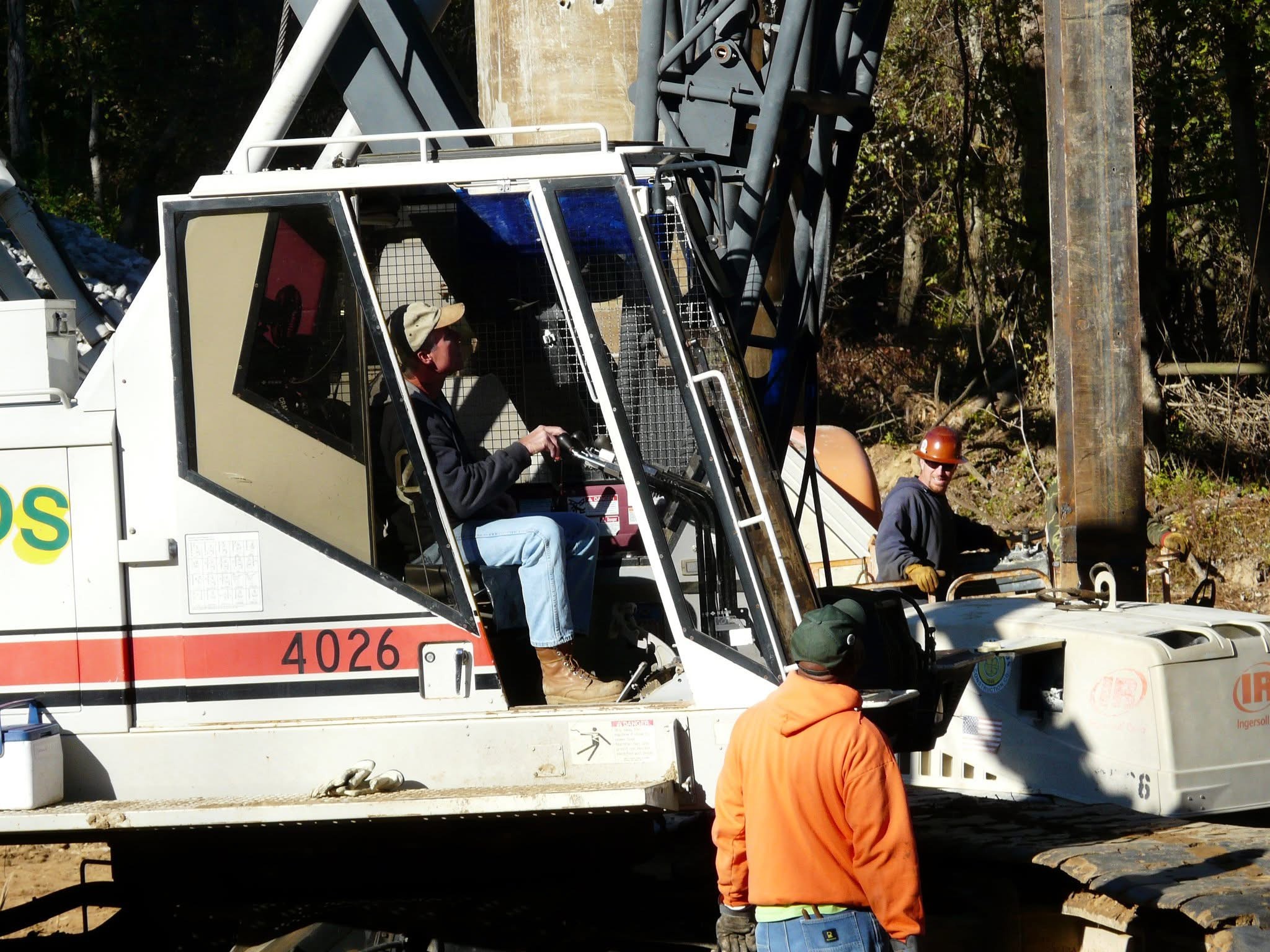
And thirty years ago, he built a device from a boat speedometer hobby project that soon became Smart Level, a construction altimeter now used across foundation repair, home inspection, forensic engineering, hardscape, and pool design, with a direct integration into ArcSite.
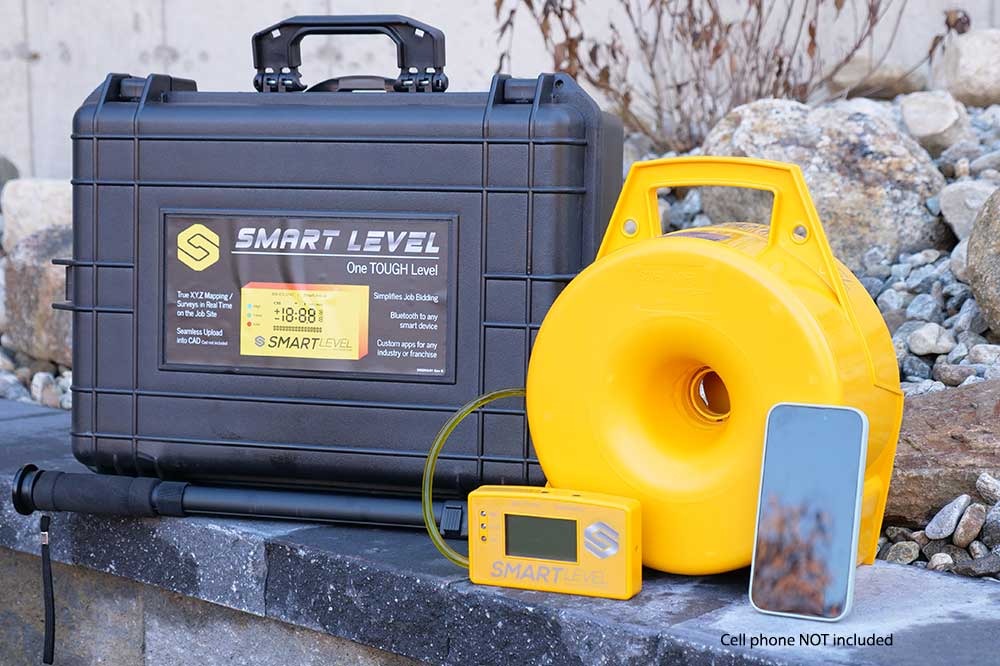
Initially, East wasn't looking to invent anything. He was building a digital speedometer for boats as a hobby. Thirty years ago, the analog gauges on the market were unreliable, and the few digital ones that existed were worse. The pressure sensor he was using for that project turned out to be exactly what he needed for something else entirely.
He'd watched a construction crew across the street from his house use a water level — a tube filled with antifreeze, the fluid settling to the same height on both ends.
"It's basically the way they leveled the pyramids three, four thousand years ago," he says. He thought he could build a better version. By the next morning, he had a pressure sensor rigged to translate an inch of height into a volt of differential.
The first Smart Level sold for $149, with a range of about 40 inches and no Bluetooth. Today's version reads up to 30 feet and connects wirelessly. Unlike the competition, it keeps getting smarter after the sale.
"It's actually a digital computer, and it learns as we evolve," East says. "If we come out with a new function, you just upgrade it like you upgrade your laptop."
But why use tubing over laser technology? You're probably familiar with the laser level. Most contractors use them, and so do homeowners and DIYers. The advantage with Smart Level is that the tubing technology helps you capture accurate measurements, even when you're in complex environments. For starters, a laser needs a clear line of sight. If you move to another room, the benchmark is gone, you have to reestablish it. And every time you need to reset, the chance for error goes up.
Smart Level's tubing goes anywhere, around corners, behind walls, into other rooms, while holding one benchmark for the whole job. It works in the dark, in direct sunlight (where laser beams can get hard to read), and around glass (which deflects a laser beam and throws off the reading entirely).
The readout is another place where Smart Level stands out. "It simply says, if you're an inch and a half high, it'll simply say one and a half inches. It takes all the math and all the figuring out of it," says East.
That same drive to take the error-prone steps out of the process is what drove Smart Level's integration with ArcSite. Readings drop directly into a floor plan as it's being designed. ArcSite easily allows you to create topographic drawings to visualize that data for your customers.
For hardscape and pool design, where elevation changes on a single lot can run 10 to 20 feet, East sees an even bigger opportunity. His team can take a drone image of a property, load it into the app, and drop elevation readings straight onto the image while walking the site — and that data then flows into an ArcSite design.
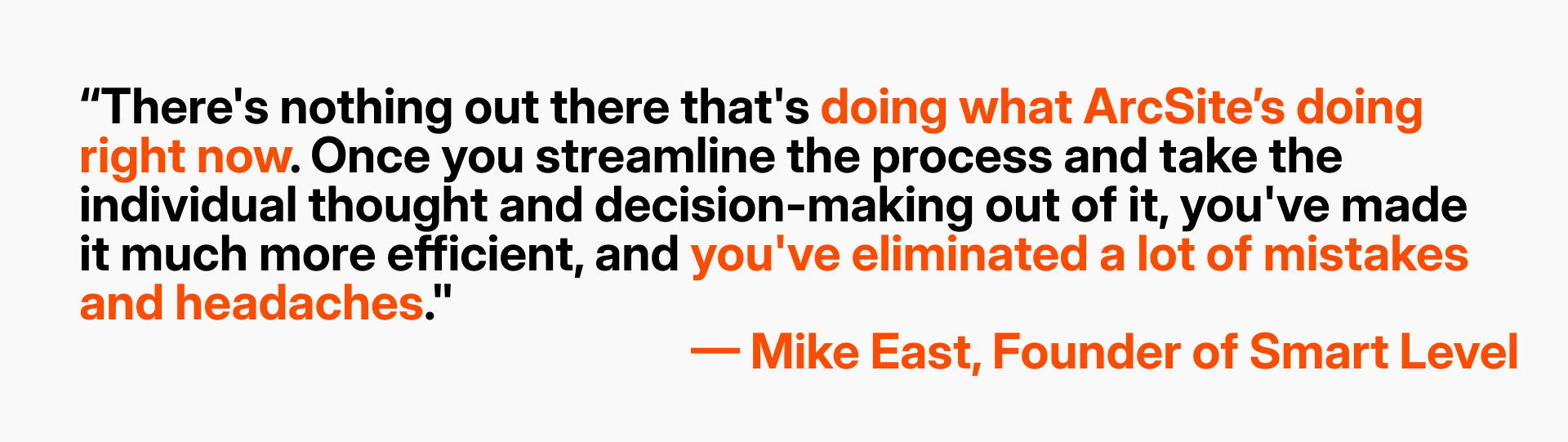
East says on the ArcSite partnership: "There's nothing out there that's doing what you're doing right now. Once you streamline the process and take the individual thought and decision-making out of it, you've made it much more efficient, and you've eliminated a lot of mistakes and headaches."
East has spent three decades learning what actually keeps a business standing. Established in 1996, Smart Level has seen tech booms, busts, and everything in between.
But he says the economic climate right now, “I have never seen so many things changed at once that could put you out of business.”
From AI to hiring to volatile material costs, businesses today are up against a lot. East has seen this film before, and he knows how it ends.
"Choosing the wrong partners has been my biggest failure," he says. Three times, he trusted a manufacturing or industry partner who didn't deliver. One mistake alone set him back by two years. His instincts, by his own admission, are generous. "I trust people until they give me a reason not to. That's dangerous in business," he says. "You have to get burned a few times to really develop that."
This is one of those things that’s only learned over time. You can’t Google or study your way to good instincts, and who you surround yourself with has the most poignant impact on your business.
"I've never seen so many things changed at once that could put you out of business," East says.
During the pandemic, a $3 component he relied on got swept up when Ford Motor Company bought out the entire market supply, pushing his lead time from on-demand to 52 weeks. He had the engineering on hand to redesign around it — by his own account, mostly luck.
Separately, the price on one brass component he uses went from $0.27 to $1.25. Businesses without a system for tracking those shifts in real time will watch their margins evaporate without ever seeing it coming.
He says a system like ArcSite is a non-negotiable for businesses today. You need something that can track materials and maintain your margins; otherwise you’re going to have your legs cut out from under you. The sooner business owners understand this, the better luck they’ll have against strong economic headwinds.
East has lived through this kind of disruption before — he compares the current AI moment to watching colleagues refuse to trade flip phones for smartphones. "They just stayed with the flip phones, and they literally got left behind in the dust." His read on AI is the same one he'd give on any new technology: stay on top of it, or fall behind. But don't mistake urgency for haste. "Don't rush into it without putting enough thought into it to know what you're doing."
East's advice for building a career is simple: find something you love, get better at it than anyone else, and the money follows. At the end of the day, his definition of success has nothing to do with the bank account — it's being able to hop on his Harley on a bad Wednesday and ride to the mountains. Thirty years in, he still calls it fun. That's the one function that never needed an upgrade.
Curious how Smart Level's integration with ArcSite puts accurate elevation data directly into your floor plans? Click here to chat with our team.