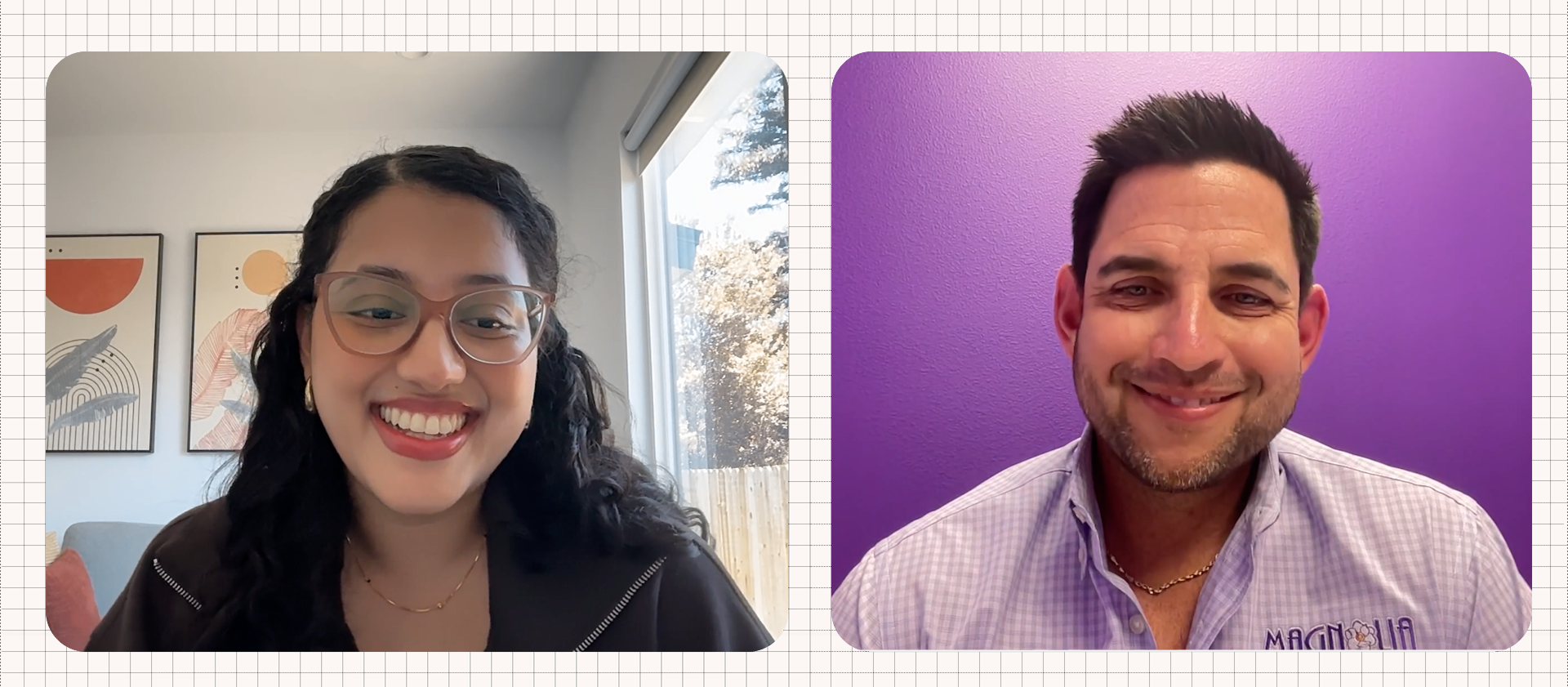

Robert Whittaker - CEO of Magnolia Fence
[00:00]
So we've decreased our cash conversion cycle by like 15% just since we took ArcSite seriously. Robert, thank you so much for joining me today. It is such a pleasure to finally meet you. But we'll start off nice and easy. Can you just introduce yourself with your name and what you do? Yeah. So today I'm in my Magnolia Fence and patio shirt. My name is Robert Whitaker and I am the CEO, the chief energy officer. And when I'm not doing Magnolia and Patio, what got me on stage is the the proven process works if you follow it. Right. So now I'm a Purple Coach, and I get to go all across the United States and help people implement a process that's going to work best for them. So but today I'm working in my business. Yesterday you would have caught me and I was in Purple Gear, so I bounced between a few different roles. I love it, so tell me about both. Tell me about Magnolia, then tell me about your role at Purple Coaching as well. Yeah. In short, I, I went to school for marketing management and I graduated in ‘07. And management is no longer a thing. It's leadership now. And I knew that our world needed something. So I wanted to be a consultant right out of the gate. But no one's going to hire somebody who has no wisdom or experience. And I definitely wouldn't
[01:30]
be mentored by somebody who hasn't been where I want to go. And so we launched our construction company and and had phenomenal success with it. Just like anybody who's probably listening to this, there are you you have your good days, your great days and your growth, your growth days. And we joke that sometimes those bad days are just well dressed or dressed up in a in a suit. So anyways. But so what got me though here today was people want to do what I do and I kept trying to answer questions, give them advice and whether they took it or not. Nothing ever moved. And it got me realizing about three and a half, four years ago, people want to do what I do, but I'm not sure if they want to do what I did. And it led me to start asking clarifying questions. And I realized, hey, this is my my breakthrough moment, where I get to start doing the consulting and the leadership training. And I found that what worked for me might not work for you, because the most complicated part of your business is people. And even if you take advantage of all this AI and everything else, the only person who can consume or pay you is people. So even if you eliminate everyone on staff, you still got to work with people. And so anyways, I get to go all across the country and help people have tough conversations, lead lead leaders and model by example.
[03:01]
And so Magnolia Fence is going to do about $11 million in the fence and patio world, primarily residential. We're entering the commercial space. We just haven't made that an emphasis yet and we’re built up of about, I don't know, ten key executives or officers between two different locations in the Fort Worth Metroplex. So anyways, that's that's how I'm where I'm at today is people ask me so many questions that I wanted to get to the root cause I was, you know, it was interesting. I kind of flew over that people would ask me questions and I'd prescribe based off of the symptoms they would give me. Probably very similar to y'all software. Hey, this is my need. And if you guys quickly go solving it with the software, the implementation and probably execution isn't nearly as well. But something I love about ArcSite is that, like y'all, it almost is. Like y'all have hired industry professionals like Arthur and Patrick and just Nate and all of them, they know our industry so well. They know how to ask questions to get to the root pain points. And that's not a plug for y'all. It's just exactly what I do at Purple Coaching. I try and figure out, but why? But what, but how? And we get to what we really need to solve. And that's why we've had ArcSite. And I don't know when we get to this point, but I'll just go ahead and say it. One of the reasons I can go spend 80% of my time coaching consulting is because I have incredible
[04:32]
softwares like ArcSite watching my back, protecting my margin, documenting projects. So that way if we were to ever have turnover, I could quickly grab it and I'm probably overstepping. You probably have all these great questions, but I freaking love y'all software. Aw well, the feeling it's very much mutual. I'm very happy to hear that. But no, let's let's jump lily pads a little bit. Let's back up, actually, because you said very eloquently, people want to do what you do, but they don't necessarily know or want to do what you did. So walk me back. You graduated from school. How did you get into the fence industry? Like what called you to this place in the world? Yeah, I can tell you, most people claim they start businesses because they're trying to solve a problem. That problem is almost always selfish. I've never met somebody who one wanted to start their own business to solve other people's problems. Their problem was they were out of money. Yeah, they didn't know what they wanted to do. And I it would be too long to go over the whole history of how I ended up where I'm at. But what's kept me in the fence world is the fact that we identified that we are. We're not fencers. We're running a business that happens to do fencing. And it doesn't matter if we sell apples on the side of the road or we sell fencing. You've got to have systems and processes. You've got to have great people. You've got to have alignment and camaraderie. And so once we realize, like it's not about the product, we started thinking a lot bigger. And I've got a vision, which is to change the way
[06:03]
people view contractors by changing the way we view ourselves. And the second that shift happened, I really bought into Magnolia Fence and Patio because to be honest with you, I had walk in rooms and I was never like a like, I'm in, in insufficient to be in this room. But I mean, if you're around lawyers and accountants and private equity and you're just a fencer or a roofer or a sheet, a sheet drywall guy, you know, sometimes you can convince yourself you're not on the right room. But we all have the same things. We all have gross margin. We have overhead. We all have people. We have HR just we just sell different products and services. And so anyways, that's what kind of kept me in it. When I realized that I was wasn't running a fence company, I was running a business of people. Exactly. I like to say every business is a people business because exactly like you said earlier, it's people that are consuming your product. It's people that are working in your business. It's people that you're being, that you're paying and that are paying you. Like that's how their entire economy runs. So like, yes, we're in the SaaS world. There's AI coming in every shape and form towards us and part of our lives, but really it’s in the service of people and their needs and their problems. Right. And fundamentally, every business exists to make a profit. Everybody is working to make a living. Like we're not living in some fabulous utopia where we can all be on a beach every single day. Wouldn't that be amazing? Yeah, but I think that's really important to say, especially for folks that might be listening to this. Like, there is no reason to
[07:33]
feel intimidated when you're talking to people who are high level corporates. Like they might have a different background to you, but you bring just as much value to the table as they do. So I guess let's dig into your journey with Magnolia a little bit. Can you walk me back to maybe like the early days of the business before you found ArcSite? And then how did your journey with ArcSite start? That’s been really incredible for some of the people who are listening to this that are looking to grow or scale their company. And we could talk about the difference between growing and scaling later, but the amount of resources out there are more obvious than ever. Like I remember when we first started our landscape business 20 something years ago, I was like, I don't know where between 18 and 22, you had to make a commitment to something 18 months in advance because it would be published in the Yellow Pages. So what I thought was really great about that at the time, it felt like, oh, I'm committed to whatever I'm saying. But now I'm looking back and think I had to believe in what I'm saying because I can't change it. And so we live in a world now where you can say something in it, or you can say something and change it or, or, you know, we actually get in a lot of conflict a lot of times because we quickly respond before taking a breath. And so when the early stages of Magnolia or my landscape was very simple, it was a lot of like heavy lifting, doing hard work, knocking doors, pencil and paper, shuffling paper around. And I was grateful for that,
[09:04]
because it also allowed me to exchange paperwork to to like my crews or to my clients. And there was handshakes. Now, we live in a world where it's almost safer and better if you could just ACH a payment and but then you really figure out real character, like if you've been paid, are you still going to go out there and shake that clients hand? And so we went from a pen and paper, not by choice, but because that's all there was with very strict, clear strategy to we we almost chased everything. And we have this saying, if you chase two rabbits, you'll get none. And I remember I think it was like 2020 maybe 2019. They they've created this accountability chart for me or for the company. And I was allowed ten big ideas a year because I was just constantly chasing the next one and I had the bandwidth for it. But here's an interesting fact. And anybody who's listening that can look it up and put it in the comments or whatever, what the real statistic is. But like something like 60 years ago, when our parents were in the midst of growing their careers, there was 12 major changes a year. There's like 1800 now a year. And and I'm reading this book by Doctor Benjamin Hardy about being your future self now. And it's really amazing. Our we haven't humans really haven't evolved much if you really think about it. But our world has. And one of the reasons we can't think very far into the future
[10:35]
is because the average age in like 1890s was 36 years old before people died, and then it just wasn't like 40 years or 50 years ago it was 65. So we don't we our brains hadn't been able to think for, well, anyways, God gifted me the ability to see further and faster, but it also is my big Achilles heel. And I share all that because now I'm where I'm at today. So I had ten really big ideas and I burned them up January like 20 or January 15th of 2020 or whatever it was. So I stumbled across two software's: Job Nimbus, which is our CRM and ArcSite. And I go to text everybody. I got an idea, and then I was like, crap. I used all ten of my ideas already, and so I did it all behind my team's back and was so kind of cool about this is because I think it was writing in Covid and it was, you know, during our slower season, I got to build it the way that I saw it, and I got to break it and build and break and build. And we know that when you're part of building something, when you defend it more, but you also make it better from the start versus having somebody like dump. And so Patrick, the curly hair Patrick who's now like over everybody. He's phenomenal. All those people are phenomenal. He and I got such a great friendship that we built out ArcSite and and it was so awesome to see. And then I did the same thing with Job Nimbus. And I came to my team. I said
[12:05]
I got two incredible products and they were blown away. Of course they were like, why didn't you tell us? Anyways, my business between those two softwares increased by 40%, but it wasn't. And hear me listeners, it wasn't that we had 40% new business. We had 40% of the business that was leaking because we didn't have proper work orders, drawings. We weren't moving fast enough. I think of sales. So like when I consider ArcSite, I think of it as a sales tool. Do you hunt by chance? Do you hunt? I don't, but I'm sure a lot of our listeners do. So go ahead. So I think about sales is like hunting. It is extremely like the thrill of the chase. Right. And then as soon as you kill the deer or whatever else, like for a hunter, you're like, oh, maybe I should have waited. We were going to cook a steak tonight. Now I got to clean it. Now I got to take it into town, and. And it's kind of like sales. It's like, oh, now you got to create the work order, and it would bog us down. So people in our company would have office days. And I'm like, oh my gosh, if you have office days, you're not selling. And so ArcSite, if used properly, you have a work order created before you even get the yes. So that way when you get the yes you can truly enjoy the celebration. Well, I'll be totally honest, listeners, Patrick was phenomenal. But Robert does everything about 80% and then he moves on. So I actually mainly use the tool for drawing only. We still paid the full subscription because I loved having access to Arthur and Patrick and all that stuff. Well, about two years ago,
[13:37]
I made a commitment that we were going to fully build out ArcSite, and this is where it gets good. I built it out and it sucked because I tried to do everything all at once and I said, that's not going to work. I said, how do you accomplish something? One bite at a time? So hear me out. Every week I set a goal. I'm going to get really good at this one product the next week and the next week. And I went and did a standing meeting every single week with your team. And you know what I loved about them? They were super patient, but boy, did they get excited when they saw progress. Yeah. And so what we did was we just said, hey, what's our chicken sandwich? And let's build those out. What's 80% of what we do? And let's target on that, because we went in and we tried to do like 80 products all at once. And once it was right then we were going to launch it. Well, the problem was is once we did 80, it wasn't what our team needed. We miscued something. So we did one at a time and we did about 30 products maybe over 20 weeks. And then we just said, hey, every time you have a product that's not in here, let's sit down and figure out why it's not. Maybe we don't commonly bid it. Maybe we've been scared about it because it's too complicated to create work orders, whatever else. And now I bet you we have over 100 different, like, products per se. Like, right now. I bet you have something in my email saying, hey, I'd love to go in and add this new ornamental iron fence that just hit the market. I want to start selling it and it's very easy to add.
[15:07]
I couldn't imagine doing business without ArcSite. It's actually on our org chart on two different people's responsibilities to maintain at all times. And the reason why it's two different people is because one maintains price, one maintains product, and if they just spend, I don't know, 30 minutes once a week on it, they keep it caught up. And so I just want to kind of share that journey, because for a couple of years, I wasn't ever cussin ArcSite because I knew I was the one who didn't end up fully implementing it. I was frustrated with myself, but I didn't give up on it because I know that if I had the subscription, I had the Arthurs and everything. When I decided to start doing the work I knew I needed to do, I didn't have to wait for a new onboarding call or whatever. Oh my gosh. So we track our cash conversion cycle. So basically, for the listeners who don't do it, this is a phenomenal tool. So from the day you get a call to the day you collect your money, you should try and beat that every day. So ours is about 66 days. The whole sales cycle from call to collection. Well some people's is longer because they have a lead time because they don't have enough employees, some people just longer because it takes them forever to bid or whatever. Right. So we've decreased our cash conversion cycle by like 15% just since we took ArcSite seriously. I love to hear it. So here's the last piece of this. And then you can ask more questions. Since I go across the country 80% of the time,
[16:37]
we do have some turnover. I can't sometimes catch people who are upset or frustrated. A lot of them came and wanted to work with me and they have different leaders. That's what you get when you grow well. When they leave, we have an expectation that you have all your drawings and pictures and everything in one spot. So while it's super sucks that we lost a person, we didn't lose the information. And so that that creates two really incredible experiences. One for a client, because we don't have to redo the work, but two, for the person who inherits all that work, they don't feel overwhelmed because everything is messy. We have a very like black and white. These are the things we need and if you want to color outside the lines everywhere else, that's fine. But we need this, this and this. And then you go to your unique self. So anyways, super excited about using your software. I love it. No, I really think you've just said it basically answered like five of my questions I love it, you're doing my job for me. But I think that implementation story is really important, right? Because I don't think there is any software out there or any tool out there that is a magic bullet. Everything is. The value you get out of it is the time and effort that you put into it. And that's like with anything, right? Like even rewind 50 years ago and whatever type of analog system you were trying to get working for you is not going to work unless you take the time to do that. And I think in the digital age or in the AI age, that idea is lost a little bit. You think you can do everything quite instantly, which maybe you can, but it still takes a certain amount of effort and care and time to get it
[18:08]
just right for your business and get it working for your business. When you were sort of making that transition of, you know, you built it up all by yourself, you did an incremental amount of setup every week, like you were saying with our team, what was that process of rolling it out to the rest of your team? How did you get everybody on board? Because I think that change management piece is also really tricky for a lot of business owners. You look a little younger than me. So change management from people between 20 and 30. It's like the number one topic. Yes. Right now change management. And I would even argue that change management isn't descriptive enough. Positive change management. People don't mind change as long as it's positive change. And that doesn't mean that it has to produce fruit, but it has to be done in a way where we can like change sucks. It's a trade off. It typically is is bad before it's good. So what we would do is always include anybody in a process. Hey guys what do you want the next product to be. So that's number one right. Where are you guys winning the most jobs. And let me make your life easier. But since I walk shoulder to shoulder with people, I know what it's going to take after the sale. And when I look on, I have this this cool thing that I do at Purple Coaching. And I basically identify what's your gains and drains. And creating work orders, for me after the sale was my number one drain. And I said, well, I hire people that are like me. That's, you know, typical. I imagine that's what it is. So we did an energy deal and same exact thing. They're there
[19:38]
gains was sales or drains was work orders. And so I said, well I think I got a solution for that. And since I never got ArcSite completely out of the business, I didn't have to reignite that. And and that was kind of strategic. Like, sure, I could call it I lost some money, like whatever. I don't know what the subscription is a month like 150, 180 bucks. So cheap. It's just like it's just whatever per per person. And by the way, listeners, we shared a few logins for a while that what a waste of time and money. And it wasn't. We were trying to manipulate the software, just had a couple of people were like, didn't really use it. No, we pay per seat now everybody uses it. And my gosh, just like when we made that ownership, it's kind of like when somebody starts at a company, you don't give them a company shirt because you don't know if they're gonna work out or not. They're never going to be bought in. So anyways, we have I don't know how many users, 7 or 8 users. So anyways, so we we didn't have to get it started when this new sales team was on like, hey guys, there's this whole ArcSite because they were already drawing it. And I said, if you guys like the drawing being completely in unison, what would it look like if the pricing was complete? Complete unison. And we we have a mission right now at Magnolia Fence and Patio. Well, two things. We want to be known for hiring more people through this AI boom. So I want people to be like, they implemented AI and they hire more people. Yes. The second thing
[21:08]
that I'm chasing right now is that I want people to say, not only during the AI boom, Robert reduced our hours, so we're aiming to go to 32 hour work weeks while still being paid, like you're a full time employee, but most people are using AI and they're replacing that free time with more work. Now there's like a bell curve here. So like at first there's probably going to be more before less, but the goal is to get down to a 32 hour week. And so if you think about that, like, well, I don't want to create more time without intention. And so we actually just next month, I was talking about on another podcast last night, we're going to have everyone pick a hobby that they want to get better at or start. And I'm going to I'm going to pay for it. And for the next six months they're going to pour it into themselves. Because if you don't know what you're going towards or growing towards, you'll never go. And so anyways, I just share all that because if I can paint a vision with ArcSite, I like, hey, listen, if I can create a tool that truly will allow you to scale instead of grow, because growth just takes more effort, scaling is less and more or get more with less, right? It's a huge difference between scaling and growing. So I just paint a vision and then if you don't have influence over your team, if you don't inspire your team, then you're either not thinking big enough, you're not clear enough on your own vision, or you don't model what you want. And so anyways, since I own Magnolia and Patio, but I am the Purple Coach, I'm blending both of these conversations
[22:39]
so it very easy for us to get people bought in because I used it first. I hold myself to the same accountable accountability as everybody else. So if I say you got to draw it, it's because I draw it. Yeah, I love showing off y'all's tool. So normally what people use me for now, like outside of Magnolia, is like, hey, can you show us how you use your tool? And I'm a I'm a galvanized. I'm a, I'm a hype guy. So you put me on any of your prospects or any team that's struggling to adopt it. I'll show them how to use our zip around that software. Just my energy will transfer to their energy, so just be excited about it. Yeah. So anyways, and if you're commission, you should be happy because if you can move faster, sell more jobs, you should be making more money. So I love what you said about you should use AI or technology to free up your time. We're not trying to do more work in 40 hours and turn into robots. We're trying to live fuller, more happy lives. And I think there was really an inflection point after Covid, right? Like I, I’m 30 years old, I had like a sort of interesting split in my career where I spent the first like four years of my career in office, five days a week. It was like grind climbed the corporate ladder. This is like the path that's been set out for you. And then after Covid, there was a real split of like, what else do you do besides work? Do you have hobbies? Do you have interests? Do you have a full life of like family and hobbies and friends and work? It's a slice of the pie,
[24:09]
but it's not the entire pie. And I think that transition is even more like baked into like the younger generation that is coming up in the workforce right now because they grew up in a isolated time that was inherent to them versus for the folks that were in their 20s or 30 or 40s when the pandemic happened, it was like, oh, I'm now changing a habit or a way of life that I've already bought into. So on the on the topic of looking at like younger generations or like younger entrepreneurs, what's your advice to them of like both building a very successful business, making lots of money, if that's your goal or being very successful. However, you define success, but also having success in life outside of it? If the the why is powerful, the how is easy. And so you got to identify your why. Now I don't expect for the younger generation to have like their clearly defined why. But if you're around rooms or in rooms with people who have their why, you can start really fleshing out your own. Start with your values and things like that. So. You mentioned success, and I know in a speed conversation like this, we tend to use it success in both categories. But there's success and then there's significance. Success is what's in it for me. Significance, what's in it for all or for you. Right. And once you've tasted significance, success will never satisfy. And but I do believe somewhere between graduating high school and probably early 30s,
[25:42]
you have to be successful. You cannot pour from an empty cup. So you have to be a little selfish to be selfless. So I don't want anybody to think like, because there's not a whole lot of talk about that. A lot of people like, you need to be super significant. If you got nothing, you can't be very meaningful with no means. And so the best advice that I could project on anybody listening, whether you're starting your career or your younger entrepreneur or you're like, feeling like you're not enough is patience. And it makes me think of this story. I use it all the time. A gentleman goes up and says, hey, would you like $1 million today? Or would you like a penny that doubles every day for 30 days? And so of course, someone's like, there's got to be a trick here. Tell me more, right? They don't want to make the commitment, but they tell me more. Well, a penny that doubles every day. It's all about compounding, right? On day 25, it's only $127,000. But we can do the quick math and be like, well, hey, I think at the end of the 30 days, it's 5.2 million. All of that really big return happens in the last few days, but we tend to give up too early or we get impatient or we call it peak not like peak performance, but like we want to see the finish line before, you know. And so my recommendation is to do small incremental steps, not all day, just every day.
[27:12]
And it takes me back to this ArcSite thing where if you go and try and do $1 million worth of work in the software or create a million products, you're not going to get anywhere. But if you do one a day, every day, don't skip a day, you're going up with way bigger results. And they say that if you if you have more than three priorities, you have no priorities. And so like, yes, I'm well aware that some of you all need to go in and do like 5 to 10 products right away, I get that. But for Robert Whittaker and as much stuff as I've got going on one product every week for probably, I bet you about 40 solid weeks and I would skip some weeks, y'all. Like I was like, I got something going on. What I would do is every week I skipped, I booked two back to back appointments. I'd message my rep and be like, hey, I don't know if we'll be able to get it done at that time. It might be maybe shorter or longer, but I'm just seen yet and I would give him some notes prior. So that way they they were you know, they always say if you want to be mentored, be prepared. And so I'm being mentored by ArcSite in a sense. Right. Like everyone always acts like, oh, I pay you $180 or $150, whatever it costs you. You work for me. Know you still trash in, trash out. And so I was very prepared. And listen, I'm a high DI in the DISC [profile]. I am not a detail guy at all, but boy, I like money. I like it a lot. I like quality life. I love employees that are happy, and so I'm willing to do hard things
[28:42]
for short periods of time if I get big results. And so anyways, I don't know where else you want to go with this, but I sure loving all of this. I love ArcSite I love your team. I've got personal relationships. Oh by the way, if you don't have a personal relationship with your vendor, that speaks a lot about your character because your vendors, just like you mentioned, we're all in it to make a dollar and to make progress in our careers. But we all do this because we're not trying to impress, but we're trying to impact. And every one of your team members is going through the same stuff we are they have hardship. They have things that are exciting. Maybe somebody forgot to say good job. So I'm that person for them. Nate and Patrick and Ryan and all them like I'm like, I'm glad to have new friends. And let me say this, if you treat like an ArcSite, like a tool, I would almost guarantee you're going to treat your client like one two. Your clients are guaranteed to only have as good of his experience as your employee, as your vendors. So I want people to audit that. If you treat ArcSite only like a tool, the people that are behind the screen, your clients are going to know that you're treating them like a tool to. So anyways, if you want to see success in ArcSite or any CRM or any other drawing tool, whatever else, just because we're meeting digitally doesn't mean that we're meeting with robots. There are humans
[30:12]
that are behind the purpose, and so you get what you put into what your investments you make. Exactly. I think there's definitely like a community aspect to this, because I've been reading a lot about community. I think it's really interesting, like the like there's no more third spaces anymore. Like work is one of the last places where a lot of folks, especially younger folks, find community. Because again, think back to where parents or grandparents generation, you always knew your neighbor, you knew everybody on your whole block. You maybe went to church or other like organized religious activities to like get people together. Maybe you were really involved in your kids PTA at school. There is a lot of different communities that you could partake in. And these days, sure, you could find a digital community. You could become a fan of a band and like, have a fandom to be a part of or whatever. But the real community that's left in person every day that you're actually going to chat to people with is work, right? And that is so tricky because you're wanting to be there for a very specific purpose like we've established. But also it speaks volumes to how you move through that sphere, because if, like you said, you're treating folks as like a hierarchy in your head of like, this person is my vendor, I don't have to pay them a lot of mind, I pay them. So therefore they should do my bidding kind of thing. Like that attitude definitely kind of comes back around, right? Because you're probably talking to clients or investors or whoever is, you know, that you're trying to make good relationships with. You probably don't love being treated like that either on the other end. So I think it comes back around to you in terms of how you value those relationships. Once people understand
[31:43]
like what your purpose, passion and goals are like. So example, if you can articulate that to people at ArcSite, ArcSite does have a solution for that. But you've got to be able to articulate and the only way to do that, people say I need to learn how to communicate better. Know you need to learn how to connect better. And the only way to connect better is to care more. And so like I think of Justin, he cares so deeply about people, Ryan and Patrick and all them too. But I just think because I've known Justin for a really long time, he's cared before he communicated. And so maybe I don't know if take the suggestion, y'all, but if you all just go straight into tactical work with whoever's helping you implement your software, you're just going to continue to like add instead of multiply. But if you can get like a Arthur Ryan or one of them completely bought into your vision on what you're using it for, oh, they're going to start thinking creatively for you. Now, with that being said, also like use y'all's wisdom and expertise very often. I'm like, hey Arthur, this is how I see it. I'm not saying I don't want to try it, even if it didn't work, but what do I need to know that I don't know? Where's my blind spots? And y'all would never share intellectual property, but you guys have a way of asking questions to stretch us. So that way we can communicate what problems we have. And I get it. At the end of the day, you're just drawing a line, getting some pricing or whatever else, but there's so much more
[33:13]
in this tool than just that. If you used properly, whether that's all that ArcSite does for you, it's still there's something in front of it and behind it and you want it to to match. So the way we use the tool currently and I have an idea of how we're going to do it, but the way we have it is it launches it. You know, we we call it snap finger pricing. We know in the fencing world, since you share fences a lot of times with neighbors, the likelihood of you saying yes today is very low, because once you get a good competitive price, you're going to go talk to your neighbor and talk about splitting costs. So what we do is just our goal is to have an in-home presentation. We call it snap finger pricing. We can guarantee the pricing, but we within a matter of seconds, we want to be able to tell you what that stuff costs. And I could do that without the software. I've been doing it a really long time. I could probably almost do the estimating, like the materials and stuff faster than the software, but I don't want to do the work forever. I don't want to be. I call people, people come to me or like ask-holes, A-S-K askholes. They just ask me, ask me, ask me because they know that I have an answer for that. So now ArcSite is the answer to a lot of that. But anyways, so we did give that snap finger pricing and then it syncs our APIs or whatever it's called zaps or whatever into Job Nimbus. And then we type up a formal quote if they're ready to move forward or if they really are getting serious. We have a goal for 2026 to actually only operate our quote system out of ArcSite and,
[34:44]
and still use our CRM for automations. And I think you guys have got some really great things in the future that are on board. We've started using some of your payment and contracts and stuff. We're not 100% there because the job Nimbus works for us on that side of things. So talking about buying, sometimes you have to, you know, to to to move fast, go alone. But to move forward go together. And so and we really love our partnership with Job Nimbus. And there's some other great ones out there contractor accelerator and lead techniques and some other ones that that I know you all sync with. But our goal is to continue to give you all feedback. So then that way y'all can continue to move the product in the way that we need it. I have this saying unspoken expectations. It's premeditated resentment. If I don't communicate what I need out of your software, then I'm going to not like y'all. But that's just simply because I didn't communicate it. And having all at our event in January was like, I think it was like completely eye opening. I said, hey, listen, you're not going to get some new logos on your board. You'll probably get a few more users. People are going to maximize it. But what you're going to do is you're going to see how we think, how we learn. And by the way, I want to help you grow, too. So they were in their learning. We had some great keynote speakers that people paid thousands for. We we cut up with them, smoked a few cigars. We did hibachi with like 90 people, fried rice everywhere. And they left and they're like, we now know how y'all think there was a hundred people there. We know how y'all think,
[36:15]
and we don't think of very linear order. You know, a lot of these tech people, everything is very linear to y'all. Yeah. Well, you know, because you're in the creative space. So you're like, no way, no way. And so it was really it was awesome. And I was thinking about the investment that ArcSite made in that day. I mean, it's easy to pay for a logo on the deal, but to send a couple men to my group and and they didn't ask, you know, hey, go do all the extracurricular stuff. But, I mean, there was a huge investment and the payoff has been unbelievable. So anyways, really excited to be able to do it. If I were to tell anybody bite sized pieces one product at a time, because you do have a product that is your main thing. So just go build it out. You know, your main thing so well. We believe like on the energy matrix is what we call it. It's easier for me to do it typically is the thing that you do the most of, and eventually you're going to be an owner doing $10 an hour tasks because you've never automated it. And that's what we want to do with ArcSite And ArcSite will always be a partner of ours. Always. You can play this every year to remind me of renewal. So anyways, yeah, we we're all in. What else can I answer to the group listening. You know what everybody wants to hear? Yeah, absolutely. The last like, customer testimonial thing I'll ask you here is if I had to ask you what dollar value impact ArcSite has had on your business,
[37:45]
what would you say? It's hard to say because like I said, I launched both Job Nimbus and ArcSite at the same time, and I don't. I don't know if, but without having like, automations. That was huge for Job Nimbus. Right. And then and having a dashboard where I could really see all the clients I'm working. I don't know how much money, like I can monetize it, but what I can do is tell you how much my time is worth. And so I don't know if I could pinpoint a dollar that I've sold more, but I can tell you how much time I got back. And so and we were actually talking about way earlier on, there is everyone wants a software that does all things. I want it to be my accounting software or my credit card process and my drawing tool, and I want my CRM and we all know this. If you're if you're good at all, but Master of None, then you're just going to fit in. You're going to be basic. So if I have ArcSite alone, it wouldn't have worked. If I had Job Nimbus alone, wouldn't have worked 90io is our meeting software. It wouldn't work stand alone. And so we just got to figure out what came first chicken or an egg. But I can tell you for me, peace of mind knowing like, well, one of my guys, one of my head head guys, Matt actually has really kept the software going since I handed over to him. He's gone for like ten days and he's like, you know, he sends the typical, hey guys, I'm going to be at Mexico, so I'll be next to my phone, but no guarantee it's going to make sense. I talk in cursive sometimes in Mexico and right, that's funny. And I haven't had to bug him
[39:15]
because all of the information that we need for his projects are in ArcSite. So it makes my life easier. It allows him to spend his time away. And so if I were to monetize it. I would, I would probably say probably could pinpoint another quarter of $1 million a year per sales rep because it freed up their time to get to more clients faster. But if I were to like, like monetize in a sense of quality of life here, I think we took it from a six to a ten because like I said, I can tell you I've hunted a lot and I haven't killed a deer in four years because I know what I have to do after I kill it. I have not killed a deer in four years because I know I have to clean it. I miss out on campfires. I've got to get a cooler later. It cost money and I don't want to do it. So it's just like work orders. I almost don't want to sell jobs unless I already have a pre-built work order. And so quality of life, I bet you is doubled in regards to where the workspace. Beautiful. One more thing I want to touch on here is the macroeconomic environment. I think a lot of contractors or field service pros in general are dealing with a lot of volatility. Fuel prices are up and down. Aluminum lumber prices are up and down. There's a lot of turmoil in the market and a lot of hesitation with consumers as well. In terms of do I invest in fence? Do I invest in this thing that I need for my home or for my space? So how have you been dealing with any volatility
[40:46]
in the market that you've come across in your own business? And then also, what's your advice to the folks that you're consulting and working with to on this? Yeah, I'm a little fragmented from like a startup because it's been a while. You you can be less responsive to those things if you have a great banking relationship. And that saying, scared money doesn't make money. If you believe in what you're doing, you're willing to go in debt for it. And so like when fuel pricing and stuff like that goes up, it history repeats itself. All peaks and valleys are connected. And so when I consider my strategy, we don't pay, we don't pay for marketing. So the the 10 million we're going to do is there's no pay per click, there's no LSA, none of that. We understand that when they're when there's ebbs and flows in the market, if we're constantly responding to those, then we're going to miss out on opportunities for clients to refer us. And so what I would recommend to people, one is if you're in a market that isn't growing, that's your fault. That's like that's like business 101 people like you're in a great market, then come to my market and they’re like ,what I have to compete against you? I'm like, oh, you mean I know how to stand out because I know what I stand for. Like, if you can't beat me in my market, that then that's your real problem. So when people tell me like, oh, there's too many two trucks in a trucks and stuff like that,
[42:16]
it's too easy to start a business nowadays. Well, but everyone's markets growing. The amount of people that are being added, you know, to, to new homeowners and stuff like that is equally as much. But if you're marketing puts you in the same room as a two truck and a truck, then you're marketing is not connecting to the right people. Or if you're being compared to a two truck and a truck, then that ideal client is going to be a distraction. So when we talk about different things up and down pricing and stuff like that.
[42:49]
I would argue, sure, gas went up, but I should have lowered something else. I mean, I'm buying brand new laptops for like 450 bucks. Three years ago there were 2000, right? And so yes, there were some very specific things that are hurt. I get it, I travel across the United States and so airline tickets right now are like through the roof, but with proper planning you can almost guarantee you won't have poor execution. So we plan for some of this talking about economics. It's so funny. A lot of us are technicians that became business owners. Well, a lot of business owners do better than technicians because they are looking further ahead. When you talk about economics, you're literally talking about the windshield instead of the rearview mirror. And when I talk to technicians and yes, I'm going to say it, technicians, you guys are this is how we've always done it. This is how I grew up doing it. You've got to be willing to be flexible. You've got to be willing to bend a little bit or, you know, sometimes let a lesson turn into a blessing. And so, like right now fuels up, I guess. I don't know, it's up like a couple bucks, but like do the math on that. It's only a couple hundred dollars for the average ticket job. Show me your P&L and I can show you. I call it EBOT and it's earning before owner theft. I will show you where you're stealing from your company long before or two bucks extra a gallon matters. And so I'll end on this.
[44:22]
The most common phrase that people people want to talk to you about three things in coaching. First, one is time I said, you don't have a time problem. You have an energy problem. You have mind management problems. Your mind consumes the majority of your time. So we got to work on that. So we knocked that one out. The second one is communication. I clearly tell them it's not a communication it's connection issue. Show them where they're not connecting with people. So boom. And then the third one is efficiency. I want to be able to crack the whip and get more done. And here's the deal about efficiency. Efficiency is simply getting better at something. But if you get better at the wrong thing, you get further away from the right thing. So here's the deal with the fuel prices are aluminum or whatever else. Focus on your effectiveness.
[45:14]
No longer compete with your customer or your competitors, like with who's better or who's cheaper. Become your only one in the market. Like really figure out where you stand out and people don't by Magnolia Fences because we're the best fence. They buy with us because we're the easy button. Our target market is very clear. There are people who don't have the time or bandwidth to think through everything. And you're like, how do you find those people? They're all over the place. I'm one of them. And so we are the easy button. And so anyways, I think when people start worrying about gas prices or fluctuating costs, they're working. They're focused on the wrong thing. You need to zoom out and think, is this going to be an issue in six months? No. And that actually happens a lot in ArcSite. Oh, I get new pricing every couple of weeks. I'm like, who cares? Update it like once a quarter.
[46:12]
The time that you were going to spend updating your pricing and ArcSite, I could teach you a sales technique that will help you close a deal faster. Oh, better yet, instead of complaining about fuel prices, call one of your customers back because I noticed your follow up board. Nobody called their follow ups. That's what we're doing today. We're called over 100 people. I said, y'all want me to lower my price so we get more people to say yes, but yet we have 100 people that didn't get called back. And I got like ten to say yes. So I think we focus on the wrong thing, right? Too much. So they're done. There we go. Beautiful. Oh my goodness Robert, you're a wealth of knowledge. I could talk to you all day but this is amazing. You're also a gold star interviewee. You answered everything I could possibly want to ask you. So bravo. And thank you so much for your time. I really appreciate it. It's been my pleasure as well. And I know we're still being recorded, and maybe you could share this with your higher ups or whatever, but let me tell you, it is very easy to be great when you're around. Great people think about that. Energy meets energy, and I wouldn't be as good today for you if you weren't great yourself. The way that you prepared, the way that you speak, the way that you're passionate about it. You're brand new to the software, but you're not brand new to like the space about connecting with clients. You're a true professional, and I want you to know that too. Thank you. That makes my life. Day. Week. Month. Thank you. That's really kind of you to say. I appreciate it.
About Magnolia Fence
Industry: Residential Fencing & Patio
ArcSite customer since: 2020
Revenue: ~$11M
Locations: Fort Worth Metroplex (2 locations)
Their Story: Magnolia Fence & Patio is a Fort Worth-based residential fencing and patio company led by Robert Whittaker, CEO, self-described Chief Energy Officer, and business coach who spends 80% of his time traveling the country helping contractors build better operations. ArcSite is one of the systems he swears by. He'll tell you that himself.
The Impact
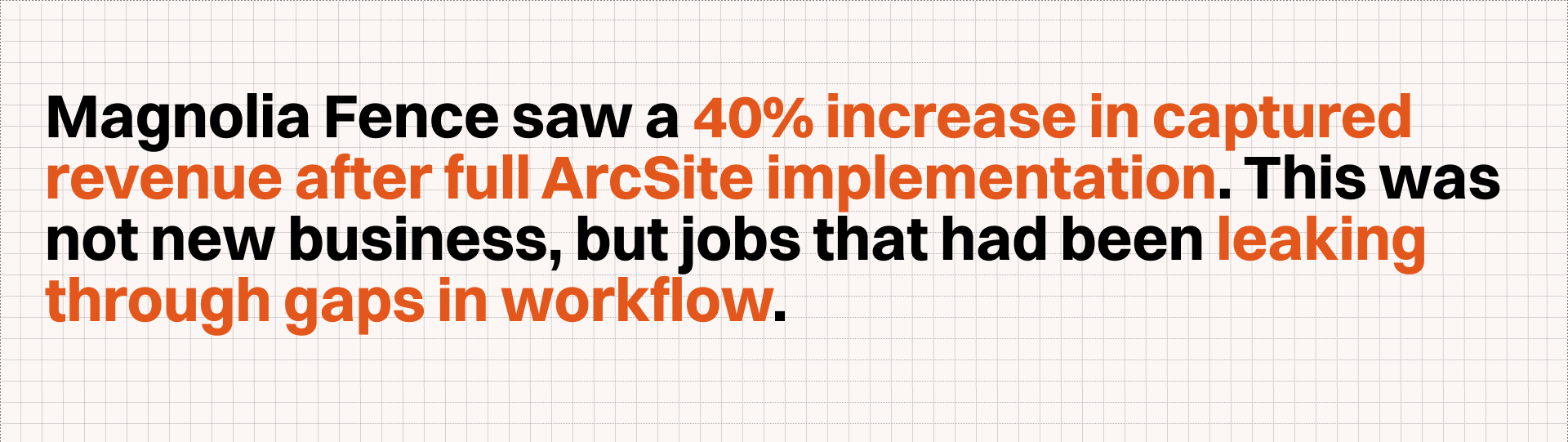
- 40% increase in captured revenue after full ArcSite implementation — not new business, but jobs that had been leaking through gaps in drawings and work orders
- 15% decrease in cash conversion cycle since adopting ArcSite (reducing the number of days from the lead coming in to collecting payment)
- 100+ products built into the ArcSite catalog, allowing for seamless price and ordering updates through a centralized system
- Work orders ready before the close — reps celebrate the yes instead of dreading the paperwork
How the Business Started
Robert Whittaker didn't set out to run a fence company. He set out to be a consultant. He graduated with a marketing management degree, knew he wanted to help other businesses run better, and just as quickly realized no one takes advice from someone with nothing behind them.
So he built something first.
Magnolia Fence & Patio grew from that — a business he could use as proof of concept and pressure-test everything he'd eventually teach. What started as a scrappy residential operation in Fort Worth has grown into an $11 million company with two locations and a reputation built almost entirely on referrals. No paid ads. No pay-per-click. Just process, people, and a clear sense of what they stand for.
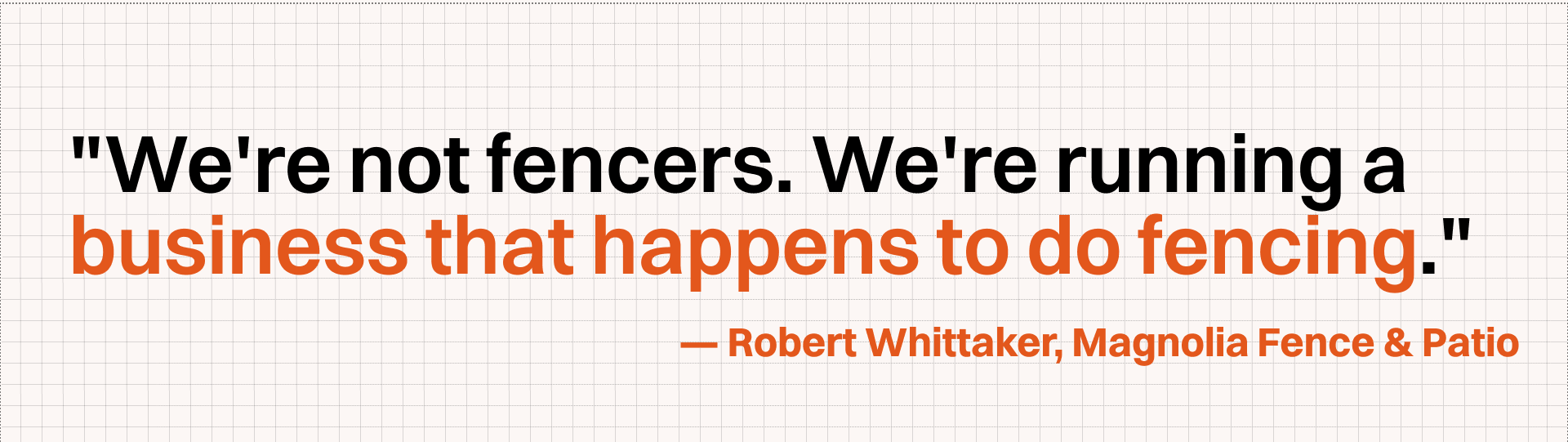
"We're not fencers," Robert says. "We're running a business that happens to do fencing."
That distinction — between being a tradesperson and being a business owner — is the lens through which he runs everything. It's also why, when he found ArcSite in 2020, he didn't wait for a committee meeting.
The Challenge
Before ArcSite, the Magnolia fence was doing well for itself. ArcSite helped turbo-charge their process so they continued to get more leads and win more jobs. But the biggest drain on the team’s morale and time was everything that happened after the sale.
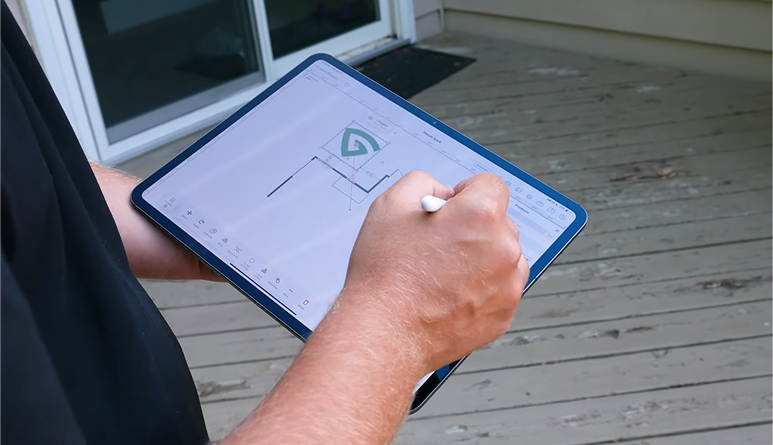
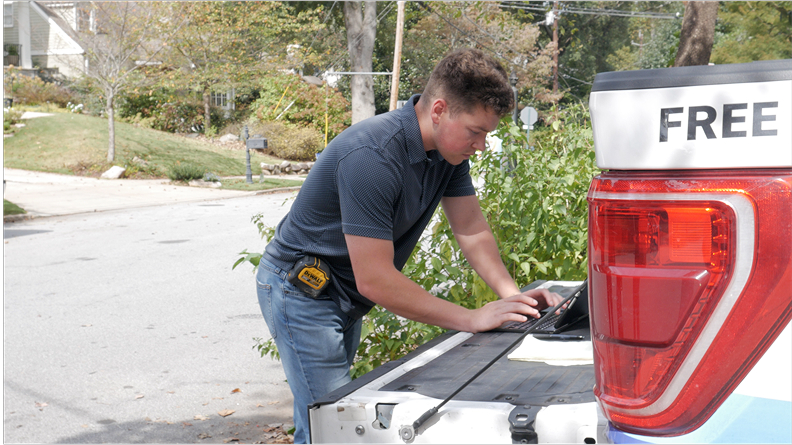
Magnolia's reps were good at selling. The drag came after the yes — manual work orders, slow turnaround, and hours of post-visit admin that pulled people out of the field. The gap between close and cash was longer than it needed to be. And if a rep left the company, whatever drawings or site notes they'd built up either walked out with them or got lost in the shuffle.
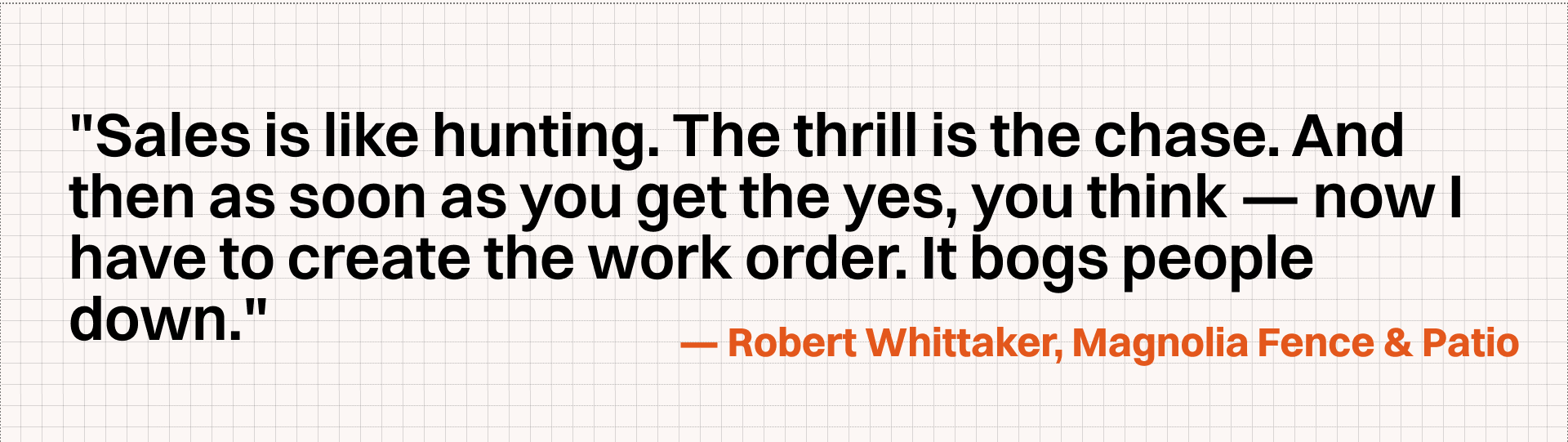
"It's like hunting. The thrill is the chase. And then as soon as you get the yes, you think — now I have to create the work order. It bogs people down."
The other pressure was scale. Robert spends the majority of his time offsite — coaching, consulting, traveling. He needed systems that could hold things together without him in the room.
Documentation that didn't depend on any one person's memory or habit.
The Solution
Robert found ArcSite during COVID. He'd already used up his self-imposed limit of ten big ideas for the year, so he implemented it quietly — building, breaking, rebuilding — before ever showing his team. By the time they saw it, it was already working.
What he'll also tell you: he only used about 80% of it for the first couple of years. Magnolia was drawing in ArcSite but hadn't unlocked what the platform could actually do. He kept paying the subscription anyway. Not out of habit — out of conviction.
"I was never frustrated with ArcSite. I was frustrated with myself for not finishing what I started."
About two years ago, he committed. Weekly standing calls with the ArcSite team. Catalog built one product at a time — 30 products over 20 weeks, prioritized by what the team sold most. Every new service was added as it came up. Today, Magnolia runs 100+ products in ArcSite, with two team members owning it full-time: one for pricing, one for product. Today, ArcSite provides intelligent AI-powered features to help fence pros get up and running even faster.
The workflow shift mattered as much as the catalog. The goal was simple: have a work order ready before the customer says yes. That way, when they do, the rep can actually celebrate.
"If used properly, you have a work order created before you even get the yes. So that way, when you get the yes, you can truly enjoy the celebration."
Turnover got solved along the way. When someone leaves Magnolia now, the drawings, site photos, and measurements stay in ArcSite. Whoever inherits the job doesn't start from scratch. The client doesn't repeat themselves. Nothing falls through.
"While it super sucks that we lost a person — we didn't lose the information."
The Results
Since full implementation, Magnolia's cash conversion cycle has dropped 15%. The 40% revenue increase Robert points to isn't new business — it's recovered business. Jobs that slipped through because of missing drawings, incomplete work orders, or slow follow-through. That revenue was always there. ArcSite made sure they kept it.
The reps who pushed back hardest at the start are now among the most productive. The shift happened when they realized that drawing in ArcSite was faster than sketching on paper and re-entering everything into a separate system.
What's Next
Magnolia is working toward a 32-hour work week — full pay, fewer hours — by continuing to strip out inefficiency. Every process that runs cleaner is time returned to the team. ArcSite is part of how they get there.
Robert still walks his Purple Coaching clients through ArcSite personally. Not because anyone asked him to — because it's the kind of system he believes in enough to put his name on.
For any contractor still running on paper, the cost isn't the subscription. It's the revenue that keeps walking out the door.
Curious how ArcSite can help you run your business more efficiently? Click here to chat with our team.
See other stories