
[00:00]
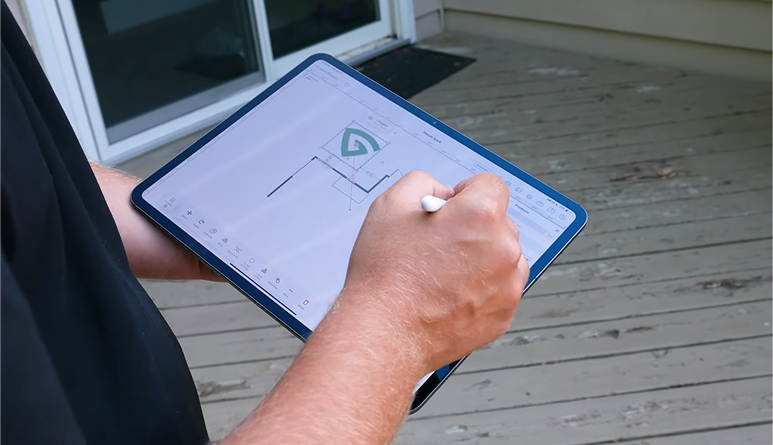
The days of using pen and paper to write down something is kind of gone. And now it's... You've got to be, computer savvy. You've got to be able to handle a program. Software program. implementation is very easy. I think if you have an open mind and you're willing to learn, it's not that hard. I mean, to us in our system, you run over to ArcSite. I'm just drawing it here. I'd go to ArcSite on this iPad and, grab my drawing and put in the customer's information, and then I would grab whatever I want to draw for them. If I want to draw a wood fence, I just draw it, then it's it's done. It's estimated, Okay, Marcus, we’ll start off nice and easy. Can you just introduce yourself with your name and your title? Oh, yeah. Marcus McCrary, the owner at, DFW fence contractor, family owned business. My wife, Molly and I own the business. We've got, our son, our daughter, and mother in law and other family members that that work for the company. Perfect. So tell me a little bit about how your business got started. I saw that you've been in business for over 25 years. Came out of the military, I was, a U.S. Coast Guard, aviation mechanic. And, my brother had a garage door business running. When I was, with my six months or so of leave that I had left, I'd come back and I’d help him do garage door service work.
[01:30]
Back then, we advertised heavy in the yellow pages. Yellow pages said, “Hey, here's an opportunity for you guys.” Do you want another, space that you could possibly work in? I had a good friend of ours who said we can build fences, so we came in to the fence industry by chance. The the yellow page was getting to I think she said the print was in the letter D, and so we couldn't pick anything. A, B, C or D, but, we picked fence and so started that. And then basically I have never stopped since, so, had an aviation, basically time to get my ANP to be an aviation mechanic. That's what I thought was going to do for life. But this fencing business that actually started as a garage door business, fell into our laps and we've been working ever sense. That's awesome. Talk to me about those early days. What was that like? As you're trying to figure out what your business looks like, trying to get it set up, figure out who you're going to work with in the business as well. So my brothers and I started together and had a good time, had had done that for about 12, 13 years. And, you know, just we started evolving and, started selling fence and became very, very busy. Didn't know a lot about fencing, honestly. We didn't we didn't know anything. We didn't know, we really didn't know how to set the post properly. Like, you know, you start tearing down some of these old fences, tear off somebody’s old fence. But we didn't even know how to set up a post properly.
[03:00]
So, we definitely didn't know anything about the wood fencing business. Although in the DFW market, it's a huge fencing business for wood. Everybody's got a, everybody in Texas is friendly. They everybody likes everybody, but no one wants to really see their neighbor. So, so we started building wooden sets. Chain-link fencing, had a little bit of practice with that before, but we really didn't know a lot. And, but we were willing to work hard and try to figure these things out. That's awesome. So talk to me about the scope of your business today. How many employees do you have? What does a typical day look like for you guys? Just run me through it. February, January time frame are a little bit slow, right? And this is the slow season for fencing. We're trying to get ready to ramp up for spring. We know that by February 15th, everybody in their tax, Everybody’s going to get their tax money, and they're always going to be looking for improvements around their properties. Fencing happens to be one of those. Everybody's got either a dog or a pool. And they have to have those things secure. So, and if they don't have one the neighbors have got one. So if it's attaching on the home, then you got an opportunity there. You know, we're running, right now with about 17 employees. We do run subcontract crews as well. And during a typical timeframe between probably March through almost November, we're running about 8 to 9 crews daily. And, you know, depend upon scope of work. The job itself.
[04:30]
We might end up installing one crew of, you know, a three man crew might install five jobs in a week. That same three man crew might be on one job for the whole week. We definitely like the bigger projects. That does keep our our work in our office a lot easier for us, but we take on, all types as far as, small job to large job. We typically have a minimum of about $1500 to show up on a project. After that, we'll do about anything, from there in the fencing business. But a daily practice, getting crews out the door, getting jobs orders for the next day, contacting clients, making sure they're set up and they understand, we're going to be doing scope of work, that those three things are ever evolving every day, you know, like getting crews ready, ordering material and talking to customers. That is that's the name of the game. I mean, obviously reputation and, being first to get your estimate out. Obviously, having good tools like ArcSite has for us to be able to estimate quickly, things like that. There are other, caveats to those three things, but those three things are what make the business run daily. Absolutely. So speaking of ArcSite let's talk about your workflows sort of before ArcSite and after ArcSite Talk me through what a workflow looked like before you guys discovered the tool. Workflow before ArcSite Like, demanded, a man... Well, some kind of a little bit of intelligence, a little bit of math, behind him and basically,
[06:00]
a little bit of creative skill to redraw an estimate from maybe a proposal from an estimator that we got accepted and then that that drawing came back to us, in our, in our shop. And then every day we would have to sit down with graph paper and pencil and draw every fence drawing. So what ArcSite, before ArcSite... Well, there's just a lot of, of prep work. I can remember days back in the past in the spring where we might sell 30 jobs in a week, and these jobs can be very extensive or very small, but they can be very detailed. And when you're talking about you had a normal workflow of maybe 10 to 15 jobs sold in a week, and now you're double or tripling that flow. And now you go sit down and draw all these drawings you're you're talking about, you know, Captain Crunch, eat up a lot of time. That's what it was. I mean, it was going to tear up your time. And then what that is not allowing you to do is then to communicate with the client, because new leads are coming in, new workflows coming in, and then you've got this big, crash right here in the middle of all this paperwork that has to get done to be able to now communicate with the customer you’ve sold, plus retain the new customers possibly coming in. So, yeah, definitely ArcSite has been a big benefit to our company. Absolutely. And previously, how did you guys handle like that kind of crash happening in the middle?
[07:30]
Was it hiring more people to help kind of, alleviate some of that load or like, what was the solution before you found the tool? We spent a lot of time. It was just more time, you know, like during those weeks to, like, get all that, try to get it caught up and I think all that extra time and frustration leads to, frustration with potentially with a client. You know, you're like, you're tired, you've worked extra, it's different, I think, for an owner versus, somebody working for the company. Obviously, I understood what I had, but maybe having my employees up have to work harder. More frustration for them. Less ability to handle maybe a customer relations kind of. Because the guys building up the paperwork and getting the crews scheduled are also kind of in control of the customer relations, too. So, they're the ones that are getting the questions on when can the job run, or is my job getting installed soon or, you know, as problems arrive, everybody in the fencing business, that’s in the fencing business kind of knows this. We're also kind of in the trash and recycle business. So we kind of, I call it like war zone construction, like where you got to kind of go in and create, like modern warfare with somebody's backyard. Basically, we got to go in there and tear it all apart. And, you know, some clients don't understand that, but, you know, you you can't abracadabra a post in the ground, you know, you're going to have to do some destruction and construction to put the post in the ground.
[09:00]
It doesn't go in there. Here, abracadabra post go in there, it doesn't work that way. You're going to have to work hard. So I think having, a software like ArcSite to help us move forward with that, I don't think you can have a better tool. We're going to probably talk a little bit more about it, but it's definitely led me, into other directions in the business. That's amazing. So I guess let's talk about it. How did you find ArcSite? Do you remember, like, when or where you first came across the fact that it was a tool? 2022, right. I'm looking for ways to evolve the company. Right. I'm trying to find something that will make it easier on me. Right. And I'm trying to find a way to duplicate myself. That's not easy to do either, as a business owner. So having two newer guys who've never been in the fence business be my production manager, my production manager assistant, I needed a way to scale them and make it easy. So I think I was just searching, searching, searching. I kept thinking of an AutoCAD type program. I had other things. We had Excel where we could do some stuff with Excel. But I wanted something. I could simply draw it and then that be the price. I really need something that can help me operationally, because if I can fix operations, then I can go fix sales, and I can fix automations within operations and sales. I think that's what led me to ArcSite was just wanting to be able
[10:30]
to duplicate myself, because my young guys were asking me questions, and to me, it seemed, easy because I've been doing it for 20 something plus years. Those guys hadn't. So, we were looking for a software program that could basically streamline our workflow. And consequently, this ended up being ArcSite and very happy that we have. Yeah, we are too. So I guess talking about the implementation of ArcSite So you, you know, you found the tool and then you're starting to like, implement it through the business. What was that like for you? I won't say, you know, I'm not going to paint a picture that's perfect, right? I mean, if you want your software to help run your business, you're going to have to put time into it. I know since we've come on board, ArcSite has a lot of different options for a new client to help them build their, their products. I will say, like, once you get the hang of how ArcSite flows and works, it is pretty simple to build new models and to modify, how it how it is implemented, but it is what you put into it. If you put a lot of work and effort into it, it can be the best tool in your business. It I don't think you're going to buy anything out of the box because we're all different companies. You're not going to buy something out of a box and go, oh, that works for everybody. And this is perfect.
[12:00]
I don't think it's that way, guys. And maybe I'm wrong. Maybe it does work that way for other folks. But for me, we're a custom fence builder, so we're going to do things a different way. And, But now that we know how to implement it, almost have about six guys, my office that can build a model, and it's shareable. That knowledge is shareable within your organization. You know, I to share that to somebody else. It's easily taught. That is what I do like about ArcSite. It is easy to work with as far as like once you understand that system, how it does its math, it's very easy to use. That's absolutely true. It's like with anything, right? Like what you put in is what you get out. So it's always good to hear that. In terms of, how you're using ArcSite you know, today, like, can you walk me through a recent job that you've used on and it had, just like, save time or just had a big impact on the way that you were able to run that job? If I go out to any average homeowner or even a commercial property, we can use these on commercial, bid set plans. I can get bids set plans, off of, ITBs (invitations to bid), from different places, like, PlanHub or Construction Connect. I can download plans if I have that model built in my system. Basically, can, you know, line that out. Tell me how many posts, how many rails, how many top rail, whatever it is. How many rolls of chain link do I need?
[13:30]
That has definitely sped up everything in our business because now, once that job sells, we have a full list of what we need. Then we can go take that to our four different distributors and say, hey, give me a price on this. Give me a price on that. Like, It’s moved DFW, our company, to a different, to a different area because, you know, we never had a purchasing manager before until last year. Now we have a purchasing manager. A purchasing manager now, can can, take all of the signed up, you know, documents through ArcSite and get a whole entire list of what we're shopping for, so that that's definitely, expedited the purchasing side. On a production side, like, you know, it is very easy for my production managers to look over a project and go, okay. Yeah, it's it's not missing anything. I'm looking for this. I know that it's in here. I mean, at the end of the week, we're paying all of our subcontract crews. The labor is already figured per job, like we already know, okay, that that figure was in that job. That's what we're paying for the job. So as far as paying our guys, it made it a lot easier. When you're writing close to 35 checks in a week, it's nice to have something that can help you calculate what all that should be. That's awesome. How is the, like, reception been from your team? Right, like whether you're hiring a new team member to come on board with you guys
[15:00]
or initially when you were rolling it out, how was it for you to just get your team acquainted with ArcSite and get them up to speed and running in it? I'll say this, and this is probably, true in a lot of businesses, as we evolve, as we change, as your companies grow, you start hiring talent. The days of using pen and paper to write down something is kind of gone. And now it's... You've got to be, computer savvy. You've got to be able to handle a program. Software program. implementation is very easy. I think if you have an open mind and you're willing to learn, it's not that hard. I mean, to us in our system, you run over to ArcSite. I'm just drawing it here. I'd go to ArcSite on this iPad and, grab my drawing and put in the customer's information, and then I would grab whatever I want to draw for them. If I want to draw a wood fence, I just draw it, then it's it's done. It's estimated, For another business owner to business owner, you know, you set your margin in the program. That's what we do. We set up a margin, but you set your margin and it calculates your cost, and you have your margin as your profit, and you never lose. If your estimators estimate it right And they use the right product. Depending upon how detailed, you you let them have options. You can let different products have different options in them. Whether to not use post or- some wood jobs we do
[16:30]
we don't have to, redo the post. So sometimes you don't have to sell post. So we have options on ours. As long as our guys always select the right options and don't miss anything, we can't lose. Amazing. What about the customer side? Like, once you started, showing customers like, hey, here's like the, you know, length of your property line. Here's the amount of materials it’ll take. Here's an approximate cost. You're able to do that a little bit more on the spot than you were ever able to do before. What was the reaction that you got from that? Before ArcSite, we used QuickBooks for estimating. And we would always hear in the past, “Hey, I'm going with DFW fence because you have a very detailed quote.” Now, if I could have taken the same detailed quote that I had with them and connected a drawing with it, okay. And then also add pictures to it that we took in the field and then take our detailed-ness that we had as a company, but compact that with a drawing, photos. Oh guess what, you want to finance it? I can add a little, a little brochure at the bottom of my estimate, which we do on ours. That gives them the financing piece. Here, go finance your fence with us, right. So I think it was, I think it was perfect for our client base because we do a lot of residential. And to show them a detail estimate, a drawing, pictures taken from the job and financing capability.
[18:00]
When I'm presenting like that versus somebody else that's not presenting like that. Okay. We're going to we're going to have a one up again, not only we're going to be detailed, but I’m going to have a drawing, I’m going to have my photos, and I'm going to have financing capability, you know, and you can do more with that. You know, you can, you know, you can add YouTube videos to it, you can add different things on follow up. But as far as estimating goes comparative to DFW fence contractor and the QuickBook days versus DFW fence contractor and the ArcSite days, you know, we're totally, totally on an advantage for the client to see what we’re offering. And with a drawing, with photos. It it makes a lot of sense. It like kind of packaged everything that I want to I have put together to make an estimate. Absolutely. It's just so much clearer, especially for homeowners, that, you know, maybe this is their first time having their fence done. They just really don't know what the process involves. And this way they're able to build a lot of trust with you guys. They're like, okay, I can see exactly what I'm getting. I can really put my faith in these folks. I'm going to trust my, you know, hard earned money to them as well. At the top of this call, you were talking about how you're focused on, you know, growing your business and, innovating in your business going forward. So can you talk to me about how you kind of have been enabled to have, more of that free time to do that because of the ArcSite implementation? First off. We're able to build a software with ArcSite that allowed the production to flow more smoothly.
[19:30]
And if production is flowing more smoothly along, coupled with, production is also what I would call purchasing. Purchasing is running more smoothly, purchasing is more, robust now where they can see a bigger picture of what's going on. And then that helps us shop material better. Okay. If I'm shopping material better, then now I'm making more margin. So ArcSite started that flow for us. But if I hadn't had ArcSite right now, this is not where I would be at right now in this position. So what ArcSite’s done for us there is it's helped our production, helped our purchasing the next step and help me do we'll start more automation. So we started working on some automation to our company. That basically can take an ArcSite flow and running into our AI program, it can communicate to customers and we go through different steps to get dig test done, to get permitting done, to get purchasing done, to get hey, we need your half down cause we're gonna start your project. Hey, you're in progress. Here's a follow up email. Okay, now we're at completion. I need an email here to tell them we're at completion. I need to drag that over to my review site and ask for customer review. So ArcSite has allowed me as a business owner to quit working in my business and start working a little bit more on my business so I don't have to run the day to day every day. And then right now it's helping me focus on marketing, branding and lead flow generation.
[21:00]
If I really didn't have a program like ArcSite, I wouldn't be where I'm at right now. And, you know, I'll say that like it if I was suggesting something to a younger company that's getting started in the business, find you something that can help run your operations, then then start working at maybe some of your automations and then start working on your on your marketing. A lot of people work on marketing first. They don't get their operations right, then their marketing will end up failing on them. Because, as I get too many clients and they can't handle the clients or end up with bad reviews, and they're gonna end up basically shooting themselves in their own foot. You know, when you're young in the business, I think you got to come, like, hit all cylinders, every, every location. But ArcSite is definitely freed me up and has allowed me to, progress the company. And had I not had a program like ArcSite, we wouldn't be in this position to be able to do what we're doing right now. It's amazing. If you can put a dollar value around the impact ArcSite has had on your business. What would that be? That's a great question. We've always been about a $3.5 million company somewhere in that area. Right now we're we're pushing five. This last year, and that was kind of in a downturn, I think with, with the marketing side of it now that we're doing, because I’ve been freed up because of a program like ArcSite you know, we're hoping to hit, you know, you know, 6 million this year, six, six and a half.
[22:30]
So, you know, dollar wise, what is it worth? I don't know, was it worth for a business owner to have some, some opportunity to be able to have some free time themselves, be able to go golf, go fish or, you know, be with their family more? So, I think a program like ArcSite, I don't know what the price tag is. For a business owner, I'm sure everybody's different. For us, it's kind of priceless because we we definitely use ArcSite. Exactly. Can't put a price on time with family or time to just do the relaxing things that you love. I want to pivot a little bit now and just kind of speak to like, your entrepreneurship story, because obviously you've been doing this a long time. You've been in business, over 20 years, like you said. Looking back on the history of your business, what was like the biggest learning that you had about running your own business and being an entrepreneur? Fencing is, especially in the great state of Texas. You know, fencing is and DFW area is... Everybody wants, everybody wants to be friendly, like we talked about earlier, everybody wants to be friendly. But everybody also wants their privacy. So, having a good fence, having good neighbors, is a good thing. But, I think that, what I've learned the most is just being patient, you know, learning how to handle, customers and learning how to deal, with my own self and how I'm going to react to somebody. Fencing is I'm telling you, if you take down somebody's fence
[24:00]
and they've got, you know, adjoining neighbors, the likelihood of you finding the worst in somebody is very high. Because, you might not know that you got a bad neighbor. But they're...it's funny doing this for a long time. We would have calls come in. “Hey I've got, like, eight neighbors put together.” I want to get the best deal. And I'm like, yeah, that's great. But there's going to be one in this group of people. But it's not going to be any fun for me to deal with. So you put together eight people. It's great and I appreciate it. I'll give a little bit of a discount, but I know all of you and that eight is going to make this eight. feel like 80 because it's going to be really bad. So yeah, learning patience, learning to deal with clients is, what we've probably learned the most in running our own company. You know, it's not easy, dealing with the public every day, day in and day out. We could have a crews pulling five jobs a week. We're talking 40 different clients in a week, and you're trying to make 40 different people happy. And those 40 different people to have a neighbor now, you’re dealing with the 80 different people, or if they're hitting three on each side, you're hitting, you know, 240 or you’re hitting, you know, 120 people that week you're trying to make happy. Permitting is not easy. We're starting to build to automate that. That's definitely, probably one of our hardest things that we try to accomplish as a company is permitting. DFW is like 40 different cities and 40 different rules in each city.
[25:30]
It's not easy. That also takes a lot of patience from our end, because we want to go make doesn't so want to go make money. But sometimes the cities don't allow us to because we're waiting on a permit. So, definitely patience is what we've learned the most. Absolutely. And I guess looking forward now like five, ten years from now, where do you see yourself and where do you see the business going? I got I want six more years of this is what I want. I want to be done in six years. I want to...I would like to... I don't know. I don't know that I want to quit working. I just want to not have to be, the main one running it. And I do feel like some of your questions earlier, you know, what ArcSite’s done for us. It's allowed us to have a production team. It's allowed us to have a purchasing team. It's allowed us to focus on marketing, sales. I feel like we’ll have a good chance of being there in about six years. Where I could be... Where I don't have to work as much. And I don't know that I'll ever not work. But I just want to be at that point where I don't have to work as hard.
About DFW Fence
- Industry: Fencing
- ArcSite customer since: May 2022
- Location: Dallas, TX
- Headcount: ~20
- Their Story: DFW Fence Contractor is home of the hand-built fence. Founded 20 years ago, they are a local custom fence contractor dedicated to providing great customer service and products. As former military veterans, they strive to uphold a standard of high-quality fencing to suit their customers' needs. They are a small business committed to better serving their customers.
The Impact
- DFW Fence Contractor saw revenue growth from $3.5M to nearly $6M since the implementation of ArcSite
- ArcSite freed up founder Marcus McCrary to work on the business instead of in it, allowing him to have time to focus on marketing, branding, and automation
- They hired a purchasing manager who can now shop materials strategically across multiple distributors using consolidated ArcSite material lists
- They streamlined payroll for subcontract crews because labor is pre-calculated per job
- The company invested in its institutional knowledge, training staff on how to use the ArcSite workflow to grow their own skillsets and estimate independently
The Overview
The best opportunities are the serendipitous ones. The city you never imagined yourself in, but now call home. The job you never imagined yourself doing, but grew to love. For Marcus McCrary, owner of DFW Fence Contractor, that’s exactly how his business got off the ground.
Founded over 25 years ago by McCrary after leaving the U.S. Coast Guard, DFW Fence Contractor has become a family business employing 17 people and running 8-9 crews during peak season.
What started as a garage door business that accidentally fell into fencing has grown into a $6 million operation serving the Dallas-Fort Worth area, specializing in residential and commercial fencing projects. It's about understanding what Texans truly want: to be friendly with their neighbors while maintaining their privacy.
But as McCrary and his team discovered, growth brings complexity. And without the right systems in place, that complexity can become a bottleneck that prevents further scaling.
The Challenge
Even with decades of experience, DFW Fence Contractor's manual workflow was creating friction that limited their ability to grow.
When a job was sold, the production team had to sit down with graph paper and pencil to draw every single fence drawing by hand.
"I can remember days back in the past in the spring where we might sell 30 jobs in a week," McCrary recalls. "When you're talking about you had a normal workflow of maybe 10 to 15 jobs sold in a week, and now you're double or tripling that flow, and now you have to go sit down and draw all these drawings, you're talking about Captain Crunch, eat up a lot of time."
Manual redrawing consumed hours of production team time that should have been spent on higher-value work, and communication gaps with customers became prevalent because the team was buried in paperwork. Any good business owner knows that frustrated employees working longer hours during peak season to catch up on administrative tasks does not translate well.
As McCrary puts it, "All that extra time and frustration leads to frustration with a client. You're tired, you've worked extra."
As DFW Fence Contractor grew, he essentially wished he could duplicate himself, with younger staff needing training and guidance to learn the ropes.
The Solution
McCrary spent time searching for the right tool, something that could streamline operations without requiring deep CAD expertise. He needed software that could help his team, many of whom were new to the fencing industry, work independently and empower them to be more autonomous.
That's when he found ArcSite in 2022. "I wanted something where I could simply draw it, and then that would be the price," McCrary explains. "I really needed something that can help me operationally, because if I can fix operations, then I can go fix sales."
ArcSite eliminated the need to manually draw every sold estimate. When a job was accepted, the drawing was already complete and ready for production. The production team could instantly see all the details they needed: how many posts, rails, rolls of chain link, gate specifications, and more.
"Once that job sells, we have a full list of what we need," McCrary says.
DFW Fence built custom products in ArcSite that allowed them to set their margins once and then trust that every estimate would be accurate. "You set your margin in the program. It calculates your cost, and you have your margin as your profit, and you never lose if your estimators estimate it right."
"Almost six guys in my office can build a model, and it's shareable," McCrary notes. "That knowledge is shareable within your organization."
For customers, the proposals stand out with the detailedness that DFW Fence is known for. Instead of just a quote, DFW Fence delivers a complete package, complete with a professional drawing, photos from the site visit, detailed notes, and financing options, all in one polished proposal.
The Results
By moving from manual graph paper drawings to ArcSite's digital workflow, DFW Fence transformed both their operational efficiency and their bottom line.
The ability to scale operations without proportionally scaling headcount has been transformative. "With better marketing now that we're doing, because we've been freed up because of a program like ArcSite, we're hoping to hit 6 million this year."
Perhaps most importantly, ArcSite gave McCrary something you can't put a price on: time. Time to focus on strategy instead of operations, to build the business he wants to hand off to his son in six years. Or just time to do the things you love: golf, fish, and spend time with family.
"I think a program like ArcSite, I don't know what the price tag is for a business owner. I'm sure everybody's different. For us, it's kind of priceless."
See other stories