
[00:01]
If I had to put a dollar value on the impact that ArcSite has had on my business. It's like how many, how many trips to, you know, an hour away have I saved? How many estimates, how many projects have I won by having that more professional, proposal? You know, how many bullets have I dodged? By, you know, providing, such a high level of detail, if I had to put a dollar amount on the value that ArcSite has provided to me in the almost five years that I've been using it, it's pretty priceless.
[00:53]
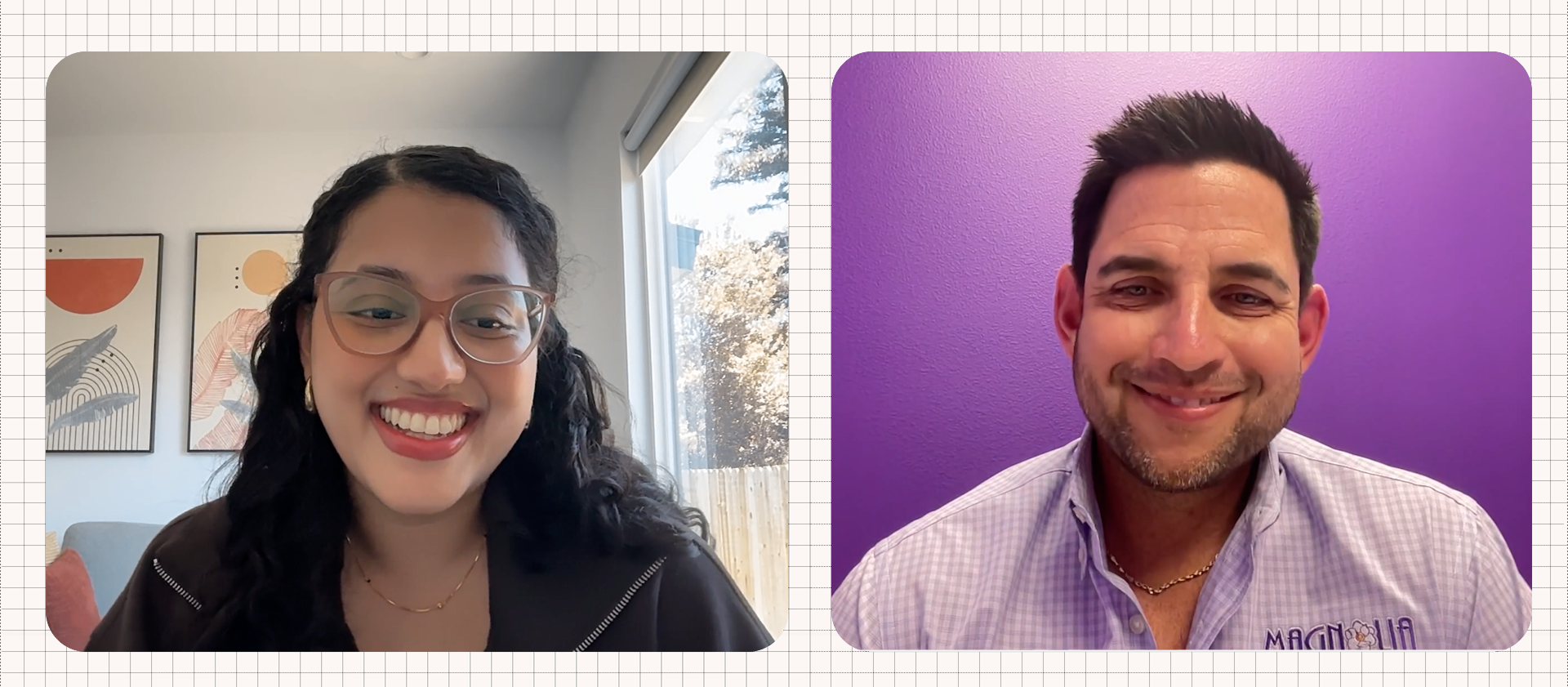
Dan, I'll start off nice and easy. Can you just introduce yourself with your name and your title? Yeah, my name is Dan Hardy. I own Hardy Fence out of Chanute, Kansas. And, we're about a month away. Not even a month away from being in business for ten years. And we are very small operation, family owned and operated. Yeah. I guess. Tell me a little bit more about the business. How did you guys get started and what made you want to become an entrepreneur and start up this enterprise In the first place? We, we decided to start this company out of necessity, actually. We had we had a fire, our barn burned down, and I used to be an oil and gas for about ten years in sales, and, and, it was in twenty, early 2016, and the oil and gas industry was in kind of a downturn at the time. And and I got laid off and, in the barn, it just burned down a few months prior, and we were having our new barn built in a different location. And, while being laid off, you know, thinking, what's next? I don't want to just dive back into the oil field and, and, just repeat this cycle. And so, we were my wife and I were actually building some fence over from where the barn used to be to where the new barn was going to be. And, we started joking around with the, the contractors that were building the barn, and I said, why don't you start a fence company? And,
[02:23]
and it just that evening I started doing some research on, on the market and what that would look like. And two weeks later we started the LLC and, and, and early on, we, you know, we found some, industry experts, you know, a little bit outside of our area to, to lean on for expertise and advice. And, and that was a huge step in the right direction early on. Which led us to join the AFA, the American Fence Association and, and, things like that. And we've developed a lot of good relationships through that. But that's, that's really how it started. And, I guess, you know what put it in my heart to want to do something like that is my my grandpa had a construction business, here back in, 60s and 70s through the 80s, and, and, you know, I he died when I was, when I was pretty little, so I never got to meet him. But I always thought when I was a kid, I want to grow up and be a carpenter like him, and then I. And then I get in the oil field and then have a desk job, and it's like I'm so far away from, you know, my childhood dream at this point that, you know, how am I ever going to get out of it? And so being laid off, finally gave an opportunity to, to step out in faith and, and, you know, bet on, on myself for a change and, and, and it's been a really good. Absolutely. I mean, I think, you know, obviously in the moment when,
[03:53]
you know, layoffs happen or like, big life changes happen, it's like a huge blow because you're like, wait, what? This is my livelihood. What am I going to do now? But whether that’s like by design, the universe has an intention. And, you know, it's kind of redirecting you in a way that, you know, is maybe more of a fit for like, what you dream that you wanted to do. Like you were saying. So talk to me about the business as it stands today, how many, you know, employees you have, how big is the business? Just run me through it. So when we first started, it was about three years until we hired our first employee. We started in March of ‘16, and then we hired our first employee in May of ’19, and, and then when Covid hit, he ended up leaving. We hired another. And then toward the end of that year, hired another. And at that point, we outgrew the the shop that we started in at home and, decided to move the business into town, for one to get us off the gravel roads and, you know, go to job sites and everything's dusty on the trailer and, and, that's not always good, but, so we found commercial property in town, and, and, hired a few more people, and then an office manager and a marketing director and and, and then, honestly, I got a little too comfortable and complacent, and I kind of let our culture fall apart and and slowly saw that, you know, the mistakes be
[05:23]
compounded, and kind of had to start over in a lot of ways. You know, and, and, my faith is very important to me. And, and, you know, I, I just, felt like, you know, God was leading us in a different direction. And so, we actually ended up selling our commercial property, and actually, we sold everything in, in that county and, and bought some land, and built the house. And this is kind of a fast forward to 2024, you know, just a series of bad hires and, mistakes and, and, and then we ended up here back on the gravel road, which is fine, in all reality. But, and then more recently, you know, we had another full time guy for a while, and then more recently, just decided, you know, it's time to get back to the roots of why we started it to begin with. And that's as a family business. And, so it's just just my family and I, and, you know, we homeschool and so we're pretty flexible with, with how our schedule works. And, and the kids are able to, to help and, and learn about business and the trades and, working with their hands and,
[06:54]
and maybe deciding that they don't want to do hard work, you know, when they grow up, and that's fine. But, and that's just been the first of the year, this year that we've made that change. And so right now it's, it's a small family operation based out of our house. And that's how I see it for the foreseeable future, unless one of the kids wants to take it over someday and. Absolutely, honestly, running a business is one of the hardest things. And hiring out of all the things you have to do as an entrepreneur is like the hardest thing to find somebody who's going to share your values is going to have the same work ethic as you do. You know, someone who's able to just like, take initiative and not need too much, like, you know, hand-holding along the way. There's so many things that go into it. And like you said, culture in a business is really important. And when it's good, it's amazing. And when it's not, it's like, really not. And affects everything. So it's it's such a tricky thing. But I'm glad that, you know, you guys have kind of kind of found the found the groove that you want to be in. Being a family business is amazing. And being able to involve your kids in it as well, I'm sure is really fulfilling. Talk me through your workflow before you found ArcSite. Like what was the typical, you know, process looking like when you guys were looking to, you know, start up on a new job? Okay, so before ArcSite, you know, I had my, my stone tablet and my chisel and hammer, you know, metaphorically speaking, now. So when I first started it, it was, it was all just, you know, scratch paper,
[08:25]
you know, from from the fence suppliers. They had these, little, you know, they'll be this big or big pads, this big, grid paper. You know, and a lot of guys still use that to have company branded sheets like that. And they go on the job site and they measure and and they just, you know, each little square is 8ft or 10ft, whatever the sections are. And they'll draw it out with how many corners and how many gates and, and, do a quote right there, handwritten. And that's kind of how I started out on the drawing side of things. But then I've always been big on spreadsheets, you know, all through my oilfield days as well. And so it didn't take long to come up with a, kind of automatic cost calculator that just had a list of all the things that I use. For different styles of fence. And then I would just put in the quantities that I need based on my little hand drawing, and then it would, you know, let me put in the labor and, and it would automatically calculate the totals that I need. And, and then I graduated from the pen and paper to, a spreadsheet that I made that I put in the lengths of each run, how many corners and ends. And then it would, it would do those, those calculations that I was, you know, on paper for me. But then fast forward to, I think, September of 2021, when I was just getting started with, with fence,
[09:56]
you know, I feel like I was really on the ground floor of, of that and was able to help, ArcSite as a whole understand fence, which was really cool to be a part of that process. But I saw a lot of potential in that, you know, here's this big sandbox that I can do whatever I want, I can I can price things by the foot, which I don't like to do. But in a pinch, it works. And then, you know, I can also build this thing so, you know, to such a granular level that I can I can make it 100% accurate, down to the nuts and bolts. You know, even account for waste on material such as wood. And that's how I built my, my library from, from the beginning. And it took a long time. I don't know how many hundreds of hours that I have invested in building a library. And I know that's been kind of a challenge for a lot of, a lot of fence companies getting into ArcSite as they see that immense amount of back end, work that has to be done up front in, you know, what's what's really cool is now almost five years in, getting to help ArcSite, you know, move to the next level of things where that that back end setup time is, is very minimal and so, so I'm, I'm honored to be to have been a part of that from, from the very beginning and getting to see, what it's becoming. And so,
[11:27]
I think part of the question was, what where where am I at now with it? Or was it just where did I start? Yeah, we can move on to where you are at now. That was perfect. But. Yeah. Tell me about your workflow today with ArcSite. What does that look like? Okay, so my workflow today with ArcSite, is a lot it's very in-depth. And so I'm, I'm pulling data from a few different places. You know, I like to give customers a, a drawing overlaid on a satellite view of their property. And so I'm, I'm, I'm pulling, you know, the best aerial view I can find into ArcSite. And, calibrating it to to the software. And then I'm drawing the lines, exactly as we've measured them on site or, you know, based on what I can see from that satellite view. And it just helps us get on the same page even before walking on the property. A lot of times, I'd say 80 to 85% of the time I'm able to give them a pretty firm estimate without having shaken their hand or walked onto their property, which which is huge because a lot of these projects, you know, we're in rural southeast Kansas, and for me to drive 60 miles, even 40 miles, one way and then spend 30 to 45 minutes or even an hour, depending
[12:58]
on how, how much they like to talk, looking into this project that, that can quickly become half a day. Just going to look at, look at projects. And so, you know, another element to that is, the integration that you guys have with, MySalesman and, you know, it's, it's a more customer facing lead qualification tool that's on our website is something that we've used since the very early days. I think our company was only two months old when we sign up for MySalesman. And so that's saved us a lot of time driving to all these, potential job sites as well. But now with that integration, I can have a customer run through the quote tool on MySalesman on their own, and then I can import that, that data directly into ArcSite and, you know, double check the, the measurements with, a different software that shows property lines, things like that. And, I can get within a few feet of accuracy every single time. And, you know, and even if it does, even if I'm a couple feet short, I still don't have that expense of having to drive, you know, all the way to their property. So that's well worth it to me. And, and so then, another another aspect to it is I can, I can quickly change between different styles and heights
[14:28]
and even, configurations. You know, once I do the initial layout, I can I can adjust things pretty quickly and, give customers tons of different options right up front, with very minimal effort where it used to be, you know, running through that spreadsheet and doing all these different drawings and figuring out section counts and post counts and things like that. So then, you know, I and I may even text that, that drawing, a screenshot of that drawing to them. And I always highlight the measurements and the lines in, in a bright green. So it's highly visible. And another aspect to having that drawing for them is, is accountability. We're on the same page. You know what I'm proposing, if you want to go out there and measure yourself just to double check, that's that's great. At least I'm not showing up with, you know, too much material or not enough, because we weren't on the same page from the very beginning. A lot of contractors would just say, I'm going to install a 150ft of fence. You know, and then you show up. And what if they actually expected you to install 175 because you didn't, you know, you made a mistake on, on the layout. And so,
[15:47]
and it's just, you know, if, if I'm competing against another company, there's very few companies, especially around here, that, that are, presenting estimates to customers in this professional of a manner, you know, with a proper drawing and detailing exactly what they're going to do and when they're going to do it and how much it's going to cost. And so, it's, it's not uncommon for us to, to be the high price, but still get the job because of the level of professionalism that that we bring to the table. And ArcSite is a huge part of that. Amazing. That's really good to hear. And I think you know that, like you just said, like it is, you know, a every business needs to be competitive and how they're like presenting their estimates and proposals to their customers to win the bid. And ultimately it's like customer as hard earned dollars, right? And they want to make sure that they're trusting their hard-earned money, to somebody who's going to do a really great job and really have that like work ethic that you mentioned, earlier as well. And I think it's just allowing companies like yourself to have a like that little layer of polish so that you're presenting in the best way, initially when you're speaking to those customers. I guess on that, like, have you had any like, great customer anecdotes, like maybe 1 or 2 stories that stick out when you were able to, like, present something and they just had a good reaction to, to looking at it. Yeah. So we've we've had several customers who've
[17:18]
who've commented on the quality of the drawings that we're able to provide and, and the level of detail with it. And even customers who are having a hard time deciding exactly what they want and, being able to quickly change styles or heights or colors and give them those options. You know, when I'm not giving a firm estimate, but I'm, you know, just helping to set, you know, a ballpark price for 5 or 10 different options sometimes, you know, people will be apologizing for, for taking so much time, but in reality, with ArcSite, it doesn't take that much time to, to show different options. And so I, I just tell them it's part of it. It's it's what I'm here for. You're I mean, this is a big investment for your property, and and I want to make sure that you're, you're you're getting what you want, and and they'll even ask, well, what's your opinion? My opinion really doesn't matter, you know, because I don't have to look at it for the next 20 to 40 years or whatever. But I want to make sure that you're getting what's appropriate for your, your property or your goals and your budget. And so I don't mind doing ten different options, because it really doesn't take that much time. And so and I appreciate that level of care and detail, in showing them tons of different drawings and, and lots of different prices and, and just working through this thing. So it's,
[18:48]
it's helped us win a lot of projects from that standpoint for sure. I want to circle back to something you said earlier, just in terms of like, material calculations. And, you know, with someone, you come in prepared to install 150ft, worth of fence, and now you might need 175. How has ArcSite helped in just estimating you've got the right amount of materials you're building for the right amount, and just making sure that, you know, your margins are not getting impacted when there are those little like variations when you get on site. Yeah. So ArcSite helps, from the standpoint of accuracy in that when I adjust that 100ft line, you know, or let's say 96ft line for eight foot sections, you know, if I go to 97ft, it knows that it needs to add a section and you know that they're going to be spaced out equally. And so it's, it's very, very down to the nuts and bolts, in the way that it's, it's built out. And so, you know, it's, it's really quick to make those minor changes that, ultimately affect the amount of material that you're going to use on site. And, and I know even moving forward, I, I can't really speak to it, but I know that, the next, what's, what's on the horizon is really exciting because it brings a, a level of, intuition to it
[20:18]
that, I was not expecting. And so I'm really excited for that. You know, for ArcSite to be able to, think about things that maybe aren't inherently built into, my bundles, like a gate width, for example. You know, my, my, gate panels are, are pretty static in that when I put a double gate on the drawing. Say it's a wood privacy fence. It automatically includes, six, eight foot, two by fours because, typically we're going to build an eight foot double gate. Well, in the future, it may be, you know, if I, if I do an eight foot double gate, it knows that I only need three, eight foot two by fours because I can cut them in half, without having to adjust. the bundles, to account for that. So, so really excited for, for that level of detail. In the future. But even now, just, you know, I pull up a print, a, a pull sheet, basically that, I put on a clipboard and I take it out to the shop and into the yard and just check things off as we load them, and, and it just helps us to be really detailed in, in making sure that we have everything that we need as we go to the job site.
[21:49]
Absolutely. One of the things you said earlier as well is that, you know, you were kind of on the ground floor to help ArcSite kind of build its offering around fencing. Initially, I guess. What was that collaboration like for you? You know, we always like to say that we, you know, want to partner with our customers, make sure that we're servicing all of the needs that they have. And like you said, as well, where it started out in 2021 is a lot different to where it is now in 2026. But yeah, I guess in general, what is your experience been like working with, the ArcSite team? So my experience working with the ArcSite team has been very pleasant from day one. Patrick Caldwell was my my original CS, rep, developed some really good relationships with those guys. And I can tell, even from the beginning, that, you know, Patrick had a strong desire to see, ArcSite become a titan in the in the fence estimating world. You know, and I've, I've since seen, ArcSite far surpass other, other softwares, in this space. And you can tell just from the top down that, everybody involved, just wants to see this thing be, as, as big or make as big of an impact for, for customers as possible. Absolutely. If I had to ask you to put a dollar value on the impact
[23:19]
ArcSite has had on your business, what would you say? If I had to put a dollar value on the impact that ArcSite has had on my business, I, I don't. That's such a hard question. $10 billion, I don't know, you know, because it's like, how many, how many trips to, you know, an hour away have I saved, how many estimates, how many projects have I won by having that more professional, proposal? You know, how many bullets have I dodged? By, you know, providing, such a high level of detail in that if I had to put a dollar amount on the value that ArcSite has provided to me in the almost five years that I've been using it, it's pretty priceless. Beautiful. I guess sort of looking back on your entrepreneurial journey, like you said, you kind of started out in oil and gas, and this is sort of a redirection that you found yourself in what has been like the biggest piece of advice that you would give yourself if you could teleport back ten years and and advise your past self? If I could go back ten years and give myself a piece of advice, it would be not to compare myself to other business owners, other entrepreneurs, because it's really easy to see others success, to see their ten trucks,
[24:50]
you know, their ten crews and their giant warehouse and, their massive online presence, you know, videos with millions of views and, and to be envious of that. But, I've honestly, I've spent the last few years, cutting out a lot of that noise, I call it. And just, just, you know, keeping my head down and worrying about what I have to do each day. And, the victories and, and, goals that are in front of me and, you know, my life is not theirs and vice versa. And, my joy is not is not to, to be, you know, a multi-million dollar company. I tried for a little bit and it and it backfired and it wasn't fun, and I, I really didn't enjoy any part of that process. And so, I found the most joy in where we're at right now. Honestly. And, and so that's what I would say. Just don't don't compare yourself to others. Absolutely. They say comparison is the thief of joy. And it is so true. And it's too easy to compare yourself these days. Like you open up your phone on Instagram, TikTok, whatever. And you see a thousand people living amazing, successful lives. But, A) how much of that is real? Because people always post like the shiniest parts of their life and their success and and B) It's about what makes you happy, I think is a lot harder question to answer because sure, anybody might be happy as a,
[26:20]
you know, founder of a multi-million dollar business, but is that the right thing for everyone? Right. Like, I know I wouldn't want to do that. I like having my work life balance. I like being able to spend time with my family. I like being able to do a really good job at my job. But then it's all about, you know, having that holistic aspect to your life. And if you don't have that, then you know, you're probably not a very happy camper. Yeah, I've, I've even had in recent months, you know, since making these changes, I've had some pretty candid conversations with other business owners who who are chasing, you know, the big dream and have, you know, tens or, I don't know, maybe, maybe 100 people on, on payroll or people that they're, they're responsible for their livelihoods. And that's a wonderful thing. You know, if it's if it's managed correctly, but, you know, they've they've even shared some, you know, burnout. Managing people is really hard. Like I think everybody, I don't know imagines like, oh, it's great to be the boss here. You got a whole team under you. All this stuff that I don't know, I found that like being a people manager is almost like being a glorified therapist. Like there's a lot of problems that you have to deal with all the time. People want certain type of answers and things. They just want to vent and you don't. I don't think a lot of people realize that until you get into that role and you're like, wait a minute, this is not the kick back in my chair boss role that I thought it would be. It's actually a lot of hard work,
[27:51]
minutia and like emotional stress as well, because you're having to deal with people's emotions as they bring stuff to you. So I guess looking forward now as well, where do you hope that your business might grow in the next 5 to 10 years? So in the next 5 to 10 years I am I hope to see our business grow into, leaning pretty heavily on on the family aspect of things. I've got, my kids are 16, 15 and 13 and, my son's right in the middle is the 15 year old, and he's started to help more in the field here lately. And, and, is taking and taking an interest to it and, and just trying to nurture, nurture those relationships with, with my kids and, and see if, if one of them maybe wants to take it over in time and, and, really no plans to the scale or to chase, you know, chase the multiple crews and, things like that anymore. Just just want to be where we're at for a while. Absolutely. And also, I think it just, you know, kind of plays to the fact that you are such a, you know, important member of your community. Right. And I think especially for where you're at in southeast Kansas, I'm sure people are looking for other members of the community to, like, invest their hard earned dollars into, like, I know that when I look for, you know, if I need someone to do work around my house or my property, I always want to go for a smaller business. Because, sure, I might be able to find
[29:22]
the big business with the shiny website and the bells and whistles and all that stuff. But honestly, the smaller the business, the better care you're going to get, the more attention to detail you're going to get. There's just a lot more heart and soul that's put into it. So I think it's very clear that you're you're you're filling that niche, especially in your, your community there. Yeah. And I would say to anyone out there who, is being told that, you know, they, they have to stick with, the cheaper material because nobody's going to pay for the good stuff or, you know, just lies like that. You know, if you, if you focus on building a good reputation and a quality, a brand that's centered on on quality and good customer service, there's there's people in every market who are who are willing to pay for that. And, you know, it's up to you to be the, the market disruptor, so to speak, you know, and people appreciate that. There's a lot of customers who, who we get through word of mouth or, or even organically through our website who they don't shop around because they, they see what else is out there, and they see that there's something different about us, even though we may be higher than, than others. But, there's just more more often than not, we're not competing against another company. We're really just competing against our own values and, and reputation
[30:52]
and, and the level of quality that we, we say we're going to provide. Speaking of reputation, though, that, how did you guys get to build your reputation? I know that's a loaded question, but I guess thinking about maybe a younger fence company that might be coming up, somebody who might be venturing to start their own business. What advice would you give to them on building their reputation around their values and their work ethic? So the key to building your reputation as a new fence company is consistency. Do what you say you're going to do when you're going to, when you say you're going to do it and, and maintain a, a level of quality that that means doing the right thing when they're not watching, you know, when, when you need to make a decision that would save you a little bit of money. But it would, it would, cheapen their, their product, their end result, you know, making the right decision every time, earning their trust. And, and that has a snowball effect over time. Absolutely. Nothing earns the customer's trust by just knowing, the, you know, the business did right by, you know, people notice that, and they always were gonna, you know, come back, recommend you to their, you know, peers or friends or family or whatever it is. And that's that's really priceless. Like, you can't put a price on trust. I've got my last two questions for you now, the first of which is what is your favorite thing about being an entrepreneur?
[32:23]
So my favorite thing about being an entrepreneur is the flexibility. I can I can choose, especially in this season where it's it's really just our family. And we homeschool as well. So and our kids are playing sports with, homeschool sports programs. So we may need to go on a Tuesday afternoon to Manhattan, you know, 2.5 hours away for a tournament. So being able to schedule work around those things without worrying about, you know, taking too many vacation days and losing my job. So that's that's been the biggest, benefit is just the flexibility of it. Definitely. My last question for you then is how do you define success? I think success is, is having a quality of life that that includes having good relationships with, with those around you, especially your your family or your inner circle. And being good to, you know, a good, leader and a good, friend to, to those outside of even that, that circle. But but also realizing that, you don't have to keep up with, with, those who are more successful, who don't have to chase, chase money and, and, power and things like that, but just, just stay in your lane and,
[33:55]
and, and just find joy in what you're doing.
About Hardy Fence
• Industry: Fencing
• ArcSite Customer Since: September 2021
• Location: Chanute, KS
• Headcount: family run
• Their Story: Hardy Fence is a family-owned fencing contractor based in Chanute, Kansas, serving residential and agricultural customers across rural southeast Kansas. Founded in 2016 by Dan Hardy after a career in oil and gas sales, the company has built its reputation on delivering a level of professionalism and attention to detail. Today, Hardy Fence operates as a lean family business, focused on quality work, trusted customer relationships, and doing things the right way.
The Impact
- Regularly wins bids as the high-price competitor based on proposal quality and professionalism alone
- Eliminates costly site visits for 80–85% of estimates using satellite-based remote measuring
- Delivers material lists accurately down to individual nuts and bolts, preventing costly over- or under-ordering
- Generates multiple fence styles and pricing options per customer in minutes — work that previously required hours of time.
- Scope disputes that once simmered into callbacks or "he said/she said" conflicts simply don't happen with clear SOWs inside ArcSite.
How the Business Started
Dan Hardy didn't plan on starting a fence company. In early 2016, two setbacks arrived at once: the oil and gas industry, where he'd spent a decade in sales, went into a downturn and laid him off, and a barn fire had just consumed part of the family's property. While the new barn was being built, Dan and his wife, Sara, were building a fence between the old and new barn locations. In a conversation that afternoon with the contractors building the barn, they started joking about starting a fence company.
That evening, he did some research. Two weeks later, he filed the LLC.
Hardy Fence launched in March 2016 out of the family home near Yates Center, Kansas, a small town in the rural southeast corner of the state. For three years, Dan ran the business with his wife, Sara, and the occasional friend or family member helping before hiring his first employee in May 2019. The company grew, moved into commercial space in town, brought on crews, a marketing director, and an office manager — and then, as Dan puts it honestly, things got tough. Eventually, they started fresh.
Today, Hardy Fence is back to its roots: a lean, family-run operation working out of their house near Chanute, Kansas, with Dan's kids — ages 16, 15, and 13 — occasionally helping in the field. It's intentional. The Hardys homeschool, and the flexibility of running a small family business is what Dan now describes as his favorite part of entrepreneurship.
The Challenge
Before ArcSite, Dan's estimating process was what he calls "stone tablet and chisel" — hand-drawn layouts on grid paper pads that fence suppliers hand out, with measurements eyeballed on site and pricing calculated by hand. He graduated to a custom spreadsheet he built himself, which was more systematic but still required manual input of every run length, corner count, and gate configuration. Generating multiple quotes for different fence styles meant running through the whole process again from scratch.
For a fence contractor operating across rural southeast Kansas — where job sites can be 40 to 60 miles from home — every site visit carried real cost. Driving an hour each way to measure a project that didn't close was half a day gone. And even after all that effort, handwritten or simple spreadsheet estimates left room for scope confusion: you might quote 150 feet of fence and show up to discover the customer had expected 175.
The Solution
Dan found ArcSite in September 2021, early enough that we were still developing our fence-specific capabilities. He became a collaborative partner in that process, spending time building out a detailed product library — pricing fence sections down to individual posts, panels, corners, gates, and hardware, with waste factors built in for materials like wood. That investment paid off in a highly configurable, granular system he could rely on completely.
His workflow today runs quickly: when a lead comes in through MySalesman — a customer-facing quoting tool integrated with his website that he's used since the company was two months old — Dan imports that data dire ctly into ArcSite.
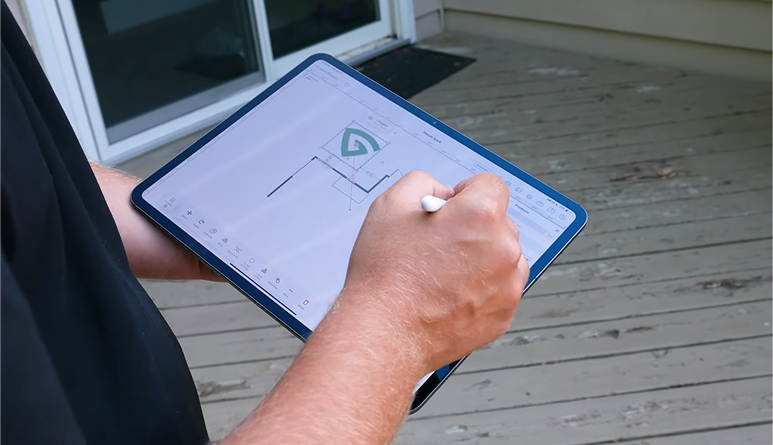
Within a few minutes, he pulls the best available aerial or satellite image of the property, calibrates it inside the software, and draws the fence layout over it. The finished drawing shows fence lines highlighted in bright green directly on the customer's own property — measurements clearly labeled, scope precisely defined.
In 80 to 85 percent of cases, Dan can deliver a firm estimate without visiting the property at all.
The Results
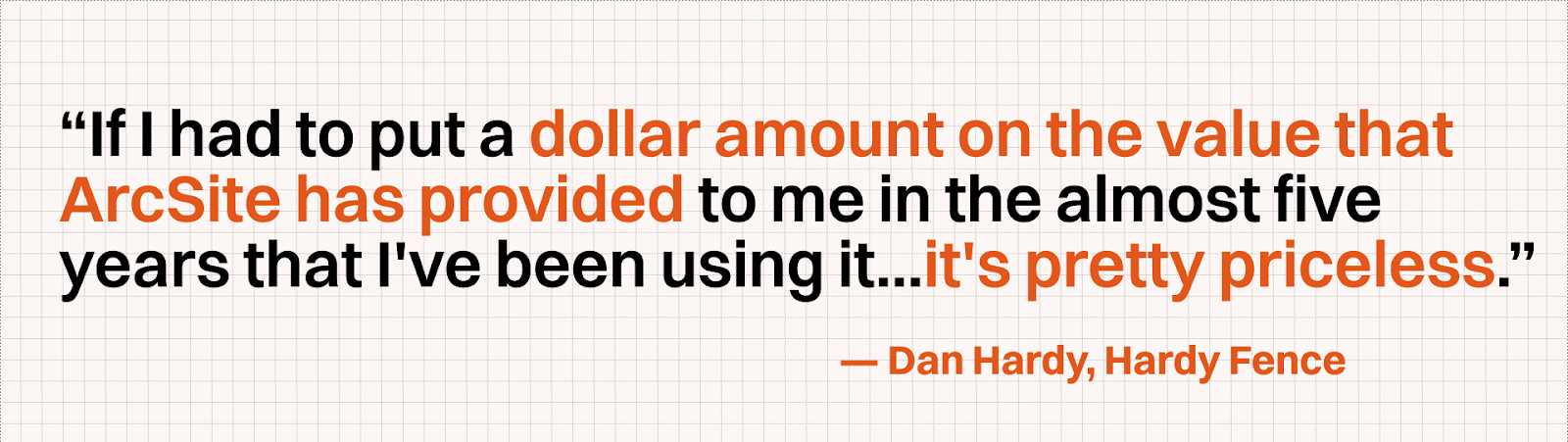
The impact on Hardy Fence has been hard to quantify — but unmistakable. "If I had to put a dollar amount on the value that ArcSite has provided to me in the almost five years that I've been using it, it's pretty priceless," Dan said.
The clearest signal is what happens at the bid table. In rural southeast Kansas, few competitors show up with a professional digital proposal, a scaled drawing overlaid on the customer's own property, and a detailed materials breakdown. Hardy Fence does. And it's not uncommon for them to win the job even when they're the most expensive bid.
The proposal also creates a layer of legal and operational protection. A customer who receives a drawing showing exactly where fence lines will run, how many feet are included, and what gates are specified has no grounds to claim they expected something different. Scope disputes that once simmered into callbacks or "he said/she said" conflicts simply don't happen.
Dan isn't chasing growth for its own sake. He tried the multi-crew path once and found it wasn't what he'd envisioned. "I found the most joy in where we're at right now," he said.
His 15-year-old son has started helping in the field and is taking an interest in the trade. Dan's hope for the next decade is less about scale and more about building something the next generation might want to carry forward.
Dan's advice is simple: don't compare yourself to others. "My joy is not to be a multi-million dollar company. I tried for a little bit, and it backfired, and it wasn't fun. Just stay in your lane and find joy in what you're doing."
See other stories