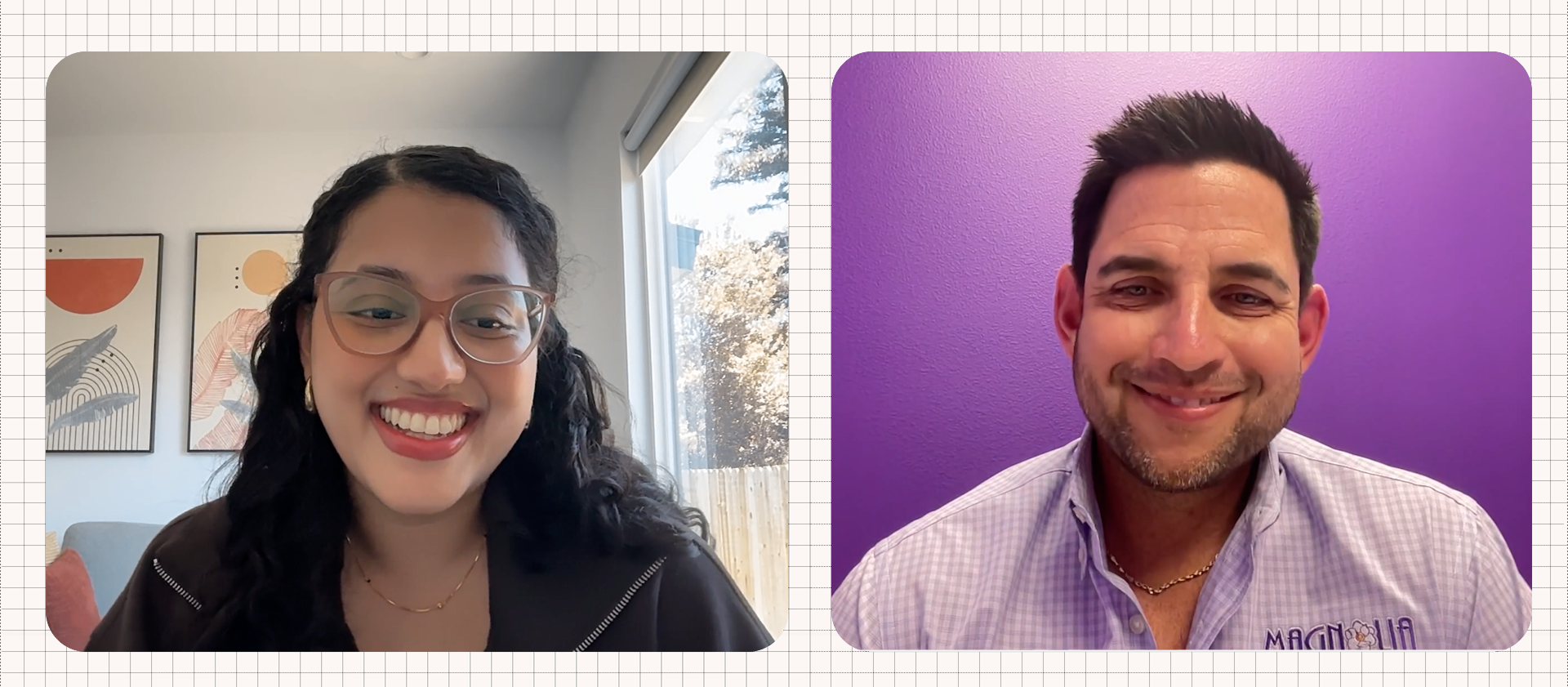

James Kempthorne, VP of Sales — Biltright Turf
[00:00]If I ask you what dollar value impact ArcSite has had on your business, what would you say? I would say at least a couple million. Like it's — we can't. We literally couldn't do what we do without it. All right. Well, James, thank you so much for joining me today. It's a pleasure to talk to you, but we'll start off nice and easy. Can you just introduce yourself with your name and what you do? Yeah. My name is James Kempthorne, and I'm the Vice President of Sales for Biltright Turf. Basically run the residential side of the business, which is all encompassing of residential design from artificial turf, hardscape. I mean, you name it — basically anything that doesn't touch the house except for pools, basically. Awesome. So tell me a little bit about Biltright. I saw that you guys got started in Temecula, but you're all over the country now. Yeah. So about 13 years ago, which is kind of a testament to who we are. I mean, there's not a lot of turf-specific companies — or specialized companies, I would rather say — that have been around that long. And we really started in many forms, but worked directly with a turf distribution and retail company. And there was a gap that we noticed in the industry. So as turf progressed —
[01:30]you know, originally it was this artificial turf that was used in sports fields. It was kind of interesting at the time. People didn't really understand it. You know, people were saying it was breaking people's knees and all these different things. But it's really progressed to where it's not only filling a need with clients based off water shortages, dry climates, super wet climates — it's become something that residential homeowners need, not just sports fields. So as the quality of turf continues to progress, technology continued to progress. And we had really, really good turf. There was just a major gap in the industry where there were a lot of people doing installation — general contractors, construction companies, pool companies, and landscapers — that didn't specialize in turf. So there wasn't a lot of warranty behind the work. And so our owner, Kyle, who is the brother-in-law of Dylan, who was actually running a turf distribution company, decided to fill that gap. He was really interested in the construction side of things. And so he actually went through and really wanted to make a specified turf installation company where we could guarantee no seams, we can guarantee a labor warranty,
[03:00]we can guarantee just a quality of service to our clients — where they could come to us if there was an issue with the product and we could go back and actually fix it. So he really sought to create this specialized industry, and that reputation and commitment to doing things the right way, not cutting corners, making sure that every single yard we were doing was as if it was our own, had developed a great reputation. And that reputation got us into some big box dealers, which continued to expand. And that expansion continued to get us a good reputation to where we started getting asked — even though we were in the Southern California market — to basically drop our business model into different markets across the country. And that's exactly what we did. We pride ourselves on being the "figure it out" crews, where if they say, hey, are you guys in Texas? Even though we're not, we decided to figure out this business model that was not only providing quality where we were, but that we could go in, develop our network of crews, make sure they're certified, develop our sales associates, and continue to expand so that we could not only serve the dealers, but serve the clientele in that specific market. And so that has turned into now nine states, because we're just entering our actual ninth state with Oregon and Washington. It's been a crazy ride. Went from originally serving
[04:30]19 stores to we're close to 300 across the country with some of those relationships. That's amazing growth and really a testament to your business model. I wondered if you could tell me a little bit about your role more specifically and your background. How did you get to be in the role that you're in now? Yeah, honestly, no construction background — big sales background. I worked for one of the largest companies in the world, actually. Had moved up very quickly in that role, ironically started at the same time as Biltright kind of in its inception, which is kind of funny. So I moved all the way up in a sales company — very high pressure sales, big corporation — to one of the top 1% of leadership in that company. I thought I was going to be there for a lifelong career and then just corporate America — you know, fell out of love with it. I think it's gone in a direction that I wasn't super stoked about. And full circle, the owner of Biltright is actually my brother-in-law. So our wives are sisters, and on a trip I mentioned that I was potentially looking elsewhere, and he mentioned that they were expanding and they didn't have a lot of that corporate background, because a lot of the expansion
[06:00]was with major corporations. And there's a very specific way that you have to navigate that. There's a different language they speak, there's different metrics they speak. There's a lot of different things that a small company doesn't necessarily speak the same way. And it's what I've been doing for the past 13 years. So I went through this whole process of getting in with them and analyzing their business model, what the goals were. Our values really came into alignment. I knew Kyle for a very long time. And it just worked out perfectly. My skill set in the corporate world matched what they were trying to do with expansion. And since I've come into the role and analyzed their tech stack — which ArcSite was part of — it's been awesome. We've now expanded into four additional states since I've been here. Almost doubled in size, which has been really cool. And where I was working before, we actually moved away from Oregon and Washington to Central Texas to have a little more access to all our locations. And then we actually just went into Oregon and Washington. So now we're going back to where I was. That's an amazing journey, and I completely understand what you mean. On the corporate side of things, I spent a lot of my career working for corporate clients on the media production side, and it is a different world. Nothing is said plainly. Everything has a certain — it's almost like a different language in terms of how you have to navigate those relationships.
[07:30]So it's a fully different ballgame. And we're now responsible for their metrics. So we have to hit certain metrics or we lose those relationships. And that's something that I was obviously very familiar with. I mean, even talking about conversion ratios, year over year growth, week over week, month over month — it's just basic stuff that you grow up learning in the corporate environment. It's just different. And it's not something that a lot of times small businesses even think about. It's always just about survival. Right. Like how do I make payroll? How do I make sales in order to make sure my profit margin is good? So that's obviously a component to what we're doing, but we also have a responsibility to serve major partners as well. Exactly. You mentioned the tech stack was one of the things you were working on initially. So tell me a little bit about what your processes looked like before you found ArcSite. Tech stack — first thing I decided to start analyzing. There are multiple onboarding program, tech stack obstacles, et cetera. And that was one of the first things that we looked at — going through the tech stack. Those are the tools basically of the salespeople and the operations team in order to function in the business. And if you don't have a tech stack nowadays, you're just behind. Yeah, I think that's just the component of small businesses —
[09:00]when they're trying to start building a tech stack, it can be very expensive because a lot of tech companies are going for those bigger entities. You know, Salesforce, etc. — just really expensive, almost to the point where a small business has to run very quickly. And so a lot of their tech stack was manually built — they had pieced together different things with APIs and different connections. Not duct-taped together, so to speak, but kind of that way. Really good tech, but definitely not everything flowed the way it necessarily needed to. And so one of the things I did was analyze every single piece of their technology — email system, document storage system, everything all the way up to what was the salesperson actually touching. And we changed pretty much every single thing, except for — there were probably 10 to 12 components to their tech stack. We changed pretty much all of them, but two. And one thing I remember talking to ArcSite — the cool thing I really liked about ArcSite is they were so open to feedback. Like, hey, this is what we need for our business, and their business development people were like, no problem. Let's see if we can make
[10:30]that happen for you guys. And they would make it happen. And ArcSite — I told them, and I stand by this — that this is the one product we're not getting rid of. This is — we cannot get rid of it. It separates us from every piece of our competition. It's extremely customizable. The integrations they continue to get. It basically allows you to start removing obstacles from a technological standpoint for our sales associates, which I really like — because if you're a salesperson, especially in home services out in the field, you're in the hot sun, you're dealing with clients, you can't be jumping from different technology to different technology. And so having a component where I can open a platform, all the information is in there. I can design, I can quote, I can run financing through. It allows my sales associates to not have to learn multiple different technologies, which simplifies their process. I mean, if anybody's in sales in general, that's the goal — how do you simplify the process to get from serving the client to closing the deal as quickly and seamlessly as possible? And ArcSite just did that. That was the one technology where I was like, this can't go anywhere. This is excellent technology. There are definitely some tweaks we want to make. But again, even the feedback — I can jump on with ArcSite
[12:00]and talk to them. In a small business construction type company, being able to do that with a technology company is unbelievable. You can't get that. I mean, our CRM systems and all those different things — trying to figure out who to talk to on those is literally crazy. Whereas with ArcSite, I'm like, hey, can we change these different components? They even delayed releasing some financing options based off our feedback on how we wanted the proposal to actually look. Which — who does that, right? It's pretty crazy. We've had a great relationship with them. We believe in them and they really do help, which is great. That's amazing to hear. And that's really interesting in terms of how technology companies service their clientele today, because there is almost this disconnect. You might be talking to a chatbot, get forwarded to an automated line. You have to try really hard to talk to an actual person. And I think at the end of the day, every business is a people business. Whether you are the most cutting edge AI technology company out there, at the end of the day you're serving people. So that's all really good to hear. And I think even just to jump on that — we're very pro technology. The way that we're able to grow, the way we're able to grow
[13:30]is through technology that is supposed to support us. It is supposed to help us. It is supposed to make us move faster, move easier. But I do think — in a world where everyone's trying to eliminate the human element — ArcSite has found a way to integrate it in the most effective way, which has been super helpful. I can sit in Texas and be able to look at a design while my sales associate is on site in Oregon, help them with the design and help them close the deal. Which is the way that technology should be, right? We're not eliminating the human element of that. And in home services, you can't. Staffing is a very important complexity. You have to have salespeople on site — it's not something that we can ever eliminate. And tech is supposed to help you with that. It's not supposed to replace it. To where — some of these big technology companies, CRM systems, etc. — getting someone on the phone just for a quick fix when we're trying to run as fast as possible. Because small companies wear so many different hats, we don't have time to go around in circles or submit a case to somebody. Exactly. I want to jump back and talk a little bit about the implementation process, because when you're a new company, one of the hardest things to do is implement a new software and the change management process in a way that doesn't ruffle a lot of feathers.
[15:00]So how did you guys go about that when you first started introducing ArcSite to the team? ArcSite was in full flux when I came into it. So I think the biggest difference is — most companies, from what I understand, and as I see in our competition, we see quotes, we see different drawings and stuff that other people do. And we're in an age where education is key. You can find out how big your yard is. You can get a quote within 20 seconds from ten different companies. That's just the nature of the beast. But thankfully, in a small company you can run quickly. We can sit someone down and teach them how to do something very quickly versus if you're in a major corporation. But you go from basically graph paper — which is what predominantly a lot of the industry uses — true graph paper — to an electronic graph paper. So it's not a crazy change. But the cool thing that I liked about ArcSite — and I think what our salespeople would tell you — is it allows them to not miss anything. Right? Whereas if I'm on graph paper, I have to remember what to
[16:30]add, right? I have to remember what to put into my drawing. Whereas in ArcSite it's electronic graph paper — yes — but I've got all my products, I've got all my processes, everything that I need to put in there, so when I go to my proposal I know, oh, I didn't miss anything. And you can put checks and balances in that system as well — we have checklists where salespeople can't move on until they've connected a couple of different things, which has been super valuable. But thankfully our team is very adaptable. And truthfully, going from graph paper to electronic graph paper, it just made their job easier. So the transition has been very easy. Training has been very easy because we can do it across the country. I can show them how to draw, whereas with paper I can't do that — I have to put a camera on it and actually show them what they're doing. So in general, the transition has been easy. I can speak to other technologies that we've transitioned to, but honestly it was a very easy, no-brainer conversion for us. Amazing. We love to hear that. For the turf company that might be listening to this, just a bit curious about the workflow — can you just paint me a picture of what your workflow today looks like inside of ArcSite, from drawing all the way to payments? Well, I don't want any turf company to use this because then they'll compete with us. But this is our differentiator. But I will say —
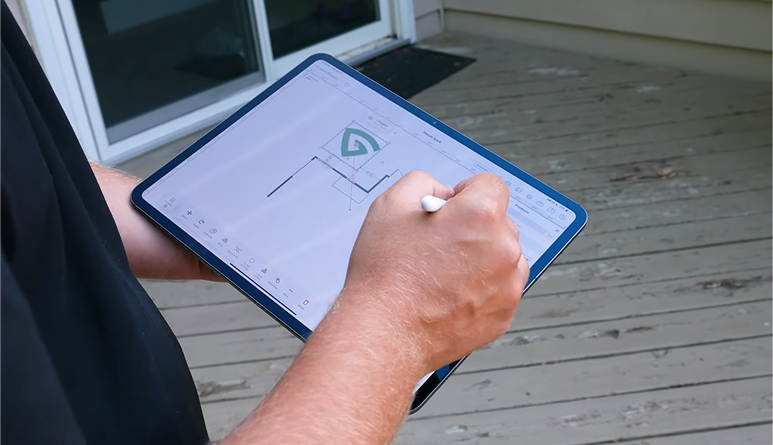
[18:00]the workflow is pretty simplistic. It's connected to our CRM system, where you can integrate that through API connections — we use Zapier. So all the information that goes into the lead instantly creates a project in ArcSite. So when our sales associate shows up on site, the project is already created. They go into the vision with the client, basically hear what the client is doing, and they can pop open a drawing and start taking notes. There's a lot that they can do just from that standpoint. But one of the really cool integrations that I like is that ArcSite has partnered also with Moasure. Moasure's an electronic measuring tool, which is super helpful for us. So as I'm measuring a specific yard — which is what our salespeople will do — you're seeing the lines come up in ArcSite on the graph paper. You can instantly make adjustments. So I'll simplify it: talk to the client about the vision, then we start measuring. We open up Moasure. They can manually draw, they can freehand draw, which is actually super helpful for us as well. And to a turf company listening — number one, a to-scale drawing is essential. And nowadays I can't tell you how many jobs we win just because we actually electronically measure
[19:30]and compare that to someone who gave them graph paper, and the square footage is off based off what they measured. So it's very, very good to show the client. It gives us a competitive advantage. And after they draw, they can make different adjustments in there as well. So then they'll start getting into creativity. Putting greens obviously are a very big thing in artificial turf, especially coming up. And after any major golf tournament — the Masters just happened and we got an influx of, hey, we want putting greens. So the freehand drawing tool is super helpful. But Moasure gets the to-scale perimeter, and then within the drawing we can put any product that we want. We can draw the different lines that we need. We can draw the putting greens. We can add the different products — from pavers to rock to decomposed granite to different things the clients would need, from edging to irrigation. But it's a full-scale drawing, and we teach our sales associates to use the layers as well. The layer system is super nice because not only can it organize the drawing — if you made a mistake, you can hide a layer and fix whatever you need to do — super helpful. And it also cleans up your proposal. So after they do all the measurements and put everything in the layers, we can hide specific layers. It still charges the client and puts it into the proposal. But for us as a turf company,
[21:00]we lay turf panels very similar to carpet. A lot of times for the client that doesn't resonate with them, it doesn't make sense — like, what are these squares you're laying on top of the actual drawing? And so we hide that so they get a really good picture. But we also make sure that we have all the product in there for the correct square footage we need to order, etc. After they get the whole rendering, they go into the client and actually present. There are payment options, which is really nice. So once we complete the drawing, we go through our checklist — did we cover every single thing? Another thing for turf companies — the checklist is huge for a real sales rep. Did they talk about window burn. Did they talk about edging. Did they talk about irrigation. We make sure they checked those different things as a checklist for us, but also as protection — where we actually know that we mentioned all these things to the client. There's an area for notes, which is really nice as well. And then we can convert that directly to a proposal while on site with the client. You can customize that proposal — put any disclaimers, any warranty information, anything that we want. And then we can also offer different types of financing, different payment plans. And especially with turf — offering someone a project where it's ten grand versus $100 a month is a very
[22:30]different conversation to have. And we win a lot of those jobs just because it's cash heavy for a lot of people, which is really nice. We can give them multiple different types of payment plans. Put that directly into the proposal, sign the proposal on site — or send it to them after the fact. We can constantly change our inventory levels as well. We can make sure that we're only allowing salespeople to sell products that we actually currently have in inventory in real time. And then after that, once it's signed — whether they apply for financing or we need credit card authorization — everything's linked into ArcSite, which is linked into our CRM systems where we're seeing everything real time. Which is super effective. Amazing. You've got the process buttoned up to a tee. On the note of how that's impacted your business — are there any business wins, whether on the P&L side or even just close rates increasing, that were notable after you got ArcSite implemented through the organization? Yeah, I think from a close rate perspective, the thing that we wanted to see is — we have a massive influx of leads, right. And whenever you have an influx of leads, traditionally close ratio goes down. Just a volume thing. The good thing that we have
[24:00]is that as we continue to add partnerships, continue to expand, we obviously are getting exponentially more leads. But our close ratio hasn't changed. So we're closing more deals due to the technology and we can just move faster. With a lot of those different leads coming in — how do you manage that with a smaller staff? You have to use technology. There's no way we could. My team on the operations side could be reviewing tons of drawings and making sure that we can take in all those orders in real time, get them scheduled in real time, and make sure that our clients are taken care of with the right product, right square footage, etc. We wouldn't be able to do it and keep the same close ratio and keep our quality in the quick expansion that we're having. So the biggest win is number one — expansion. We couldn't expand without ArcSite. 100%. Because I couldn't do my job from here and manage nine different states, different laws, different turf, different products, different vendors — all those different things that are in ArcSite in real time. There's no way we would be able to do that. It would be very manual. It would be very archaic. So I do 100% give a testament to ArcSite. We've kept a very high close ratio with an influx of leads and expansion due to the technology.
[25:30]Just because we can move faster than most companies can. That's amazing. On the customer side of things, have you had any anecdotes that are worth sharing — what sort of reactions do you get when you're able to show folks a drawing right there on site, show them the financing? What do those conversations look like? We get a lot, actually. It's kind of interesting. I mean, within the past two weeks, even just in Texas — my brother-in-law and I love to go on jobs as well. So we still go and design and do those different things. But as we were drawing a putting green, the guy was standing behind us. And it's interesting — like when we're starting to measure, we're very transparent. A lot of times people are like, oh, I'm gonna put some measuring tape out or whatever. But as we start to go through into the design, a lot of clients are extremely interested. And we hear all the time: we have never seen that — where you guys can give us a full, beautiful rendering, to scale on an electronic format, and propose within the same hour that you're on site. Right. Like, it's pretty amazing. I mean, I had a guy — he's a commercial builder, actually, commercially building a couple of properties. He emailed me the other day and said, so what's the process? How many days do you guys need to measure this and get us the actual proposal? I'm like — 45 minutes.
[27:00]Like, you know. And they're just amazed because we give them this truly professionally done rendering of their entire property. They can see where the turf is, where the rock's going to go. It looks beautiful. There's no real questions of what we're doing. And it lists out every single product, the cost of every single product — whatever they need. And it's not like we were typing that up and putting that in there — it was all just done based off the products we're adding. And it's done typically within 45 minutes to an hour and a half. That's amazing. I think that professionalism piece is so important and sometimes understated. Right. A lot of folks in the field service industry can think, oh, I know the technicality of it so well. I really know how to do my job in terms of the actual work that happens out in the field. But the other pieces of it — presenting professionally, having financing options, having that communication just not be disputable — going into a job and someone saying, oh, I thought you were going to do X but you thought you were going to do Y, and now you've got a dispute on your hands. All of that type of stuff is really tricky for businesses as they're growing. I think as this industry grows, as most industries out there grow — how you show up matters. What are your differentiators? And truthfully, what sets you apart from people who look like you? If you look at the turf industry in general, everybody's black and green
[28:30]and white, right? Like that's just how it is. How do you differentiate yourself? So if everybody's giving you a paper drawing, that doesn't separate you out. But are you truly representing a company that is professional? And these jobs aren't cheap. Home services, home development — that industry is extremely expensive. And for us, our whole mission and vision is to improve the quality of life for our customers through products and services and really give them a place where they can enjoy time with their family. So we take that very seriously. And if I'm giving someone a paper drawing — and again, we did that for years — we want to make sure it's done right. And we want to make sure that we're presenting it properly. If you're going to give us your money, you deserve the best. And you deserve a really good drawing. You deserve someone who went through and looked at your property and your vision and understood what you want and drew it out where we can actually encapsulate everything that you told us. And you can actually see what that looks like prior to us getting started versus just saying, hey, this is how much square footage you have and this is the price. Like — you're never going to win in business that way, right? And I think this has just made it very differentiated for us in our industry, to where
[30:00]no one's quoting the way that we're doing it. And it truthfully just makes it work. We're not cheapest on the block, but we don't have to be because of the way we present ourselves, which is nice. Exactly. I think a lot of consumers are willing to pay a little bit extra for that layer of trust, right? Because your house is the biggest thing that you've ever bought or ever will buy in your life. And when you're making adjustments to your home, your yard — that is where your family is living its life. That is the number one thing that everybody cares about most deeply. So you're going to probably spend a little bit extra to make sure that it's done right, done well. The folks coming to do the installation are folks that you want your family around. It's very important that that layer of trust is always there. Well. Now with technology, nothing's done in secret. So what you do while you think no one's looking is very important. And I can't tell you how many times people have videoed us saying, your team was incredible — they didn't even know that. We weren't even on the property and they took care of everything very well. They designed very well. I think that's huge. And we were being videoed the whole time and had no idea. Right. And I think that's always really, really valuable. And your brand matters — it can be shattered.
[31:30]And we see it all the time — big businesses just get shattered by not doing things the right way and not taking their clients' visions seriously. And it also stems expansion — our reputation is how we expanded. And we represent the contractors that we work with. Like if you start contracting with GCs or pool contractors or any other landscaper — are you representing them well too? If they're referring you — how are you showing up for them? Or if you're working with big box dealers, you're representing them as well. And so if you want to continue that relationship and differentiate yourself even in that world, you've got to show up and start participating in a different way. Exactly. You mentioned the big box — I'm saying realtors, that's not what it is. Retailers! There we go. The big box retailers. Can you tell me a little bit about how those partnerships came about, just in terms of how your level of professionalism and polish was able to build those relationships? Yeah, we got introduced by one of our suppliers. Our supplier was really happy with a lot of the work that we've been doing, and I think one of the biggest things is our labor warranty. To my knowledge, I don't think anybody shares the same labor warranty — or at least nobody we compete with shares our labor warranty — which is really interesting in the construction industry. No one's going to
[33:00]give a five year labor warranty, which — a lot can happen in five years, right? But also, one of the things that differentiates us in the turf industry in general is the no seam guarantee. And in construction, you don't know what you don't know. Right. We get on site, we start digging, and we just don't know what we don't know. But as we start perfecting our craft — the reason people go with us, and this is something that happens because things are going to go wrong on every job — it's just how it is. And we know that. And when people call and they do have a complaint — one thing that's interesting about our company is we usually turn those into such really awesome stories and reviews, because we tell them: this is why you went with us. Because in 30 days, if you went with someone random that didn't show up this way, or they've only been in business for two years, they're probably not going to answer the phone. We'll answer the phone to correct what we did — obviously as it's deemed within our warranty, within a five year period. We'll come back and we'll do it for you for free. And a lot of times we'll do it better than we did it the first time, just because we understand what we actually ran into. So that reputation and the no seam guarantee is huge in our industry. I can't tell you how many times — there's millions to be made in replacing curb jobs.
[34:30]And we do it — a lot of times those are jobs we competed for and someone undercut us in a big way. You know, call it a $30,000 job. But they decided to go with a cheaper contractor that wasn't a turf-specific contractor, didn't have our guarantees, had no warranties. That turned into a $50,000 job, because for us to come back and redo that job costs the same — or more — depending on labor costs. So I think that's been huge. Number one, the labor warranty and our commitment to serving our clients and honoring that. And number two, the no seam guarantee is a big one. Our craftsmanship crews have to go through a sort of certification process. And if they don't pass the no seam guarantee, they can't work with us. Which is hard for them. There are a lot of people that want to work with us, a lot of people that apply to work with us as crews. And if we say you have to guarantee no seams and show us proof of it, a lot of them can't sign that — because you can't guarantee that on every job. And we're like — we do. So full circle, our supplier got us introduced into just a small amount of stores, and they started picking up and they're like, hey, we want to try a new turf installer. We've heard really good things about you — here's a shot. Gave us
[36:00]one section, one management area. And when you get that shot, you got to take it. And how you show up — like a lot of the stuff we talked about — how you show up matters. How you differentiate yourself matters. I mean, a lot of our work when we first got into these areas was doing warranty work for other companies — going through and fixing projects, which was great. But in all the stores that we have, they stack rank us amongst our peers. And one of the things that we're most proud of is the complaints we don't get. We don't get complained on. And a lot of that is because we handle that, and the clients come directly to us. They're not having to go to the big box retailers. They're going directly to us and we'll fix it. No problem. Exactly. I think that speaks volumes about the work ethic and just morals that you all have as a company. And it's sad to say a lot of companies don't live by those golden rules. You have a lot of shady businesses that will undercut, give you a cheap price, get it done, but not to the quality that you're expecting. And also — things go wrong. There are lots of times when there's miscommunications or just something unexpected that pops up. But it's really how you handle those problems that tells a lot about your character and the way the business is run. It's not the fact that no problems ever happen — you're going to have to deal with problems now and again. And it's just important
[37:30]to handle that with grace and poise. 100% — we tell our clients all the time, don't judge us by the mistake. Judge us on how we fix it. Right. Because and again, it goes back to you — that's why you went with us. Because if this mistake had happened with any other company out there, I can't guarantee you they would come back and handle it the same way. And I think that's the biggest thing. And that's also, unfortunately, hard to communicate when you're competing with people constantly undercutting you on price. But we always say, hey, no problem. And we handle that with grace as well. But keep our card — because unfortunately sometimes we have to go fix their work. That comes back around in the end. You answered this already a little bit, but I'll still ask — if I had to ask you what dollar value impact ArcSite has had on your business, what would you say? Oh, that's a good question. I would say at least a couple million. Like it's — we literally couldn't do what we do without it. Like literally — when we review pretty much every drawing, I couldn't do that physically without ArcSite. I mean, I could not review — think about the process of having the screenshot and figuring out what's going on. If someone needed help with the drawing,
[39:00]I literally can't help them without having ArcSite in front of me and the access to all projects, adjust proposals. I mean, even the fact that our salespeople are on — this is busy season, right? We're in May. This is go time for everybody in our industry. And they're on 10, 15 appointments a week. And how would they be able to respond and react if they have all their documentation at their disposal, where I'm able to go in, adjust the drawing based off what a client needs if they call in, adjust the proposal instantly? So it's hard to put an exact value on it, but the only way I think a turf company could survive in expansion mode is to have this service. 100%. We would still be in Southern California, probably alone, without having the technology to be able to do this. And that was really the decision-making behind it — we're going to expand and create a replicable business model in multiple states. You have to have technology to do that. And based off the original — I know what Southern California does — it's easily in the millions. There's no way that we would be able to get all the revenue from the additional locations without ArcSite for sure. I'm going to ask a nosy question. You don't have to answer if you don't want to, but in terms of revenue or like average
[40:30]contract value, what sort of growth have you seen in those areas as you've expanded into new markets? Yeah, it's tough to say because as the industry continues to grow, you do have to get a little bit more competitive. But I would say it's probably gone up about 20% based off original value and what we were estimating. Just — we're able to offer a more professional look. And ArcSite isn't free, so you do pay for it, and that has to be factored into what your ticket price is. And so it's definitely gone up for sure. I can't speak to exact, but I know our previous ticket price, and it's almost 20% on the money where our average is. Amazing. Also in terms of time saved — you've got crews all over the country, doing multiple visits a day. Have you seen any changes in the number of visits folks are able to do because they're able to just go through it quicker with ArcSite? Yeah. I don't know about necessarily number of visits — I think that's pretty consistent. We try and keep them to roughly ten a week. In busy season it can get crazy for sure, but we also don't want burnout for our sales associates. So roughly ten a week is our standard. But I would say time on appointment is huge because —
[42:00]it's not just appointments. We're also focused on dealer relationships, contractor relationships. So in addition to going on appointments, we have to go serve our dealers, show face, do events, etc. So time on appointment is a lot quicker. Especially with onboarding, right — new people. You do your best to train them and prep them for everything, but they're inevitably going to struggle at first. There are so many complexities to design and construction. You have to think about drainage, slope, what irrigation they currently have, if they're going to need a retaining wall, design elements — all these different things. But I can literally pull it up, see what they're seeing based off their videos and camera — we also work with CompanyCam — see how that relates to the design and instantly say, hey, just need to alter this. Whereas if we didn't have that, our appointment time would probably go from three hours to now — average is probably 45 minutes to an hour, and they can go quicker. So I think if we were pushing more appointments, that count would definitely go up. But I would say
[43:30]appointment time is a lot quicker. And truthfully, from a leadership perspective, it's quicker for us too — we're not having to wait until the sales associates get home that night to go through anything that they need to change. They're not having to go back out. We can make adjustments because of that technology. We have the true rendering, the to-scale drawing in front of us where we can make all those different things. Ease for the client — we're not saying, hey, we need to come back out. Ease for us as a leadership team to just review and make corrections on the spot. And also ease for the client because they're going to get a proposal in real time. They don't have to wait. And then ease for the salesperson for sure. Like it's definitely quicker. And we know — the moment you leave, your opportunity to close drops — I think it's like 75%. So if you can't propose on site, handle objections, explain your design in person — your close ratio is going to drop in general. So appointment time is what allows us to do everything else that we need to do. That's amazing. And quality of life is really important too, right? Because if you're out in the field all day going to all these different visits — ten visits or more in busy season — and then you're going back to an office or your home office to quote everything you've done that day, you're really just working a crazy long day, and that's not a great quality of life for anybody involved.
[45:00]Well, I mean, it allows us to not even have to have a true office in the traditional sense. We do have a headquarters that we house a lot of things out of for operational stuff. But I'm working out of my house. The owners are working out of their houses. Because we don't need sales associates to come back and look at everything — I can look at them as they're doing them in real time. That's amazing. And then lastly, as we wrap up here — if you had to give one piece of advice for a company that's looking at where you guys are in the growth you've had, what would you give them? Simplify, right. I think we've hit on it a few times, but how you show up matters in this world. And differentiating yourself in the marketplace — in any marketplace that you're in, whether it's HVAC, fencing, roofing — you have to differentiate yourself. If you want true growth, long-term growth, if you're in this to actually serve your clients, you owe it to them to be professional. So for me, how you show up matters. And this is something that really allows you to show up in a different way. So for me, it's a no-brainer. Like I said, number one thing I walked away from in terms of reviewing 12 components of a tech stack is — this is the one
[46:30]we're not getting rid of. Like, this is the one that will allow us to continue to grow. It will allow us to expand, allow us to essentially be — which most business owners want to know — how do I be in ten different places at once? This allows me to do that. Beautiful. Amazing. Well, James, thank you so much. You are an absolute wealth of knowledge and I'm so excited that ArcSite has been a part of your business growth journey. I'm excited to share this with our audience too, because I know there's so much information that we've just gotten out of this hour-ish conversation. But lastly, is there anything else that you'd like to talk about that we didn't get to touch on — anywhere people can find you, any shout outs you want to make? Yeah, I mean, we are in nine states. We are the premier turf installer across the country at this point. We have the no seam guarantee, five year labor warranty, 25 year product warranty. You can find us on our website. You can find us in a lot of your big box retailers all over the place. But we're still a human element — if you call us, you're definitely going to get someone answering the phone. We truly care. I mean, the last thing I'll share is just truly our mission and values — to improve the quality of life for our customers through our products and services, and develop our teams both professionally and personally to their greatest potential. Our drive is people — both on the client side and internally — and we treat people right every single day. So we're in it to win it. We're in it to help everybody else, and we're always going to do it the right way.
[48:00]Which is right in our name. We're Biltright for a reason.
About Biltright Turf
Industry: Artificial Turf Installation
ArcSite customer since: 2021
Headcount: 16
Locations: Nine states: California, Oregon, Washington, Idaho, Utah, Louisiana, Tennessee, North Carolina
The Impact
- $2M+ in revenue directly attributed to ArcSite-enabled expansion
- +~20% increase in average ticket value since implementing ArcSite
- Appointment time reduced from ~3 hours to 45 minutes–1.5 hours
- Close rate maintained despite exponential lead volume growth across new markets
How the Business Started
James Kempthorne wasn't looking for a turf job. He was in the top 1% of leadership at one of the world's largest companies when he started falling out of love with corporate America. His brother-in-law, Kyle, was running Biltright Turf out of Southern California and expanding fast. He needed someone who knew how to speak the language of big-box retailers, hit metrics under a microscope, and build systems that could scale across multiple locations and regions. James made the jump. And when he got there, the first thing he did was audit the tech stack.
"There were probably ten to twelve components," he says. "We changed pretty much all of them. But two." ArcSite was one of the two they kept.
The Challenge
Biltright launched thirteen years ago to fill a gap they had watched from their family's distribution business: the product had improved dramatically, but the installation side hadn't kept up. General contractors, landscapers, pool companies — plenty of people were laying turf. Not many were specializing in it. Fewer still were backing their work with a warranty.
Biltright’s bet was on specialization: no seams and a stellar labor warranty. Crews certified to a specific standard. Every yard was treated like it was their own. That reputation got them into big-box retailers, and those retailers got them into new markets. And from 19 stores in SoCal,
Biltright now operates across nine states — pushing toward 300 big-box home service retailers nationally. It's a replicable model, but only if the tools can scale.
The Solution
A Biltright sales associate arrives at a residential appointment with a full scope of work ahead of them: measure the yard, understand the vision, account for drainage, slope, and irrigation, lay out the turf panels, price the job, offer financing, and then possibly get a signature.
Before ArcSite was embedded in the workflow, that process had friction everywhere — measurements done by hand, drawings on graph paper.
"The moment you leave, your opportunity to close drops like 75%," James says. "If you can't propose on site, handle objections, explain your design in person — your close ratio is going to drop in general."
ArcSite collapsed the timeline. Sales associates now walk the property with a Moasure device, and the measurements appear live in ArcSite as the drawing takes shape. Products, layers, checklist items — everything the rep needs is in the same platform.
"I can design, I can quote, I can run financing through. It allows my sales associates to not have to learn multiple different technologies, which simplifies their process."
The Results
A commercial builder emailed James not long ago — a man developing several properties, who'd been dealing with contractors his whole career. He asked how many days Biltright would need to measure and turn around a proposal. James told him 45 minutes.
"They're amazed," James says. "Because we give them this truly professionally done rendering of their entire property. They can see where the turf is, where the rock's going to go. It looks beautiful. And there's no real question of what we're doing."
In a market where every turf company shows up with graph paper — or a rough sketch from a competitor's truck — the electronic to-scale drawing lands differently. It tells the homeowner something about who they're dealing with before a word is said about price.
"These jobs aren't cheap," James says. "If you're going to give us your money, you deserve the best. You deserve someone who went through and looked at your property and your vision and drew it out where we can actually encapsulate everything you told us."
The Business Case
Biltright's lead volume has grown exponentially as the retail partnerships have expanded. More leads at the same close ratio means more deals closed. But maintaining that ratio under volume pressure isn't easy. It requires the back office to move as fast as the field.
James sits in Texas and can review drawings from sales associates in Oregon in real time. If something needs adjusting, he can do so on his end without detracting the sales associate from their day of calls.
"We couldn't expand without ArcSite," he says. "I couldn't do my job from here and manage nine different states, different laws, different products, different vendors — all in ArcSite in real time. There's no way we would be able to do that."
The average ticket price is up roughly 20% from where it was. Close rates have held steady despite the volume increase.
He says that ArcSite has impacted their bottom line by "at least a couple million. We literally couldn't do what we do without it."
See other stories