[0:00]
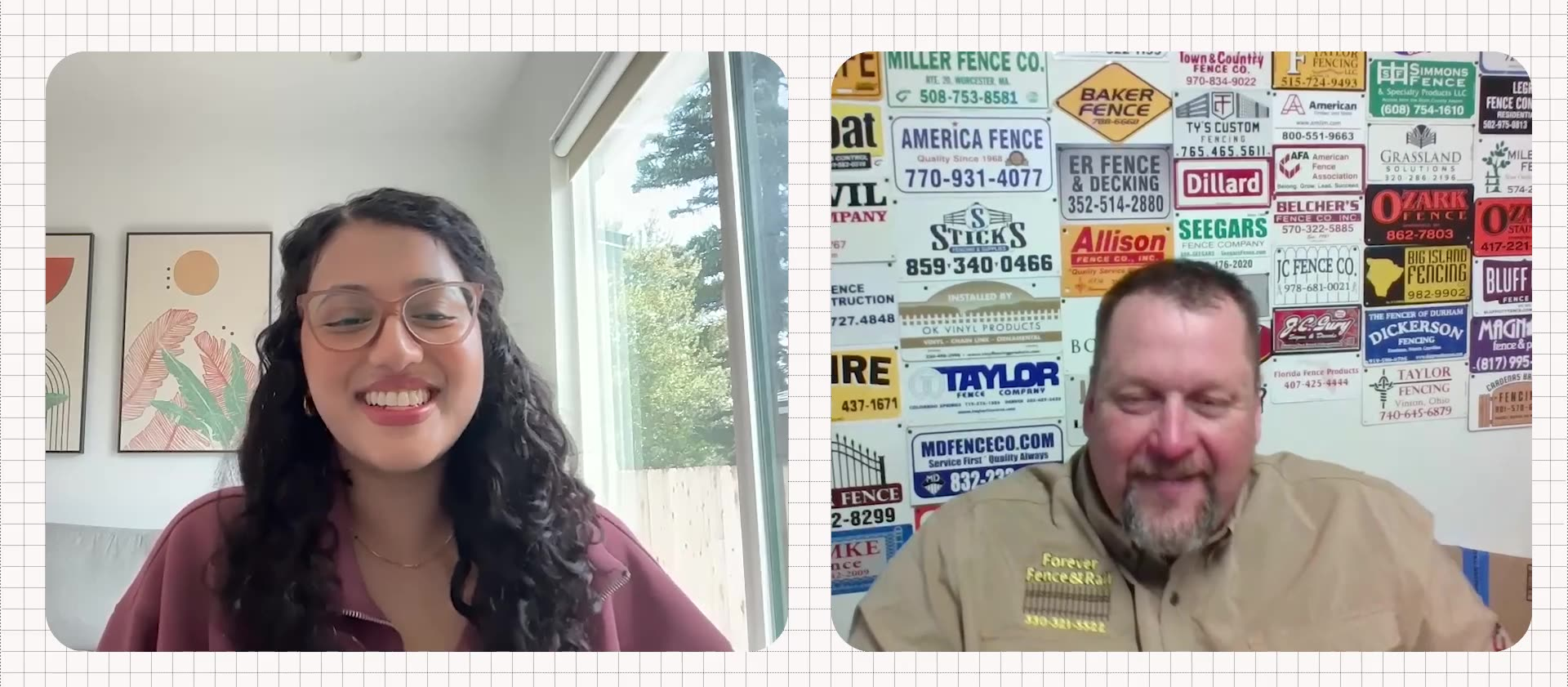
You know, if you look at the American dream, if you want to call it that, everyone wants to get out from the man. If they if you want to say that and they want to start their own business. Well they see well. Oh, he's making X amount of dollars off of this invoice. Well they're not understanding that there's insurance. There's repair and maintenance on the trucks. There's overhead. You know, there's all these extra sort of hidden costs that they don't see. But you know, you have on there. I mean, anyone that has a brick and mortar or even just works out of their truck, they should know what they have to bring in that month to just cover the bills. Well Ken, thank you so much for joining me today. We'll start off nice and easy. Can you just introduce yourself with your name and your title? So my name is Ken Throckmorton. I am the owner of Forever. Fence and Rail here in Wadsworth, Ohio. Small suburb south of Cleveland. West of Akron. I am also the 2026 AFA president. Perfect. So tell me a little bit about your background. How did you get into the fence industry? Well, I live in a small town where you sneeze within three minutes, someone across town says ‘Gazuntite.’ I used to be a chef in my prior life. And so, you know, I had my first son and came home and he cried like I was the biggest stranger in the world. And I had to make a decision. You know, being a chef, you're working 90 plus hours a week, weekends, holidays
[1:30]
really no life. And so I had to make decisions. Do I want a family life or do I want to work life? And so I made that decision. And a small fence company in town heard about it and asked me to be a salesman. I didn't I said, I don't know anything about fencing and and here we are later. That's amazing. So talk to me about those early days, like once you first made obviously going from being a chef to being in the fence business is a big shift. You, you know, are basically starting from scratch in terms of knowledge. So what were those early days like for you as you kind of got your feet under you? Well, I mean, I've always been a little bit hands on being able to, you know, handyman type thing, build things and do stuff like that. Never great. But, you know, I could do stuff. And so, you know, when I got hired on, they said, hey, go to this job, measure it, prepare a quote. And it was for ornamental aluminum fence job. And when I came back, you know, it was and this is 2006, I'm like, this is $10,000. You know, I'm freaking out that, like, I did something wrong. And, you know, they looked at it. Yep. Send it off. Well, I found out later that the job was pretty much sold. They just needed the fine details. But still it flipped me out. I'm used to, you know, it. Back then, it was expensive to have a $40 steak, you know? And so I'm looking at a $10,000 fence and I'm like, oh, what are people thinking?
[3:00]
But now it's, you know, second nature. Yeah, absolutely. That must be such like a mind trip, frankly, to be like, oh, people are pressed about, you know, a dinner out and $40 steak is what they consider splurge or like a luxury. And then over here there's companies dropping tens of thousands of dollars on sales. And I've really just like kind of shows the the difference in budget, but also like the difference in opportunity for yourself as a entrepreneur then. Right. And I was working for another fence company, but still it was it was eye opening. Absolutely. So tell me about how you started your own company. How did you make the shift there? So the other company, obviously, you know, when 2007, 2008, the the the fall happened, you know, one day they closed their company and opened it as a different name type of thing. And there was some handshake agreements, not really handshake agreements that after so many years it would be mine. When that time came, it was not what was promised. They wanted me to cover some of the debt and do this. And, you know, they they sort of screwed up because they hired me as a 1099. We didn't have a contract or anything. So, you know, after doing some investigation, talking with people, talking to a couple of suppliers, I started my own. And, you know, that was 2014, in August. And, you know, given the hand over the phone and a couple of things back to them, like you're making a big,
[4:30]
you know, you're not making the right decision, you're going to fail and blah, blah, blah. And I wanted to send a thank you card on my 10th anniversary of my business, but my wife wouldn't let me to to say, hey, thanks for the words of encouragement. So because in the back of your head you're like, no, I'm going to succeed because they said I wasn't going to succeed, you know? Meanwhile, they closed their doors 2 or 3 months after I left. You know, they had a couple of jobs that I had sold, and they finished them up, and then they were done. Gotcha. That's so interesting, too. I think when you get told like, oh, you're not going to succeed or you have somebody, be a naysayer, against you, it's just like, I'm going to show you I have that much more like fuel to my fire now, to show you up. And not only because I want to do it, but because I kind of want to prove you wrong. Yeah. And it was, you know, I've since seen this, and I've sent since given this to friends is, you know, when they get ready to start their own, you know, journey, you know, I reference, you know, Steve Harvey does the world famous jump video where, you know, yeah, you're going to fall on the way down. But if you succeed, you know, you're going to catch that shoot and come back up. And that was not out when I did my thing. But you know, I look into that a lot and say, yep, that's what you got to do. Absolutely. So give me the lay of the land of Forever Fence and Rail. Like how many folks do you employ? What areas do you service? Yeah, just tell me about it. So we mainly try to stick in Medina County as our local county here. You know, we do go around, you know, the greater Cleveland area, Akron with our installs and you know,
[6:02]
we’ll, install ornamental vinyl, wood chain link, not too much of the wooden chain link. We really are the the residential vinyl and ornamental. We do the wood and the chain link. This time of year, right now, we've been so wet that, you know, it's hard to get into people's backyards. But we have the two friends crews and a carpenter crew. We do a lot of railing. We actually have a lot of fence companies that recommend up to us railing. So, we just take care of that. And then, we also have a wholesale side where we're a big wholesaler for Homeland vinyl products, and then some of the other products we carry, we we wholesale also to some of the smaller fence companies. Awesome. Also, I know that this year you are the president of the AFA. So tell me a little bit about that. How long have you been a member of the AFA and how did you get to be president for this year? So when I first started my business in 2004, August of 2014, I had heard about FenceTech and one of my mentors, Michael Kalinich, who is a past president of AFA, really said that I should get involved and join and go. And so 2015, I went to my very first fence tech in Orlando. And, you know, there's a story that, you know, those in the industry. No. Tony Thornton came up to me. I was in the back corner a little, you know, little kid type of thing, like, you know, he's like, I'm Tony Thornton, you know,
[7:32]
executive director, AFA. And, you know, he has his little southern twang to him, but, you know, and it was I was like, wow. You know, I'm just nobody from Ohio. And he came up and said something to me. So I've used that moving forward. If I see someone in the corner, I know what that feeling is. I try to shake their hand. But joined that, went to some schooling in ‘16 AFA University and then, it was ‘17 the the Michael Kalinich and Tom Poland, another past president of our chapter, not AFA but our chapter and suggested I be the chapter president. So from ‘17 to ’19 I was a chapter president or ‘20 I was the chapter president. And then those chapter presidents voted me in as the chair of the chapter presidents. And then I moved my way up through the board being a treasurer and board member. And, you know, so and then here we are today. That's awesome. So give me the lay of the land of what your duties look like as President of the AFA. Like what is in your remit, what are you looking after and what can people expect under your leadership as well? So we have a great board with the AFA and we have great chapter leadership. And you know, our chapters are a community, or committee that works very well and brings us as a local hands on type of things. And then we we as a board, we have a strategic plan put in place where we are,
[9:04]
you know, what's best for the members and some of the vendors or suppliers that help us out. And so we put all that together. Obviously I had some duties at FenceTech this year. We run a monthly board meeting every month with the board. We have an executive committee meeting, which is our president elect, myself, as the president or past president or treasurer, our secretary. We meet basically two weeks after our board meeting. And so we're we're, you know, constantly having a meeting. The executive director and I meet every week. We have a set time on Thursday where we discuss things. And that's not the only time. And we do talk throughout the week. But, you know, if it's one of those things like the world's not on fire, it can wait. I'll put it on my list for Thursday type of thing. But things pop up. Members call. You know, my phone is constantly ringing now, you know, some of the past presidents recently have been vendors or suppliers or or bigger fence companies that sometimes people are afraid to talk to. I've always been the, you know, I'm the I'm the fencer out there. You know, I'm small guy just like you. And so a lot of people feel that they can reach out and ask me questions. And so sometimes it's some simple answer. Sometimes it makes me think, but, you know, we have things in place and, you know, you know, we just changed our,
[10:36]
our mission statement to ‘The AFA unites the industry to build community, develop leaders, and inspire growth.’ So there's a couple different groups out there, you know, fence associations, groups and stuff like that. And we're here to unite everyone. So we we do like doing that. And it doesn't matter. You know, if you're a small guy, big guy, medium guy, you know, and I say guy in general terms, but, you're working here to help, you know, we have programs throughout the United States. We have our online learning system with the American Fence Association. So we have different things out there, certifications that some states require, you have to have for gate safety and stuff like that. We're really working with the Ready, Set, Save group who used to be the Hummingbird Alliance. Unfortunately, they lost their son Alex to a gate industry gate accident. And so we're trying to help get the standards changed for not only motorized gates, but manual gates. And we've made some great strides. It was just introduced in Congress as a a non oh, what's the word you're going to. But a common sense. That's that's what it is a common sense potential law. You know, there could be some, some simple things that cost almost nothing to do less than a half hour labor time. It could make these gates fail proof if the hinge or something fails. So,
[12:08]
you know, we knew about Alex's accident. And then a year later, there was a young girl in Arizona that had the same thing. And so everyone heard about that. And it's like, well, you know, because as a fencer, some of us have kids. And so you think about that. Is that my kid? Or, you know, if you installed that gate, you don't want that guilty conscience either. So we're really pushing that safety. And, you know, it really sort of burns me a little bit when some people like, we don't need codes or, or things put in place. Well, we also need to have properly installed gates and other items put in place. So, you know, it's one of those that, you know, I think it's a good thing that we're doing right now. Yeah, definitely. You know, codes and standards for industries are basically for safety, right. Like 99% of people out there very well intentioned and have a really good quality of labor and a really good work ethic. But of course, there's that 1% of people that is going to be a little bit slapdash, but I think that protects everybody, right? So that nobody's kid or nobody's family member is going to be in one of these extremely unfortunate situations. That's really cool. I'm excited to see where that legislation goes. And hopefully it does become a law. That'd be that'd be amazing. Yeah. And you know, when you get in this day and age, when you get Congress people that are on this side of the aisle on this side of the aisle, and they both say this is common sense, let's move forward with it. That's a good feeling, you know, because at the end of the day, they have grandkids, they have kids. They know what it's like.
[13:38]
Exactly. We're all a little bit more alike than I think we think we are. And when you see people agree like that, it gives you a little bit more faith in the world. So that's awesome to see. I want to shift gears now a little bit and just talk about your career in the fence industry over the last 20 years. Obviously, you've been in this business a long time. So what are some of the biggest changes that you've seen over the course of your career? Well, I mean, I think I think colors, you know, I'll start with that. You know, in Chain Link, you really had black and brown, a little bit of green. Now there's so many different vibrant colors you can get. I mean sure it's a setup fee and all that with some of your, your chain link manufacturers, but you can get some, some pretty awesome looking chain link colors. Some of the designs, the Chain Link Manufacturer Association holds a less groovy award every year, and it's really for an architect. And then the installer and some of these designs that you see that aren't just a straight six foot with three, three strands of barbed wire, it's it's curved. It's this segment this way and this segment that way. So some of the designs are cool. And then you get into the wood and you see horizontal and you see, you know, you can see some real great carpentry work when it comes to these wood fence. And then just alone in vinyl, you know, I personally stock nine different colors of vinyl. When I first started, it was white and tan. And you were lucky if you had Adobe. And then the powder coating, you know, I personally
[15:08]
use Digger Specialties and they have 12 standard colors of powder coating. So it used to be black and bronze and that was it when it came to ornamental aluminum. So to have 12 different choices out there and the customers, you know, we all joke about it that, oh, the housewife has looked at Pinterest and they want this. Some of those, some of those are still unattainable. I don't, you know, AI must’ve created them, but some of them are attainable. And, you know, to be able to help a homeowner that has that vision, bring it to life is always something good. And, you know, bringing that to 20 years is you have the AI, you have the social media, you know. Oh, I saw this fence in Wisconsin. I want this fence here in Ohio. Okay. Let's see what we can do. Definitely the seasonality or like climate aspect is really important as well. Like are there different trends that you noticed either from calls that you get from other AFA members of I'm releasing this trending in this part of the country or anything like that. Yeah, yeah. And, you know, it's it's fun. It's good to hear because sometimes you'll have, you know, there's a buddy of mine that posts on, you know, I'm on a couple fence Snapchat groups, believe it or not. But the guy's kicking the dirt and he's like, we're dry, dry, dry. And I'm like, I want to go post a video of me walking through a three foot deep mud puddle because we're nothing but wet. So it's amazing to see the different parts of the country, the different techniques. You know,
[16:38]
we go to these, these different competitions or these different forums or these, you know, different rivalry weeks or whatever. And you go and you see these people and you know, there's a competition, but after that competition, you walk the line and you look, well, why did you do that? And they tell you and you know, that's always fun to go around the United States and see. Absolutely. The fence industry as a whole also just has so many like niches that you can go into. You can be a completely commercial shop, you can be a residential shop, you can focus on ag fencing, you can focus on industrial fencing. Is there one of those areas that you are seeing a lot of growth in right now? And also, do you think one of those markets is underserved and potentially a place where folks could focus? I think I think you're seeing, you know, with, with fuel, the price it is right now, you're seeing where people, you know, one aspect may slow down where someone will grab another. And I think that's part of the, you know, the one nice thing about AFA is we do have these different trainings throughout the United States. We have a big AFA University in November, but when we do the fence installation school, we go through five all five disciplines the wood, the chain link, the ornamental, which is steel and aluminum, wood chain like vinyl and then ag. And so a lot of times those, those people that have never touched ag before, like, well, that's not that bad. I didn't realize I could actually do that. And more and more people are, you know, coming out to the suburbs and building a ranch,
[18:09]
you know, they think it's a ranch. It's a two acre parcel. But, you know, some of the true ag guys don't want to mess with a small fence like that. They want to do miles of fence. And so, you know, for everyone to pick that up and help out, I think that's something that's starting to happen because everyone's going to get ponies and they, you know, they do all these things. You know, I, I laugh because I've, I've recently been watching Matt Matthews and his farm tours on YouTube. And he has chickens. He has horses, you know, and I'm there watching the video. I'm like, man, look at that roll on that fence. Whoever did that, it was great. And so, you know, I look at that, but it is it's people are starting to do that more in ag. The other thing that we're starting to see is coming out of the city. We're starting to see more and more multi-family homes. And so technically that can be commercial because you're having the builder help you do the divider fences and the perimeter fences. But, you know, it's it's also residential. So, you know, you are starting to see that's one of the bigger building products out there anymore is a multi-family home. Communities are, you know, these 2 or 3 apartment buildings, if you want to call it that, or put in swimming pools in. So you got to have the proper fence for that. So yeah, it's just, you know, you've got to be careful because if you're residential, you're used to the payment right after the job, but you switch over these commercial jobs and sometimes you are waiting 90 days for that payment. So you got to have that mindset, know what you're going into. Exactly.
[19:39]
It's such a different ballgame sometimes even just jumping from residential to commercial and just the the payment terms are a massive one, because if you don't have the cash flow to be able to sustain that gap till you get paid, that definitely is like a big thorn in your side as a business owner, right? A lot of a lot of times they're not going to give you a down payment. So you're having to get the material, hopefully be able to pay for the terms because you're not you know, typically your supplier is not giving you the terms that you're getting from the manufacturer. Yes. So exactly. And you mentioned fuel prices, but also it's lumber prices. It's, you know, steel and aluminum prices. A lot of these things are fluctuating and have been fluctuating for the last 12 to 18 months. So you might sell a job at a certain price thinking your materials are going to be this much. And then if you do not buy your materials right then and there and you buy them a couple weeks later, you're dealing with completely different material costs than you thought you were going to. It happens a lot with commercial, because they're playing a job out a year and a half in advance, and so they're asking for the quotes and doing that. And if you don't word it a certain way, you know, they they will take your your quote from back then prices not now prices. And it's still sometimes hard. Even if you do work in a certain way, it's still hard to fight for that price. Exactly. What's your advice to folks that are dealing with that right now? Like people who feel like they're getting their margins cut out from under them because of the volatility of the market? Well, I mean, we you know,
[21:09]
I'll be honest, I didn't know what force majeure was until Covid really happened. I mean, I always heard it, but I didn't know what it meant. And, you know, these are some trying times. And so I think you have that relationship with an attorney. You have that relationship with those general contractors, your banker and your suppliers, even. That you you go through and and figure these things out and be open and talk about it. You know, I had a fencer tell me you're not an attorney, but, you know, common sense. So go through that contract and redline it. You don't have to accept it. And one of the first things that they told me is, is if you're doing the job in Cleveland, Ohio, and say they're a firm from Chicago, Illinois, look at the arbitration clause. If the arbitration clause says we're going to Vegas, no, you're giving them a free vacation. So that should be one of the first things. And then if you see that, then you really need to deep dive in to where. What else are they trying to hide in there. And so and we do a legal class in in a couple of our operation managers and contractor business schools. So we do some of these things. And you know it's one of those things. Is it 100% fail proof. No. But for that new fence are going through schools and eye opening things, it's worth it. Definitely because I think a lot of fence pros that start their own businesses. They are experts on the technical side of it. They know their product
[22:39]
inside and out. They know their installation inside and out. It's the business piece of it that's maybe overlooked, right? Like, you don't necessarily think you have to run your business like a business. And what I mean by that, you just kind of think you're going to go out there and install some fence and make money doing it, which yes, you are, but there's also the hiring and retention side of things. There's making sure that your margins are fueling your business growth. There's the cash flow side of things. There's a lot of different aspects that probably are coming as a surprise to the brand new fencer. And as much knowledge as you know that there is right now out there on the internet, there's a lot of like conflicting advice, right? Because you might not know. You might not know what knowledge is the right advice to follow. You might follow some bad advice. And it definitely is really useful to have an organization like the AFA be like, no, this is knowledge and expertise that is like tried and tested, and we're going to be able to provide that to you as like a reliable resource. You know, if you look at the American dream, if you want to call it that, everyone wants to get out from the man. If they if you want to say that and they want to start their own business. Well they see well, he's making X amount of dollars off of this invoice. Well they're not understanding that there's insurance. There's repair and maintenance on the trucks. There's overhead. You know, there's all these extra sort of hidden costs that they don't see. But, you know, you have on there. I mean, anyone that has a brick and mortar or even just works out of their truck, they should know what they have to bring in that month to just cover the bills, let alone cover the materials they just use.
[24:10]
You know, pay yourself if you're just a one man band, everything you know, it does add up. Definitely. I want to talk about the labor side of it for for a second as well, because I think hiring and retention and like getting a team under you, that is going to be a team that you can rely on, that you can actually have to grow. Your business is a big one because initially I'm sure it's like, oh, I'm going to hire my buddies. I know, folks, I'm just going to, you know, get them into my business. But as you become a bigger and bigger operation, there definitely is like the corporatization, if that's a word, right. You have to have regimented training programs, and you need to be able to vet folks before you bring them in. So what have you heard from your members so far on the labor side of things? I like how you started off by saying team because, you know, I hear employees and I'm like, I think, okay, there are a number 13, 72 or whatever that number is, but they are a true team and you know, you want them. They know they're part of the team and they know you're a friend. But when it comes time to following the rules, they know they got to do that too. But you know, we have you know, we're just rolling out our fence foreman school, you know, we're actually going to have this the May 12th in Ohio. I don't know when this is going to air, but, you know, and so that's our very first fence foreman school. And that's how to help run a team or a small individual team being part of the bigger team. We have an operation manager school that, you know, talks about what
[25:41]
to look for. And, you know, unfortunately if you have a you know, it's it's sad. But if you have like a C employee that shows up but really doesn't help with everything and yeah, they show up. But how much is it ruining the morale of everyone else because they're just sitting there doing something, not the full effort. These are things you got to look at. And it's it's never fun to to let someone go, but you got to make sure what's best for you and your team, you know, if they if they don't like, we'll just say Johnny for for an example that Johnny just shows up. He holds the post hold diggers instead of using him. Or maybe he'll do a little bit of this, but not a lot of that, you know? Is it really worth it for the rest of the team to deal with that? You know, nine times out of ten, when you talk to your team and say, hey, if we get rid of Johnny, I'm not going to have anyone for two weeks. They're going to be like, we'll take care of it because we do it anyhow. They're going to be happier. Honestly, it creates a lot of like friction and like just not good sentiment on the team, right? Because then they're like, that guy's not really. He's trying 50%. Why am I trying 110? Why am I going above and beyond? Because I have a good work ethic and I care about my job. All right. Fine. I'm going to lower my output to maybe 75%, and then that cascades across the team. And then you just have a big problem on your hands. And the support, you know, you try to give them a little handouts or, you know, you know, something I do personally is, you know,
[27:11]
my kids were in 4H. And so we buy we buy animals to fill our freezer, you know. And so we'll buy an animal and split it up between the team. And you know, they love that, that they're getting ground beef and steak and whatever else. And they're you know that's that's a benefit to them. So, you know, and it's, you know, maybe we'll go to a baseball game for, you know, might not be the majors, might be a double A team, but we gotta they have a thing where you can go in the first base outfield, and they have a little picnic out there, and the kids can run around after the game. Typically we go on a fireworks night, so it's just a little something extra to give back to the guys and gals. Exactly. It's all about appreciation. And, you know, work, I think, is one of the last places that we have community that's like baked in. Like, I think if you rewind it to our grandparents generation, there's all these different communities, whether that was like through your religion or church or through school, community PTAs or, you know, these days a lot of people don't even know their neighbors, whereas, you know, 50 years, you used to know everybody on your blog and everybody's to be chatting to each other. And a lot of that has like pulled away as we come into modern times. Hey but that's helped the fence industry put little fences in between. It's true. True. You're like, I hate my neighbor. I don't want to see them. Well, that's that's funny. It's because we hear that I hate my neighbor. Be careful. They're going to. Come on. They're going to yell at you. You never have a problem with that. It's when they “oh. I'm good friends with them.” If you walk out of their yard, no problem. Well, then all of a sudden you put the fence up there cussing you out as an installer,
[28:42]
like, whoa, what's going on? And so those are little, you know, you can tell when a fence is going up and, and for a reason and a fence is not going up for a reason sometimes with customers out there. Yeah, definitely. You're getting into the neighborhood gossip at that point. Looking forward a little bit, how have you found the process of attracting younger folks into the fencing industry? Like, are there different challenges that you're seeing or what's that process would like for you all? Well, I mean, it's I saw I saw something on social media today. You know, you used to send the kids outside to work and play and have fun. Now you're just giving the kid an iPad and put them in the corner. And then, you know, they're wondering why their attention spans 10s. And so, you know, I think you, you know, I like to find kids that have been on teams before that have that team mentality that they practice. They know what it takes to to make it happen. It's just not going to. There it is. You know, you know, I personally like on my side it's finding the 4H kids and stuff like that that know how to work the farm and, and know what a hard day's worth of work is. But you get some people that you shake their hand, and their hand feels baby soft, and you're like, they've never worked our day in their life. And some of those guys are actually really good. So.
[30:12]
Do you find that you have, like, different methods of having to attract them into these fence companies, or they want something different out of the job than maybe a generation back? Well, the thing I found is, and it's not trying to deceive anyone, but if you work, you know, X amount of hours and get paid X amount of hours, maybe you put if you work 40 hours a week for 52 weeks, you're going to make X amount of dollars. Sometimes those kids are like, oh, that's a lot of money. They don't realize. So when you put ads out there and stuff like that, I've tend to do that. You know, put X amount of dollars a year that really. You know, money is everything still, and it grabs people. But the chances that I'm working kids calling off, you got to be flexible with some of these people. You know, family comes first here. So if you got a kid has a a banquet or a graduation, we. You know what? We'll take care of it. You know, we're in the industry where if you need to change a schedule a little bit, you can do that. Customer to customer, we're not where you work 9 to 5. It has to, you know, so many things have to be done in a day. And you can adjust your lead times when you go out to that next customer. So it's, you know, it's nothing that you want to really push that far off. Because when you're when you get into lead times over six weeks, its customers tend to
[31:43]
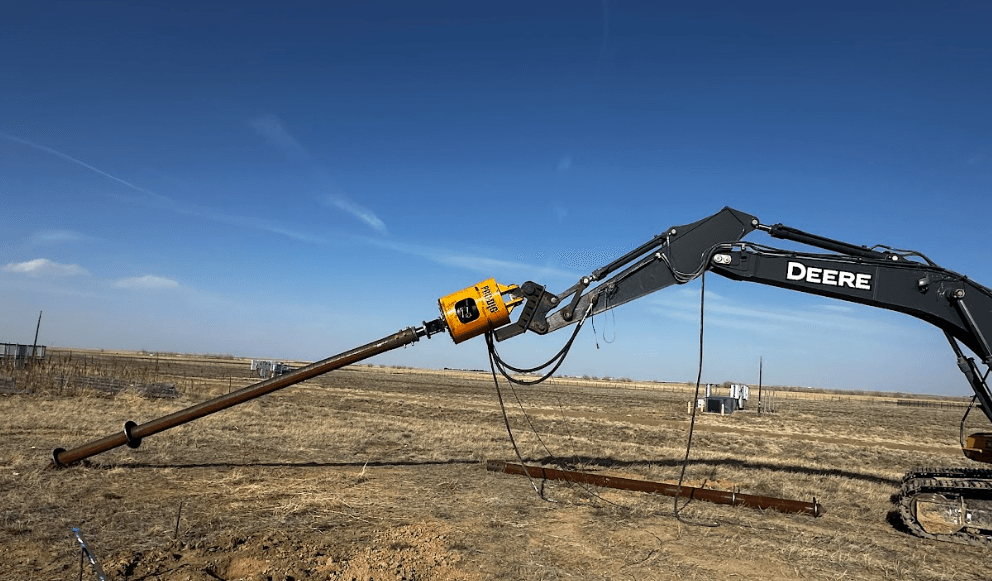
have a little fit, like, oh, I need it sooner and they'll look elsewhere. So you got to be careful about that. But you can you can change it. And most of the time, like the weather we've been having here in Ohio this year with all the rain, they understand. And then the first day they have, you know, Sunday, like, hey, when you come and I'm like, did you go out in your yard today? Well, yeah. I'm like, did you sink in? Yeah. It was over my over my shoes. I'm like, can you want a 3500 a pound bobcat in your backyard? Yeah. Why don't you wait for a little bit. Yeah, exactly. Puts it into perspective. On that note though. Have you seen consumer expectations or taste shift over your career as well? Like is there anything are people wanting like more with less? Are they sort of like wanting things faster? There's definitely a culture of like instant gratification these days. Well, I mean this this no dig. I don't know if it's a craze because it's been happening. If you look at guardrail and and farm fence, it's been happening years upon years upon years. But the no dig with more residential with social media. You know they they're searching fence and you know you might see this guy out there with a powder pounding fence and they're asking about that, you know. And so you got to give him the pluses and, and the pros and the cons. But you know, there is there is pros and cons to everything, even the old style fence we've done. So you give them that. And sometimes, you know, they appreciate that and want to move forward. But yeah, they're doing their homework a lot more.
[33:14]
You know you can AI and Copilot and Gemini and all that. It's it might not be the 100% percent correct answer, but it's it's a majority of the correct answer. Definitely. On the note of AI, how have you seen fence businesses incorporate that into their processes? And do you have you sort of seen like it done really well and then places where you maybe shouldn't be using AI where it's being used? Well, I think some of their automatic messaging systems on the websites, some companies are doing AI. You know, there's there's not it may not be AI, but there's new programs out there where a customer can draw down their on their computer, see their property drawing out there, get a rough budget number from prices you put in and they're making they're making a decision even before you physically talk to the person if they want to move forward with you or not. You know, they're not final decision, but, you know, the day and age of someone if they don't do that, saying, oh, I thought this is only going to be $3.75 when it was $5,000. You know, I'm being a little extreme, but, you know, we've all had that where someone thought, oh, it's a thousand bucks and it's $3,000. Those days are getting to where they're not around anymore. And the tire kickers are sort of gone. Definitely. I think that's definitely important. Right? Like, the consumers are educated and they know it goes both ways because because they're
[34:44]
so educated, you really have to up your game as a business. You need to be across all the latest tools and and you can't have a conversation with the customer and have the customer maybe know more than you like. That cannot happen. So there's definitely an extra layer of pressure to be up, keeping with whatever is trending or hot or cool on social media that consumers might be into. And I think two part of it is because more and more people are actually have more fence companies out in that area. You know, you got to tell them what the feature and the benefit of your fence is and how you do your fence, because competition has almost the same type of fence. So what is the difference, how you need to spend a little more time? And we all joke that during Covid everyone was stuck at home. They just wanted a fence for privacy that didn't want to talk to their neighbors safe and health, safety and health. And so we were more order takers because people call me, I need this. I have 207ft because they've already gotten five quotes. I need this and I need it done. Now we're slowing down enough from that Covid craze that you now have to go back to selling fences. You're not being an order taker, so you got to tell them that, yes, my bottom rail, my vinyl fence has a reinforcement in it. And we do have side channels. So it's a true privacy fence. And you have to go through these things. Definitely on the note of technology in the industry. Like what are some of the things that you're seeing AFA members say to you and how they are incorporating technology in their business, and how can it help you grow your business
[36:14]
as you go forward as well? Well, you have three more than three, but you have a lot of these CRM that are now almost 100% fence based. Before you would take a CRM from a roofing company or something like that, and try to turn it into a fencing CRM. And now that some of these that are actually, you know, fence based, it's it's it's making it easier. You know, you can you can have it where you send a quote and you move their name to quote sent. And depending on how you set it up, you can say three days later, send them a text, hey, I sent you an email. If you haven't received it, check your spam. But guess what? I didn't have to lift a finger and that customer was found. And I don't know how many times. Sometimes my emails going to spam and it's saved me, you know, because other times you get a call before you had a CRM. Oh, I never got an email. Will you go back? Well, yeah, I sent it this day. Well, I don't have it. Well check spam. Oh, okay. So it's one of those things that it can, it can automate a lot of work for you that it's it's a free employee. I mean, yes, you're paying for your CRM, but you know, texting email reminders, you know, sometimes a customer will get an email quote and they're waiting on 2 or 3 others, and ten days later you send an email and you're like, you know, what? I haven't got anything from anyone else. Maybe I just need to use them.
[37:44]
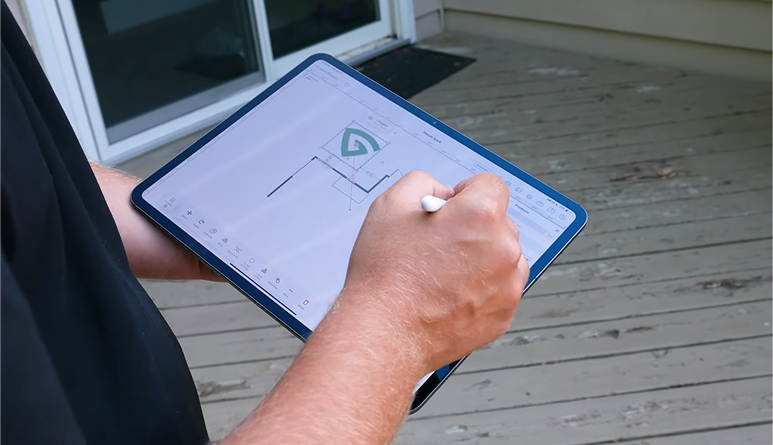
So I think a lot of these technologies are are helping the industry. Definitely the speed is really important, right? Because I think a customer that's out there looking for a company, they want it done quickly and they there's a lot more hesitation to wait these days. They're like, all right, I got this first guy in my inbox. The price is fine. I'm going to roll with it. And that's as simple as that. So it's really important to be able to be quick off the bat. As soon as you're able to visit with a customer, quote them and send them a price. How are you seeing folks that are maybe a little bit more old fashioned? I know that a lot of our customers have come onto ArcSite from pen and paper or spreadsheets and sort of like slightly more old fashioned method. And that's partly because they need to be up with that speed. But I know there's a lot of folks out there still that love the pen and paper vibe, and they love the spreadsheet vibe. So have you how have you seen that, like technology adoption change over the past few years? You know, I think just the emails and the pictures you can send and, you know, some, you know, some people have it where you can you can sort of draw it out on their yard and they can see what it looks like in their yard. And just having line drawings and, you know, just different helping, you know, it's the features and benefits. So it's that little bit extra that really can help them out. You know, I still laugh to myself when I'm at a customer's house and they may be a little bit elderly. And can I have your email address? Oh, I don't email.
[39:15]
You need to mail it to me. And it's like, whoa, I you know, I haven't even, I haven't mailed a contract, you know, and it's, it seems like I get one per quarter that I'm like, okay, we gotta do that. I want to shift gears now a little bit and talk about some of the things that the AFA offers to its members. Why is AFA membership so important for the Fence Pro in 2026? Well, I think, you know, like we talked about our mission statement before, we do unite the industry. We develop leaders, you know, we inspire growth. These are all things that everyone wants to do. And so if you if you think, hey, I'm going to be a one man band in my pickup truck and install X amount of fences the rest of my life, if you're happy with that, fine. You know, you know, maybe with some of our member savings benefits, you can get a fuel card and save some money there. You know, you can get some some shirts through, you know, different company there. You can get a computer and save some money. So we do have our member savings program and it does you know, it's worth anything. You get what you put into it. So if you just say get a membership to put it on the side of your truck, I'm an AFA member and you don't do anything. Is it worth it? You know, because you're you're putting your, your, your name on a logo basically. You know, you're not getting what you want. You know, we now have a meta locator on our website for any of our members. So if you're in a town and they know that American Fence Association
[40:45]
is a good association, they can go to our website and go type in, you know, so many miles from my house, who's all the fence people? You know, we actually do put some of our certified professionals above others because they've done the certification processes. But that's another good thing. The learning, the different classes we do offer, you're always learning. So that's good. And then, you know, the, the groups when we go to fence, FenceTech and when we have the AFA university, it's those people that get together after the event and I'll call it the watering hole of the hotels or something like that. There's more learning done when those group of fencers are together, because you may have a you may have a fencer that's wearing jeans and a dirty shirt and some dirty cowboy boots that has 12 locations and runs 100 crews. And you wouldn't know it by looking at this person, talking to a guy that works out of his truck and just maybe a little bit of this or that. Hint it helps that person grow. And so those are the fun times I like to see being involved with. And then sometimes just standing back and watching it happen. Also, you know, as the president, I try to go to a lot of the different association chapter events and everything and meet people out throughout the United States and doing the education
[42:15]
I've taught for years, I've been able to go around the United States and see things, and so it is fun to see that happen. And, you know, I'm horrible with names and I apologize to that. But I can remember face and I'd be like, oh, yeah, you and I were in Sacramento three, four years ago. And they're like, yeah. And so I couldn't remember their name to save their life. But I know where I, you know, we would teach in class and they learn something. And that's the other thing you get, you get some of these old time fencers that my boss made me going. I've been doing this 20 years, and I don't know what the hell I'm doing here. And about an hour, an hour and a half into the class, you say something and you could see them like, oh, I got it. And so that's the other thing. I like seeing too. Exactly. It's a light bulb moment. And that's always so gratifying, right? Because we all want to feel like we've helped somebody. At the end of the day, no matter what business you're in or what role you're in, you want to feel like you've made an impact. So it's been lucky enough to meet a lot of people. You see all these signs? Yeah. Hawaii, Alaska. I mean, I've been lucky enough to meet a lot of people in this industry, and so it's it's always fun. And that's the other thing too, is, you know, sometimes you may be a little bit nervous to talk to your neighbor fence company that is he going to tell me the right thing or is he going to tell me something wrong? So I failed, but he gets the job. But if you can pick up the phone and call someone in a different state and say, hey, I got this going on and like, oh yeah, I did this last week, here's what I did. It helps. Definitely. One of the things you said earlier is that, you know, there's a certain level of approachability with you as president,
[43:45]
because in the past there's been like larger heads of larger operations. So what are some of the calls that you feel like you get over the last few months? Like, is there any theme or trend that you're seeing that you get calls on the most? No, I mean, you know, unfortunately, we just had a fencer lose his wife at a young age with some heart issues. And. Just two days ago, three different fence companies went together and helped finish a job that he had contracted. And those are his competition. But they came together, got it done. You know, he he lost his wife at 30 some odd years old. He's 30 some odd years old. They have a six year old, a one year old, stuff like that. The industry gets together and helps each other out. You know, one of our past employees used to call AFA ‘AFAmily’ because if you look at the first three letters and then add, you know, the family part. And it's true because we've had people that, you know, there'll be an article coming out here shortly in the fence post that I wrote, sort of about this whole situation where some people have cancer, some people have situations just happened. And it's it's one of those that we all bond together, you know, we all feel the pain and move forward to helping each other out. That's really important these days. I think there's like less of that happening in work. Right? You always feel like you have to keep your personal life separate, but like it's just not the case, right? If you lose a family member,
[45:15]
you lose your spouse. Somebody is quite ill in your family. Like that is going to affect everything in your life. There's no way that you can compartmentalize that and just go about business as usual. So that's really heartening to see. Like you're able to get community through the AFA and you're able to get that like family atmosphere, basically like you're saying, yeah. And that's that is the first two words of our mission statement, build community. And I think we've done a really good job at that. The other the other thing is, is, you know, it's one of those that, you know, you just you can help each other out locally. It used to be you never talk to your competition. Now, during the work week, you may not talk to your competition, but in the evenings or nighttime or even a chapter event, your buddy buddies with them. And it's even to the point where, hey, I'm in your backyard. Basically, I need a tension band instead of me driving a half hour back to my shop to get a tension band. Man. Yeah, come on over. Because what happens if I need a flat cap next weekend? I'm in his backyard. You know, it's a give or take, and you understand that. It used to be butting heads. No, you can't do that. But we're all. We're all in it for the same thing. Exactly. It's like, you know, it's that give and take. It's that family to family, community member to community member. Just like helping each other out. It like helps you establish a lot more faith in the industry that you're in and also just in humanity a little bit that people are really just decent at heart,
[46:46]
no matter where you go across the country. Lastly, is there one benefit or perk of being an AFA member that you think people are under utilizing? I think that members savings program, you know, that a lot of people like, oh, I didn't even know that. But I think a lot of the a lot of the benefits and it's sometimes it costs things, but is a chapter event, everyone has a chapter and basically in their backyard some. Yes, you may have to travel a couple hours to get to, but there's golf outing, there's clay shoots, there's fishing groups. You know, there's two chapters that are going fishing events this year. Lots of golf outings, a couple clay shoots. I've already been to two different chapters, clay shoots, and then we host one here in Ohio and August. It's, you know, I'll pat myself on the back and break my own shoulder, but it's one of the better ones in the, in, in our industry. You know, Carolinas has a Carolina by the sea. And then the one thing I always tell people is, you know, if you want to go to the Carolinas by the sea event, but you're a New York Long Island chapter member, you're allowed to go. You don't have to. Oh, I only stay in my own chapter. You know, they will welcome you with their arms open. And that's that's the thing I do like about the community. You know, if you go to our website, you know, there for a while and I, you know, as a president, you you can request things doesn't happen a lot.
[48:16]
But I sort of stood on my soapbox and said, I hate that our website, you have to click three different things to find the events tab. And so finally they put the events tab right on the top. And so you can click on that and you can see the different chapter events. You can see the different national events that are going on. So I do recommend that those people look at those education events because that's you know, I posted some AFA has a community page and I posted something the other day about our classes. I said is, is there ever a good time to train? No, there's never a good time to train, but you got to make time for it. And so if you can look at those events page and try to forecast, you know, our fencers are famous for last minute decisions. And I understand because you might look at the weather and say, okay, next five days are horrible. Maybe I will go or the next five days are going to be great. I'm not going now. So, that's I think one of the underutilized items is different chapter events. You know, you sometimes you go to these chapters and you got 70, 80 people at and then sometimes you go to them and there's 13 people there. So take advantage of those. Absolutely. You can have some really meaningful conversations one on 1 or 1 to small. And then you have just a lot more insight, right? Like of course you'll get a lot of benefit from going to a class or going to one of the bigger events, but like having that like small one on one conversations with folks that are in your immediate community is so valuable. And that's the other thing is some of these suppliers,
[49:47]
they sponsor these events. And, you know, you may be buying three steps through people and they may not be able to sell you direct, but they can at least put a name to the face and help you out. And, you know, if you buy from a company through them, they can at least help you out with, okay, here's some literature, here's this or here's that. So it does help you to do those things, even if you can't buy direct with those guys. Exactly. And then as we wrap up here, my last question for you is, is there one trend that you're going to be following closely over the next 12 to 18 months? I think the AI in general and how it's affecting us. That's a big that's actually one of our key strategic plan items is that we're watching is the AI and how it affects the industry. It's it's here. You can't say it's. Oh, we're going to wait and see if it's going to happen or not. Know it's here. So we got to see how it's going to affect the industry positively.
Ken Throckmorton is the 2026 president of the American Fence Association, and founder of Forever Fence and Rail in Ohio.
Ken Throckmorton used to work 90-plus hours a week as a chef. Weekends. Holidays. The kind of schedule where, when your first son is born, and you finally come home, he cries like you're a stranger. That moment made the decision for him.
A small fence company in Wadsworth, Ohio, heard he was looking for something different and offered him a sales job. Ken told them he didn't know anything about fencing. They told him to measure a job and prepare a quote anyway. He came back with a $10,000 number for an ornamental aluminum install, convinced he'd done something wrong.
They sent it. The job was practically sold already.
"Back then it was expensive to have a $40 steak," he says. "And so I'm looking at a $10,000 fence and I'm like, what are people thinking?"
He gets it now. After eleven years running Forever Fence and Rail out of Wadsworth, he's the 2026 president of the American Fence Association.
The company Ken started with didn't make it through the 2008 financial crisis. They restructured. There were handshake agreements about ownership that turned out to be worth exactly as much as the handshake. When it became clear the transition he'd been promised wasn't happening, he talked to some suppliers, did some investigating, and in August 2014 started Forever Fence and Rail from scratch.
The old company told him he was making a mistake. That he'd fail.
"They closed their doors two or three months after I left," he says. He'd wanted to send a thank-you card on his 10th anniversary. His wife wouldn't let him.
The fuel that doubt provides is real. He's seen it work on other people — uses it himself when talking to friends who are weighing whether to start their own thing. There's a right moment to jump. You're going to fall on the way down. If you've built anything solid, you catch yourself coming back up.
The AFA president isn't a ceremonial position. Monthly board meetings, bi-weekly executive committee calls, weekly one-on-ones with the executive director, and a phone that rings constantly — members with questions ranging from simple to genuinely thorny.
Part of what makes Ken accessible is what he is: a working fence contractor with two install crews, a carpenter crew, a wholesale operation, and a railing niche that other fence companies send work to. He's not a supplier or a multi-location operation. He's the small guy. People know it, and they call accordingly.
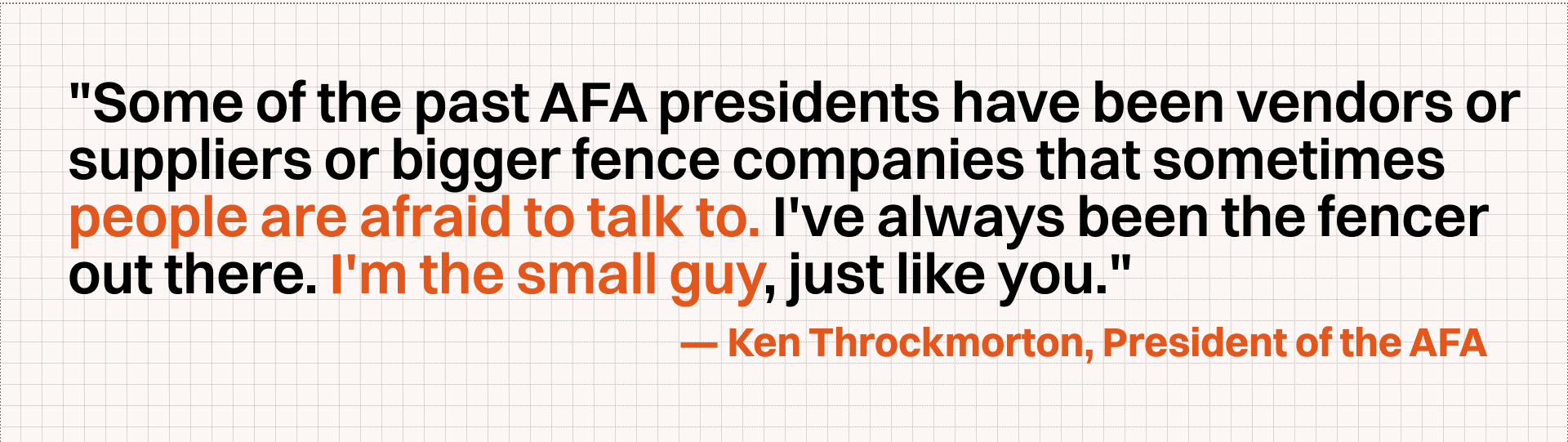
"Some of the past presidents have been vendors or suppliers or bigger fence companies that sometimes people are afraid to talk to," he says. "I've always been the fencer out there. I'm the small guy, just like you."
The AFA's updated mission statement is one that means a lot: The AFA unites the industry to build community, develop leaders, and inspire growth. Three things that sound simple until you watch them actually happening.
One of the AFA's active pushes under Ken's tenure is gate safety legislation. A child named Alex died in a gate accident. A year later, a young girl in Arizona died the same way. The organization that formed around Alex's death — originally the Hummingbird Alliance, now Ready, Set, Safe — has partnered with the AFA to push for updated safety standards for both motorized and manual gates.
The fix, Ken says, isn't complicated. Less than half an hour of labor. Cost almost nothing. It could make gates fail-safe when a hinge goes."When you get Congress people on this side of the aisle and this side of the aisle, and they both say this is common sense — that's a good feeling," Ken says. "Because at the end of the day, they have grandkids, they have kids."
For the fencers in the room who bristle at the idea of codes and requirements: Ken gets it. But he also knows that when you install a gate, and something goes wrong, you feel it too. Most contractors are doing good work. The standard is there for the one who isn't.
Twenty years in, Ken has watched fence evolve in ways he didn't expect. Colors, for one — what used to be black, bronze, white, and tan is now nine vinyl colors in his own shop, twelve powder-coat options in ornamental aluminum, and a chain link palette that's earned its own industry award. Customers show up with Pinterest screenshots. Some of those designs are still unattainable. Some aren't.
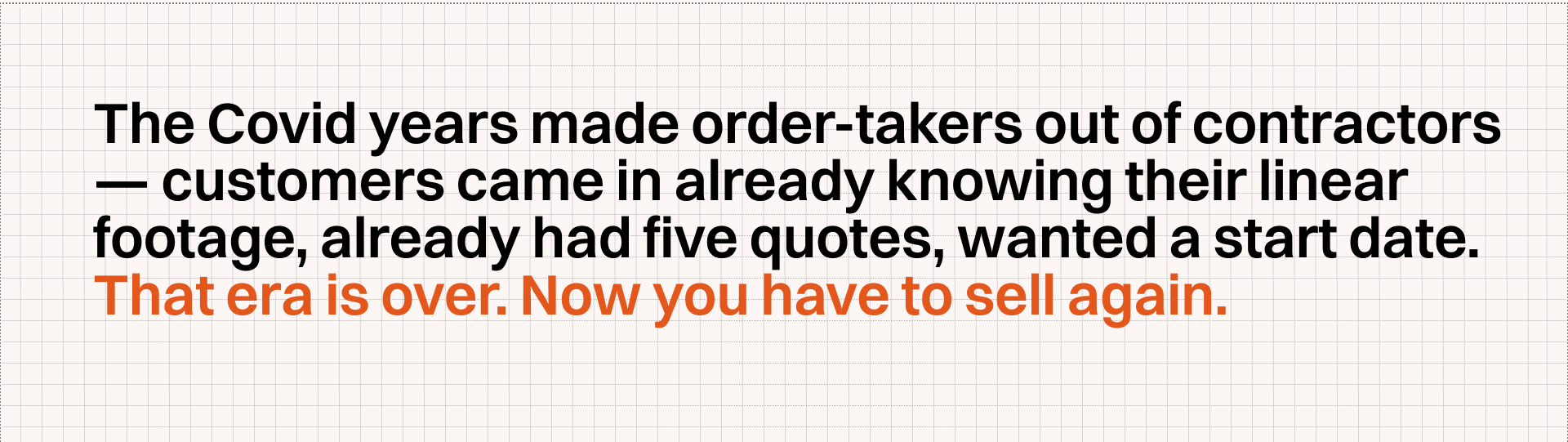
What's shifted more than aesthetics is expectation. The Covid years made order-takers out of contractors — customers came in already knowing their linear footage, already had five quotes, wanted a start date. That era is over. Now you have to sell again.
"You're not being an order taker," he says. "You got to tell them your bottom rail has reinforcement in it, you have side channels, it's a true privacy fence. You have to go through these things."
Ken highlights that you need to know your fence products inside and out, and articulate what products best fit their needs. The fence pros that are able to give your customers that consultative approach when you’re meeting with them, are the ones that will come out ahead. It’s now about building their vision in tandem with you.
On technology, he's clear-eyed. Fence-specific CRMs that automate follow-ups, proposal tools that let customers sketch their property and get a rough budget number before anyone picks up the phone, AI answering website queries at 11 p.m. — it's all here, it all helps. But the customer is also more informed than they used to be. They've googled no-dig fencing. They've compared carbon fiber and traditional installation. Walking into a consult knowing less than the homeowner is no longer something you can recover from easily.
Ken tells a story about his first FenceTech in Orlando in 2015. He was standing in a back corner, new to the whole thing, when a man with a southern drawl walked up and introduced himself. Tony Thornton, executive director of the AFA.
"I was just nobody from Ohio," Ken says. "And he came up and said something to me."
He's used that moment ever since. When he spots someone working the edge of a room at an industry event, he knows what that feels like. He goes and shakes their hand.
That's the texture of what the AFA actually offers, he argues — not just the certifications, the member savings, the locator, the legal and operations classes. It's the conversations that happen after the sessions, at what Ken calls "the watering hole of the hotels." The guy in dirty jeans and cowboy boots who turns out to run 12 locations. The one-man operator he's talking to, who didn't know that was possible.
"There's more learning done when those groups of fencers are together," he says.
Recently, a fencer in the industry lost his wife suddenly, leaving behind a family of two small children. Within two days, three competing fence companies (all of which were his competition) came together and finished the job he had contracted.
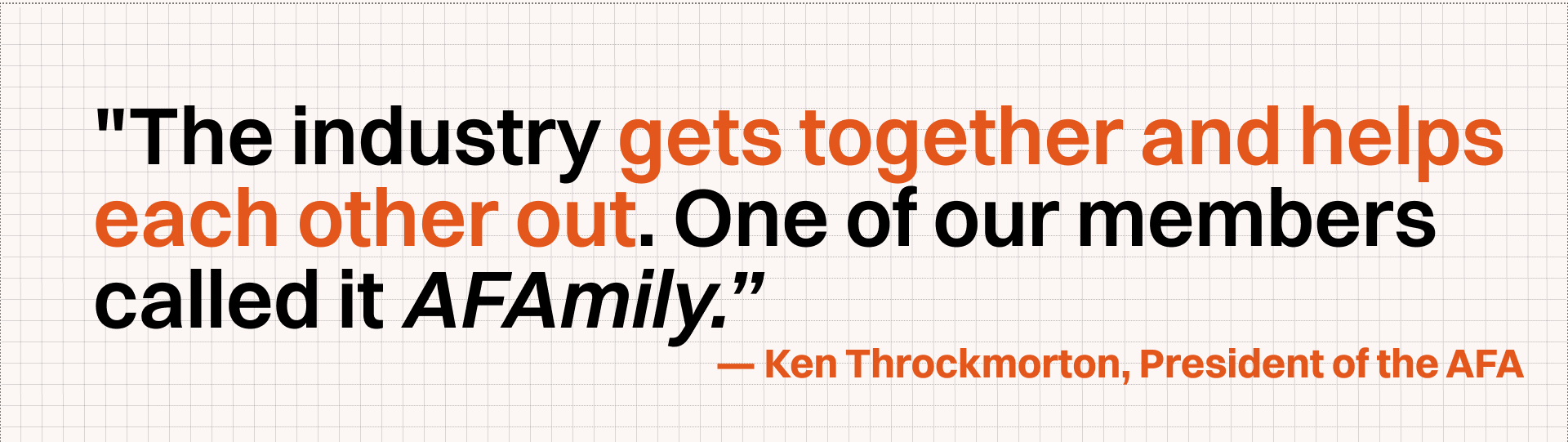
"The industry gets together and helps each other out," he says. One of his former employees had a name for it: AFAmily.
Curious how ArcSite can help you run a more efficient fence operation? Click here to chat with our team.