[00:00]
A good businessman, knows his strengths, he knows his weaknesses, and he fills those weaknesses with good people.
[00:15]
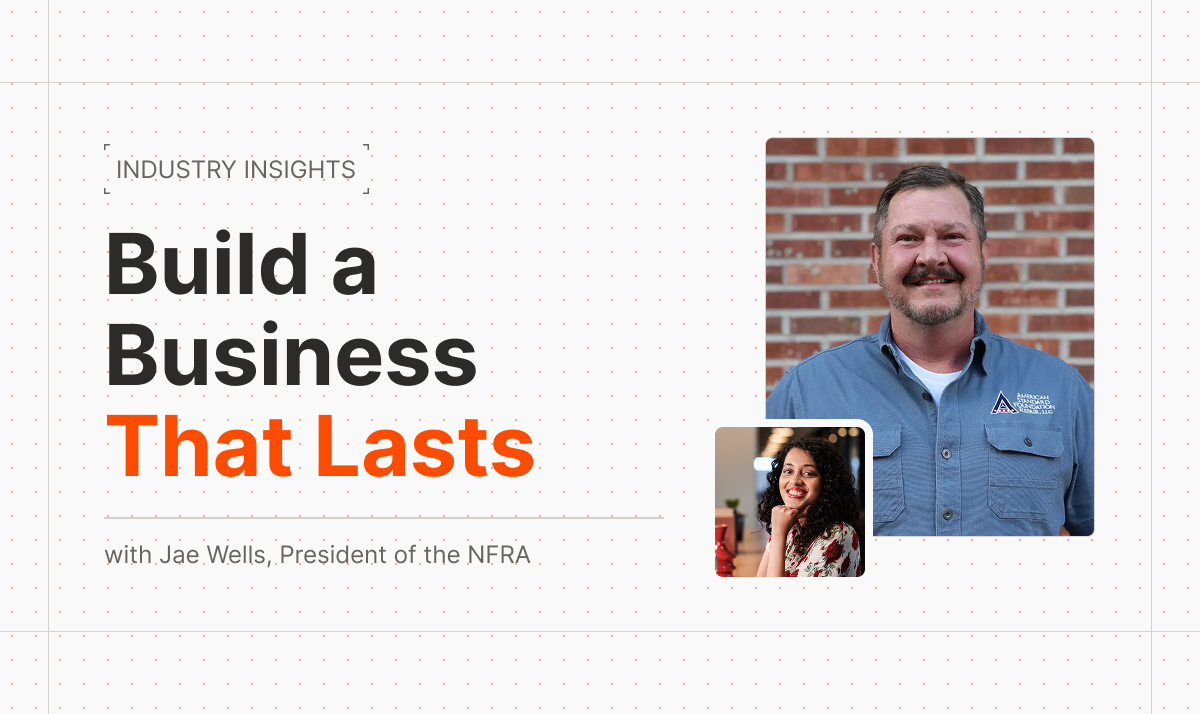
All right. Jae, Well, thank you so much for joining me today. It's such a pleasure to get to talk to you today, but we'll start off nice and easy. Can you just introduce yourself with your name and what you do? Sure. My name is Jae Wells, and I am the owner co-owner of American Standard Foundation Repair. We have foundation repair companies in Memphis, Nashville, Knoxville, and Fayetteville, Arkansas. And then I'm also president of the National Foundation Repair Association, which is an organization that represents the foundation repair industry and its interests. Amazing. So let's start with your own business. I was doing a little research on you before we talked to you today, and I think I saw in another interview that you had a different career before you got into this business. Can you talk to me about that? Yeah, I'm one of those types. I can't be bored if I do things that are repetitive. I just get really bored very quickly. And so I've had a couple of careers. I had my first degree was in music, so I was in New World Symphony, and I taught high school music for five years. And I really, really loved that. And then I went into I got a degree in biochemistry and molecular biology and went to medical school, which is how I got to Memphis. And I opened this company while in my third year of medical school, and I absolutely loved it.
[01:46]
I realized immediately that this was something that was never going to get boring. Every house is different. Every repair is different. Everything that we do is, you know, custom in a sense. So it really piqued my math skills and my physics abilities. And I just loved it. So I dove in without knowing a lot about it and eventually, you know, stopped doing everything else, quit medical school and just dedicated myself to foundation repair. Incredible. What an interesting career journey. What was it initially that like What piqued your interest? You're in medical school. You're obviously very busy as a med student. That is a difficult life to handle in terms of hours. So what was that little spark that said, oh, maybe foundation repair is a path for me? Well, I think as we grow older, we we learn more about ourselves and what it is that really makes us happy. And I think for me, I was so dedicated to music when I was younger that I never considered other pathways. So as I got older and I started looking at what it really is that makes me tick and what what makes me happy, some of the choices that I made did not align with my new revelation. So I think
[03:18]
for me, I love a challenge. I, like I said, I can't do things that are repetitive. I have to be doing something new and exciting and keeping my interest every day. And, foundation repair was exactly that. You know, it is. Everything that we do revolves around math or physics, you know, some in some way or another. And that's the way my brain works. And it was just an opportunity to take the things I loved about medicine, which was taking care of people and helping them in, in a tough in their worst situation, making it better for them. Foundation repair offered that because for most homeowners that are experiencing foundation failure, it's their biggest investment of their life most of the time. And they're really worried. And, you know, they're there. They assume the worst. And then you've got companies that'll go out there and prey on that, you know, and really, you know, ham that up and make it seem like it's much worse than it is to make a sale. And I saw this great opportunity to take that continuity of care that I learned in medical, in the medical field and really apply it to foundation repair. So in our company, the same person from the time they're handed off, from the lady who answers the phone to the inspector sales person, that person follows them
[04:49]
through the entire process right up until the very last day. So it was just an opportunity to, you know, apply really good client relations and continuity of care concepts and create a different kind of company. And I love that about our company. Yeah, absolutely. So let's talk a little bit more about that. Talk me through like the breadth and depth of your company as it is today. How many employees do you have? What areas do you serve? What services do you offer? All of that. Our our first store was in Memphis. That's our company headquarters. We also have franchises in Knoxville, Nashville and then Fayetteville, Arkansas. They're all very well seasoned companies. Our newest one is in Nashville, but the franchisee there is a prior 20 year general contractor, so even he has just a ton of experience. The company is a full service foundation repair company. So all things that require remediation of a slab home slab on grade, a conventional or pier and beam structure, water management, anything that is involved in preventing foundation failure or remediating its effects. So a lot of companies focus on one aspect
[06:20]
and they do it very well. And the challenge in our company is that we want to be able to take a person who has a foundation concern and not only fix what happened, but tell them why it happened and prevent that from happening again or on other parts of their home. So that's kind of the scope of what we do. Amazing. Yeah, that customer education part of it is so important because that's something I really appreciate as a consumer, is when a company takes the time to educate me on what they're doing, why why their approach makes sense, or what the logic behind it is, that's really a sign of trust when you're looking to bring someone into probably what is your biggest asset, right? Is your home. That is the one thing that 99% of people are saving up for, and it's the biggest thing that they'll ever get to buy in their lives. Yes. Agreed. Absolutely. On that note, tell me a little bit more about how you got involved with the NFRA, because that kind of continuing education piece, making sure that both foundation repair business owners have the resources that they need. But also the NFRA is a great resource for consumers as well. Yeah, the NFRA was just a true godsend for me because when I started, even though I was very excited about what my choice others were not, I have to say, some other people met. My parents thought that they wanted to get a psychological evaluation of my decision making skills at that point.
[07:51]
But, you know, I when I started, I was very excited and I really knew that I had found the thing that I was supposed to do. But in our industry, there are no books, there are no study guides, there are no standard operating procedures, there are no inspection methodologies. There's just no type of resource for you to educate yourself. And that was a real contrast to, say, medical school, where they throw a pile of books at you at the beginning of the semester and say, we'll see you at the end when you take your test. You know, it's very self-directed learning. And then I'm all of a sudden in this environment where I, I know how to study, I know how to learn on my own. I don't need anyone to hold my hand. Just give me a book. But it doesn't exist. So I started looking for ways that I could educate myself, ways that I could make my company stand out. Ways that I could, you know, ensure that we were doing the right things and inspecting homes in the right way, engineering approved methods, or, you know, just looking for ways to make my company much more solid. And so I found the National Foundation Repair Association. It was at that point, 100% Texas companies, and it was called
[09:22]
the Foundation Foundation Repair Association, not the National Foundation Repair Association. So I went to their first conference and everyone I introduced myself to everyone. It was a smaller group of people, I think maybe 40, 45 people, and they were all like, well, what the hell are you doing here? You're not from Texas. And I was, but, you know, eventually I just kept hanging around and I got sort of adopted by a couple of very nice people who, owned large companies that were very successful, and they appreciated the fact that I wouldn't take no for an answer. And, you know, they became my mentors, and I don't know if my company would have survived without that, because when I got into it, I had no idea how difficult it was to just learn the trade, you know, learn what it is that is good. What is a good repair versus, you know, a not so good repair. So I'm joining the NFRA. I have some really great folks who became my mentors, and they literally walked me through the next decade of building my company. And I am forever grateful to every one of them. Some of them are still on my board today. As president,
[10:52]
I begged them every year to stay around because they if they could do that for me, they could do that for so many other people. And I just, you know, I'm very thankful to the NFRA for that. We I've been on the board now for 11 years, and I've been the president of the National Foundation Repair Association for the past four years. So, it's grown a lot since then. We have a lot more members and a lot more companies that come to the conference to display their, their goods and their services. And so it's just continued to grow and grow. And I'm very excited about the direction that we're taking it. That's amazing. So tell me a little bit more about the resources that the NFRA offers. You touched on it a little bit, but basically you are able to kind of now have this structure through the NFRA similar to what you said. You can have certifications, you can learn about the best practices to run your business. And also, like you said, what does a good repair look like? What is a good business look like? So give me the lay of the land a little bit. For somebody that might be hearing about what the NFRA offers for the first time. Sure. So. the NFRA has really gone through a huge transformation from this small Texas based organization. Then we decided
[12:23]
we wanted to take it national, and they elected me president because I had a lot of ideas of how we could do that. But truthfully, none of us really understood the full ramification of what that meant. It meant from going from this Texas organization where we could focus on Texas problems. And then when you've got a thorn in your side, like me asking questions, well, I don't live in Texas. What? How does that apply to Tennessee? You can figure out some answers to give them, you know, so that's a very different dynamic. When we decided to take it national, we had to start thinking, well, we have a standard operating procedure of how we do this. But now you've got to think about how does that how does living in Michigan and having a five foot freeze thaw cycle effect this standard operating procedure versus how it might have been originally conceived to work in, say, eight foot deep expansive clays in San Antonio. And then now you've got to start thinking about, well, you've got all the rains in in the northwest and you've got the, the, the desert heat. How do you take those things and apply them across 50 states and truly call yourself national? So that was obstacle number one. Start wrapping our heads around what it means to be a national organization.
[13:53]
Number two, we had to change our mentality from that of being a small association where we all got together. We enjoyed each other's company, we learned a few things, we shared a few anecdotes, and we all went home and we were happy to now really being the driver of educational systems and certifications and, you know, networking and bringing in new products, new services, supporting technological growth and bringing in existing technology and applying it to our industry. So huge shift there from just really thinking about being a local association to the driver of an entire industry. That was a huge shift. But then the beautiful part of it also comes along with those headaches, you know, we have such farther reach. We now have members in 38 states. We all get together at these conferences, and it's good to see them. You know, you've developed friendships from across the country, people who who own foundation or repair companies. And, you know, you might think that someone who runs a foundation repair company in Oregon is really, really different from Memphis. But it's not. Honestly, we all do pretty much the same things. A few differences here and there, and we might have a few different techniques that apply to our particular environment or geology.
[15:25]
But over reachingly, we all do about the same thing in a full service type foundation repair company. So, you know, it's been an evolution. That final space there is really where I thrive. My skill is meeting people. I never think of it as networking. I think of it as making a new friend. It really is someone I'm interested in. They’re in my industry. I want to know how they do, what they do. What what they do well, what I might be able to help them do better. It's really not about networking for me. It's about creating this group of people that all help one another out. I always say at every conference, there's three things we need to accomplish here. Number one, we need to learn something. All of our classes are based on educational core values that teach you something about our industry. And there's 36 different classes to choose from so you can choose what you need most. Then I always say, you know, we need to network. We need to make sure that we are being a mentor to someone, and that we are finding someone in a position to be a mentor to us. You might not want to be a mentor to the guy that's, you know, your competition across the street in your hometown, right? But when you're talking about someone
[16:55]
all the way across the country, they don't mind sharing with you what they know, their secrets of how to grow, you know? So it's just such a great environment for being a mentor and finding a mentor. And then third, I always say, if we don't have fun, we don't come back. So I always throw a couple of really big parties during the conference. And if if you've ever talked to anybody, that is one skill that I definitely have, because we always have a great time and enjoy ourselves. So if we accomplish those three things, you know, we've done well. Beautifully said. Obviously you've been in this industry for over two decades. You have a depth of knowledge on it. So tell me a little bit about how you've seen the industry change over the last 20 years. What's different, what's new, and what are some trends that you’re watching? 20 years of change. You know, when I started this company, you only dealt with marketing and advertising. Two weeks a year. You had to decide what size Yellow Book ad you were going to place. And then about a month later, you had to figure out what size Yellow Pages ad you could afford. Okay. And then the rest of the year you just lived with whatever the decisions you made. Okay, so then Google, then all of the others. So today, if you are not dealing with your marketing advertising on a weekly basis, at least you are losing your shirt,
[18:26]
you know? So that's a huge transition. Technology. You know, I always say we're the last to get technology. And we're we have some initiatives in the initiatives in the NFRA that will help us to change that. But even that being said, we have had a lot of new technology. Foundation monitors and crack monitors and new laser levels and all kinds of new technology that have been brought into the industry that have, you know, just been immense time savers, things that help us to be more accurate and do better repairs, Of course, finally, AI AI just crept up on me. It's like I, I'm old. I'm like 58 years old. So I'm thinking like, AI, that's when I'm retired. But no, it just snuck up on me. All of a sudden it was important and I wasn't prepared. So I had to like, stop everything I was doing for a whole month and just get caught up on what it was and what it meant and how I could use it. And man, I'm still not caught up, you know, it's like so ever changing and so revolutionary. I'm able to get so much work done now that just so quickly and efficiently, and how we're going to integrate that
[19:56]
into our advertising strategies and the use of AI in all of our CRM work, all of that. It's just amazing, but daunting for someone, especially my age. You know, you're you're just trying to wrap your head around it all. So I think that's one thing that the latest thing in our industry that is just really, truly revolutionizing how we're doing business. Absolutely. Honestly, it's very refreshing to hear you say that because you go on LinkedIn or social. Everyone's like, I know the hot new AI tools. I know them backwards and forwards, like the back of my hand. And I always am a little bit skeptical because I'm like, this technology is moving very fast. Unless you're literally one of the people building it, there's no way you could know it backwards and forwards or even imagine the potential of it. So yeah, how did you go about that? Like, I'm sure a lot of people would relate to feeling behind and wanting to understand how they can just get across it and be and be feeling like they actually have a little bit of an idea of what's going on. Well, I'm not going to call names, but in the NFRA I've got some really good friends that I call my Geek Squad and they are truly amazing. techy people who saw this coming, warned me, did all the right things. But you know, the first thing I do is go to my geek squad and I say, okay,
[21:26]
lay it out for me. What have I got to learn? And then I'll go about the business of reading and studying and trying to just wrap my head around, you know, the technology, how to use the technology, where that might go in the future. That's the key. It's not enough these days just to think, okay, how do I apply what's in front of me? You've got to keep up with how it's changing and how you might be doing business two years from now. Not even two years from now, 12 months from now, it could be different. So I rely on my Geek Squad and I love them and I respect them, and they are an amazing group of people, and certainly people in the NFRA know exactly who I'm talking about. So, you know, it's a it's a reason alone to join the NFRA and get to know those guys. Exactly. Speaking of how you can implement it into your business, you really do have to be forward thinking like that. So if you had to give advice to somebody who's starting out to apply AI into their business, what are a couple of areas top of mind where you're like, you should be using AI in X, Y, and Z areas? Well, I think there's a couple of really easy add ons that everyone is doing. You know, three years ago, foundation repair companies were Monday through Friday, a few of them on Saturday mornings. But and now if you look on the do a Google search for foundation repair companies on
[22:57]
at like 1:00 in the morning on a Saturday night, every one of them except mine is open. Now in truth, they're not open. They just that just means that they have AI probably answering their telephone calls and automations, you know, setting appointments and things like that. And all of that is so readily available through your CRM, through add ons, through add ons to simple things like QuickBooks. You know, there's just a ton of of AI out there to do those things. And it's a good idea. You should, you know, you should follow suit with that. For me, with the NFRA, we're going through a lot of bylaws, changes and structural changes that are meant to accommodate how we're doing business across 50 states. Now, we have recently developed a Business Development Institute and Educational Development Institute, a Foundation Repair Research Institute, and a Basement and Waterproofing Institute. All of those will interplay with one another. But when I was coming up with the idea, I used AI to really hone in on how each one of those things would interplay on the other and create this beautiful little web of how they would hand things off and, you know, things that logically would take a long time just to come up with each string. Right?
[24:27]
And AI can say, here are the things that I see that are relevant. And all of a sudden, two minutes later, you've got this beautiful graph. Now, of course, you have to go in and you have to edit and say, okay, that's not applicable here. Or, you know, you forgot about this, but it's just it gets you so far along in developing your ideas. And of course, again, great caution. You've always got to look and read and and call out the bad and and and improve. But it is just such an amazing way of getting so much done very, very quickly. Exactly. You're almost turbocharged, right? Because you can, you know, spend a day being confused about an idea you might have not really know where to go with it. It's kind of like a thinking partner. It's not meant to do the thinking for you, but it's just something to bounce ideas off of until you can get clarity in where you're going. I want to shift gears now a little bit and talk about some of the market volatility that we were seeing across the field services industry, whether that's prices of aluminum or lumber or gas. There's a lot of volatility going on in terms of input. So what have you seen in terms of any trends among NFRA members in terms of how they're dealing with that? And what's your advice to folks that are currently in this situation? Well, you know, every year we think, oh, this is finally going to be the year. We have no wars, we have no recessions, we have no Covid. We have, you know, but it seems like just more and more
[26:00]
the stressed business environment is the norm. You know, that was not true. Not in the distant past. It it was true very recently of 2016, 2017, you know, where we could look forward to having some period of stasis, you know, or or at least good business environment for growth, whatever a stage of your process you were in. You know, we didn't have so many things, but just lately it's just been one thing after another. And it does really stress people, and companies and owners and, you know, a huge company in Texas last week closed its doors and just walked away. So, I mean, it is a stressful environment. I think that you deal with this by planning, by understanding your P&L. Okay. That's key. If you're going to anticipate how your business might react to these variables, to these stressors, then you need to understand how your how your P&L works. You need to understand how what variables are going to affect positions on your pal and how you might counter that.
[27:30]
You know, when I see trouble coming, I start doing things like trying to whittle down debt payments, any kind of payments that are on the bottom side of my P&L that I know, hey, every dollar I get off of that is a dollar in my net profit that I can use to combat these problems. We just started the Business Development Institute. Will Blake, who is the owner of Vesta Per4mance.io
[28:03]
The Bedrock Academy. He's just a brilliant man. Is the director of the Business Development Institute. Go, go take any class with that man. You cannot fail. I mean, any you will come out with just all of these little nuggets. And I have absorbed so many little nuggets from Will over the years that it just can't help. You can't help but have such a positive influence on your company, each little nugget. So the thing that we can offer is some really great, seasoned business advice that can help you to analyze where are your weaknesses? Where are your strengths, how might you combat these stressors? And man, the NFRA is just blessed with a smorgasbord of people like that that just have so much to give, so much to offer and do it in 36 classes at every conference. It's amazing. Absolutely. It's such a wealth of knowledge. And really, if you don't have that mindset of, I'm a lifelong learner, I always need to be furthering my knowledge base, then that's unfortunately how you get left behind. Things move so quickly these days that you just have to be a student of your industry, of your trade, of your craft. And then shifting gears a tiny bit, I think the conversation around labor market trends has been really interesting. Maybe five years ago you were hearing, oh, the young generation doesn't
[29:33]
want to go into the trades. They are going to college. They're getting white collar jobs. We have a real shortage on that front. All of a sudden with the introduction of AI, it's completely that conversation, at least to me, feels like it's been reversed. It feels like actually the trades are a place where you can find stability, good paying jobs. It's not going to be replaced by AI in the short term at least. Have you seen that conversation shift on your end? Greatly. You know, when I started this company 20 years ago, every college kid, every kid graduating from high school had their plans on some college. And, you know, and then as the years have gone by, the every other year, your tuition is doubling and it's just become untenable. You know, people get out with more college debt than they will ever repay, and the quality of their life suffers because no matter what they do, they're always chasing that debt. Right? So the trend has has definitely flipped over the years. We see that in the success of so many trade schools these days. We see that our the the conference this year is based. The the golf tournament is in support of a local nonprofit owned by Will Blake. Again that benefits at risk
[31:05]
children who are then taught a trade, helped to get into trade school and follows them through trade school and helps them get their first job afterwards. So, you know, when people in our industry start getting involved and creating things like that, you know, the need is there and it's so very smart because you see so many of them get four year degrees, even post-grad degrees, and they wind up getting out. They've got $200,000 worth of debt and they're making $45,000 a year. You know what? A journeyman electrician is going to start out with $120,000 a year his first year. So, you know, I there is just a a solid path for these people at this point that that gets them to a much richer life. I always say I went to college 16 years. Okay, I am I'm going to preach on this one because the truth is, some people are built for college. Some people love to study, some people love to lifelong learning and self-motivated learning, and others do not. And it's a fundamental thing. If you're not in that mindset, then why would you
[32:36]
frustrate yourself with that environment where that's required? There are other paths for your life that can be just as rewarding, just as lucrative, that will get you where you want to go without being $200,000 in debt. Now, the labor market has changed a lot as well, not just how we get to the market. You know, during Covid, we couldn't hire anyone to save your life. I mean, and then you had the whole, you know, lay off laying themselves off movement, you know, through Covid where people were dropping out of their jobs and not taking other jobs. And it just made it all very complicated. But I will say in the last few years that I've seen that totally reverse. We we kind of got to a stasis, maybe ‘22, ’23. And at this point, the labor market is good. We can find qualified applicants and and good people to fill jobs. Absolutely. And one of those things that is kind of coming to the surface, especially during Covid when there was no qualified candidates to be found, is like, we really need to be a company that people want to work for. So what are some trends that you're seeing around talent attraction and retention and building good company culture? Well, the idea, you know, one of the companies that's coming this to the conference this year is a talent search company. Literally, I need a new production director and here are
[34:06]
my qualifications. And they go search for them. The idea five years ago, seven years ago, that that would have been a thing in our industry would have just shocked me. So I think the evolution of the types of people that we're looking for is severe. Our our industry has always been very technical, but those companies that can handle that technical aspect continue to grow. And many of the owners are either really technically savvy and they understand the production side or they're very business savvy. And what what they do is just a widget, right? So finding someone who has both of those skills is rare. You're usually coming at it from one of those positions. So it's just when whatever side you're coming from, you're looking for that talent on the other side to fill your, your deficiencies or the things that you're not as good at. Right. And that's what any good businessman would do. A good businessman knows his strengths, he knows his weaknesses, and he fills those weaknesses with good people. And so things have changed greatly. Talent search agents at our conference. That's that's an amazing thing.
[35:37]
But, you know, these days, it's something we're all looking for. Exactly. You're every business at the end of the day, is a people business. Like, yes, you're in the business of foundation repair or what have you, but really you're serving the customer. You're serving the customer with good people, and you are managing a team of good people who are only going to do good work if they're treated well. So it's all very people focused. Even though I think when you start a business, you don't necessarily think about it like that. You think about like, I really like this industry. I like the technicality of it. I like the physics the math, like you were saying. But really, there's this whole other side to owning a business that can take people by surprise sometimes. Yeah. On that note, I want to talk about customer trends or customer expectations. I think the consumer has become a lot more educated over the last 10, 15 years. Of course, now with AI as well, they can ask all of their questions and they have a idea, a predetermined idea of what they want or what they think is going to be the correct solution. How are you dealing with those conversations as you go and visit customers? Well, this is a trend I'm really excited about and that we have many initiatives in the NFRA to educate homeowners. An educated homeowner is good for our industry. This was not so not not a decade ago. I mean, I would do inspections and people literally thinking that the brick on their home is what holds it up.
[37:08]
I mean, and when you dig up a foundation footing, they're like, gosh, I didn't even know any of that was under the ground. You know, unless you're exposed to it, you don't know. And and so there's just this huge disconnect and need for education at that level of your sale process to make them understand. And we've always been very good at that. As an ex-educator myself, I always made sure that was a part of what we do is just making sure at the end of the day, you understand what you've got, what happened. Why it happened, and what we need to do to fix it. If we did that, we we. Mission accomplished. The rest is out of our hands. Perhaps. But, you know, that's what I wanted to accomplish. But, you know, now, you see, in every market three, four, or five foundation repair companies on TV, running commercials. And so much of it is not just a branding commercial about your name, but often a segment commercial on, you know, some scope of work that you produce. Right? So it's amazing how much that has contributed to consumers vocabulary and to their understanding of what it is that they're looking for, to know they've got the problem and what they're looking for in terms of the solution. So I think that's brilliant. And it has to continue. So we have a lot of
[38:40]
new initiatives in the NFRA, including on our website and promoting that website nationally that are really geared towards giving homeowners a resource. What does a homeowner do when they get four estimates from or four inspections done by four different companies, and all of them are different? Or what do you do when three of them were identical and one of them was different? You know, how do you know? Is that the outlier or whether these other three people, right? You know, you just it's very confusing. At that point, I always advise, go get an engineer. A third party engineer has no monetary gain from, you know, subscribing to any of the particular remedies that people have offered you. Let him tell you what's good and what's not. But, you know, it's the consumer has definitely become a lot more savvy. And I like that. I love that dealing with educated homeowners, I don't it's not a prerequisite. That's part of our job, is to make sure you are educated by the time we're done. But I certainly love the trend and have noticed that it is significant at this point. Absolutely. And I think that really plays into how customers or consumers in general,
[40:10]
we just have we live in the knowledge era, right? Like this is the era of intellectualization of everything and freely. You don't have the depth of knowledge in whatever your service you're trying to procure from somebody. That is something that's so much more easily done than it was 20 years ago. Like before, you'd what? Need to go to the library and bring out a book on foundation repair or structural systems. And that's a lot of time investment. Today I can go in Claude or ChatGPT and just be like, what do I need to know? And you've got a little summary here in less than 120s which is amazing. It is amazing. Absolutely amazing. On the note of running a successful foundation repair business. What are your three biggest pieces of advice to folks that are kind of on that cusp? Because I think once you get started, you're a startup, you establish some clients, you might be hit a bit of a plateau. What is the couple of things that the best businesses out there are doing to really turbocharge their growth? All right I'm going to qualify best okay. First. Okay. There are a lot of companies out there that are driven that are owned by, you know, equity firms or, you know, groups of individuals that have just the mantra that profit is king. And that does not mean that they're necessarily doing everything in the best interest of the client, in my opinion. Now, I'm not saying that they don't.
[41:40]
I'm just saying being completely profit driven does not necessarily lend itself to always doing what's in the best interest of the client. So in my world, a best company is one who puts the client first. Okay, you people might look at what I just said previously here as naive businesses are in business to make money. Okay. But there are a lot of different ways we can make money. And there are there are choices that we can make about how we make that money. That don't include negating the need to take care of the very reason we're in business, and that is our clients. Okay. So, my granddaddy always said gave me these pearls of advice. And, you know, he just always impressed upon me when I started this company that, you know, taking care of your client is is the only real objective you have. If you do that one thing, all the other good things will follow. So I think if I was going to give three pieces of advice to people, as you ask, I would say, number one, make your business about your clients. If you do that, everything else will follow. You'll get leads, you'll close jobs,
[43:10]
you'll make money. You'll have a nice group of individuals under your employ that you work with every day. You'll be able to do all the good things that come along. But if you if you negate, that one central core, all of those things are in jeopardy all the time. So that's got to be your focus. Number two, I always say on every podcast, watch your expenses, you know. The older I get, the more I my mentality is is susceptible to market changes. You know a good year. Let's spend let's buy some more equipment. Oh it's a bad year, you know. Okay. Hold off nothing. You've got to think past this year. You've got to think. Is making this purchase going to affect me positively in the long range? You know, in the, in the next 3 to 5 years. And then that positivity will, will be a buffer against any downturns and propel you upwards during good times. Right. But you have to stop thinking short term. And if it is your goal to run a foundation repair company long term, you have to think long term. So watch your expenses. Every dollar you spend and every dollar that goes out to pay
[44:40]
a bill winds up coming off of your net profit. And that net profit is what you use to grow your company. So you've got to keep it in balance always. I think the third thing that I would say from my personal perspective, I am blessed with having people who work for my company for 15, 16 years, not just a couple of them. You know, virtually half of my company has been here since we started. So that's an incredible blessing in ways that we forget about after a while. And I constantly remind myself not to forget about it, because things that most people worry about, I don't have to. I know they've got it, they've proven it, they've done it a thousand times, and they're going to do it again way the next time. I don't have to think about it. I don't have to worry about it. So my point in saying all of this is take care of your employees. You know, you can't expect someone to stick around with you for 15 years if you are not taking care of them, if you don't have health insurance, if you don't have any kind of benefits package, if you're not at least giving them the, the, the, the certainty of a contract or, you know, commission structure, draw things out, there's amazing things that you can do that costs very little money, that are benefits to your
[46:12]
your employees do the things that make them want to stick to you and stick with you and be loyal to you, because those fruits multiply and they eventually wind up being just incredibly propelling things in your company. I have less than a 2% callback ratio, which is like people calling back for warranty claims. I have less than 2%. There's only one reason that's true. That is true because my production teams have been with me for over a decade. I mean, a couple of people that haven't been with me at least eight years. The rest of them have all been with me for so long. When they've done it, they know how to do it well and they don't mess it up. And so that results in really good repairs that last a long time. So that's what I mean by fruits multiplying. You know, I take care of my employees and that they take care of me by making sure our clients are taken care of. And we we don't have an expense that most companies have, which is that huge callback rate, you know, and a drain on your profits because you're always trying to go back and fix what you should have really taken care of the first time. That's not always true, by the way. You know, sometimes you do all the right things and environmental factors, you know, can, can, can get you. But, you know, a lot of times repairs are that that fail
[47:44]
especially quickly. Have there's been some aspect of it that's been neglected. Take care of your employees. That would be number three. Beautifully said. Really really great advice. Jae, you’re a wealth of knowledge. I could talk to you all day, but I know we're almost at the top of hour here, but I wanted to ask you, is there anything else that you would like to talk about that we didn't get to touch on today? You know, I want anyone out there who is older of a foundation repair company, waterproofing basement works, crawlspace works company, polyurethane, anything in our industry. I want you to come join the National Foundation Repair Association, go to foundationrepair.org join. We have a conference coming up in June in Oklahoma City at the Omni Downtown. It's going to be an incredible event, we’ve got a golf tournament we've got Wednesday night is a karaoke pool party. We've got 36 classes going on. You can earn certification classes and certifications through the association. So it's just an incredible opportunity to learn something, to find a mentor, to be a mentor, and ultimately to have a fun with people who speak your language. So I'd love for you to join the NFRA, and I would love for you to come to the conference and just check it out and see what it's all about.
Jae Wells is the president of the National Foundation Repair Association and co-owner of American Standard Foundation Repair, with locations in Memphis, Nashville, Knoxville, and Fayetteville, Arkansas.
Jae Wells has a music degree, a biochemistry degree, and three years of medical school under his belt. One day, he left all of it behind. In his third year of med school, he opened a foundation repair company — and within months, he knew he wasn't going back.
"Every house is different. Every repair is different," he says. "Everything that we do is custom in a sense."
That novelty was the draw. But what kept him was the same thing that drew him to medicine: stepping into someone's worst moment and making it better. A cracked foundation isn't just a structural problem. For most homeowners, it's their biggest investment. They're scared.
Wells saw an industry full of companies willing to exploit that fear. He built one that did things the right way.
Now, as president of the NFRA — the trade association that represents the foundation repair industry across all 50 states — he has a clear-eyed view of which companies last and why. The stressed business environment, he says, is no longer the exception. It's the condition.
"Every year we think, oh, this is finally going to be the year — no wars, no recession, no COVID. But it just seems like the stressed environment is the norm now."
Here are the three things the best foundation repair companies actually do.
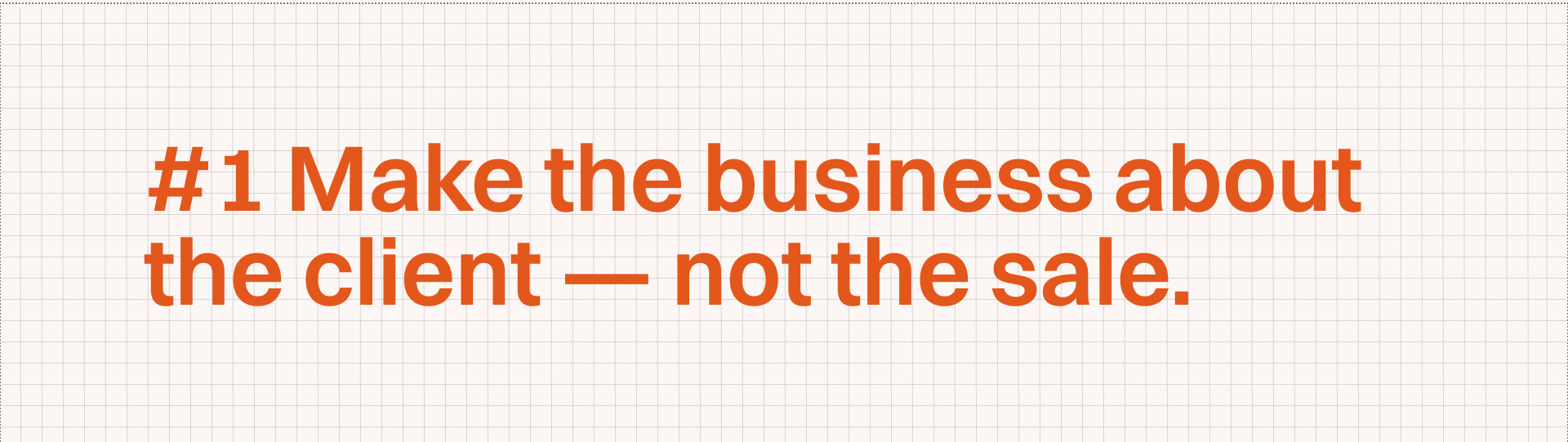
Wells is direct about this one. There are companies, he says, backed by private equity and governed by a single mandate: profit is king. Wells acknowledges that profit still matters. After all, every business exists to make money. However, he argues that centering the business on profit, rather than on the client, puts everything else at risk.
"Taking care of your client is the only real objective you have. If you do that one thing, all the other good things follow."
That philosophy shapes how his company operates at every touchpoint, including who owns the customer relationship. From the first phone call through the final day of work, the same person follows each customer through the entire process. It’s the concept known in medicine as “continuity of care,” something Wells carried directly from his medical training.
The industry's tendency to prey on homeowner anxiety is real and common. Wells went the other direction: lead with education. By the end of every inspection, a customer should understand what they have, what caused it, and what it takes to fix it. That's the main purpose; selling the job is secondary.
This one sounds obvious, but it rarely plays out that way.
Wells has watched the cycle repeat itself across companies of every size. Good year rolls in, equipment gets bought, overhead creeps up. Bad year hits, and there's no buffer. The spending tracked the weather instead of the strategy.
"Every dollar that goes out to pay a bill comes off your net profit. And that net profit is what you use to grow your company."
His advice isn't to be stingy — it's to think past the current year. Every purchase should have a clear answer to a simple question: does this make the company stronger in three to five years? If the answer is yes, the timing almost doesn't matter. If the answer is no, a strong quarter doesn't change it.
The companies that survive multiple cycles are the ones that built spending discipline into good years, not just bad ones.
Wells's callback rate — customers calling back with warranty claims — is under 2%. He'll tell you exactly why.
"There's only one reason that's true. My production teams have been with me for over a decade."
Half of his company has been there since the beginning. They've done the work a thousand times. They know what “good” looks like. And when people know their craft that deeply, repairs hold. Warranty calls don't come. That's not just a culture win — it's a cost structure advantage most of his competitors carry, and he doesn't.
Retention isn't complicated, but it is intentional. Health insurance, benefits, and commission structures that allow folks to achieve their own dreams. These are the things that make someone choose to stay when they could leave.
"You can't expect someone to stick around for 15 years if you're not taking care of them."
It’s logic that goes back to the principles you’re taught in school. Treat folks well, and they’ll look after you, too. Loyal crews produce consistent work. Consistent work means fewer callbacks. Fewer callbacks mean more margin and a cleaner reputation. That reputation attracts more clients.
Foundation repair companies don't fail because the demand dried up. The work will always be there. They fail because busy years convince owners that the business is working, when really the business is just running.
The ones that are still here after the next down cycle will be the ones who figured out the difference — and build accordingly.
Curious how ArcSite can help you run your foundation repair business more efficiently? Click here to chat with our team.