Build or Buy? 5 Questions to Ask Before You Pick a Field Software



AI can build you a quoting tool over a weekend. You describe your price book, paste in a few formulas, and by Sunday night you have something that spits out a number. Walk any trade show floor this year and you'll find a dozen new apps promising the same thing.
Getting a tool running is the easy part. Keeping it accurate, secure, and working on every job, every season, is the hard part. That cost shows up later: in a takeoff that shorts your margin, a rep stuck on a Saturday with no one to call, or a customer list sitting somewhere no one has checked.
Before building your own tool or signing up for a new one, ask these five questions before you trust it with your jobs.

1. Who Protects Your Customer Data?
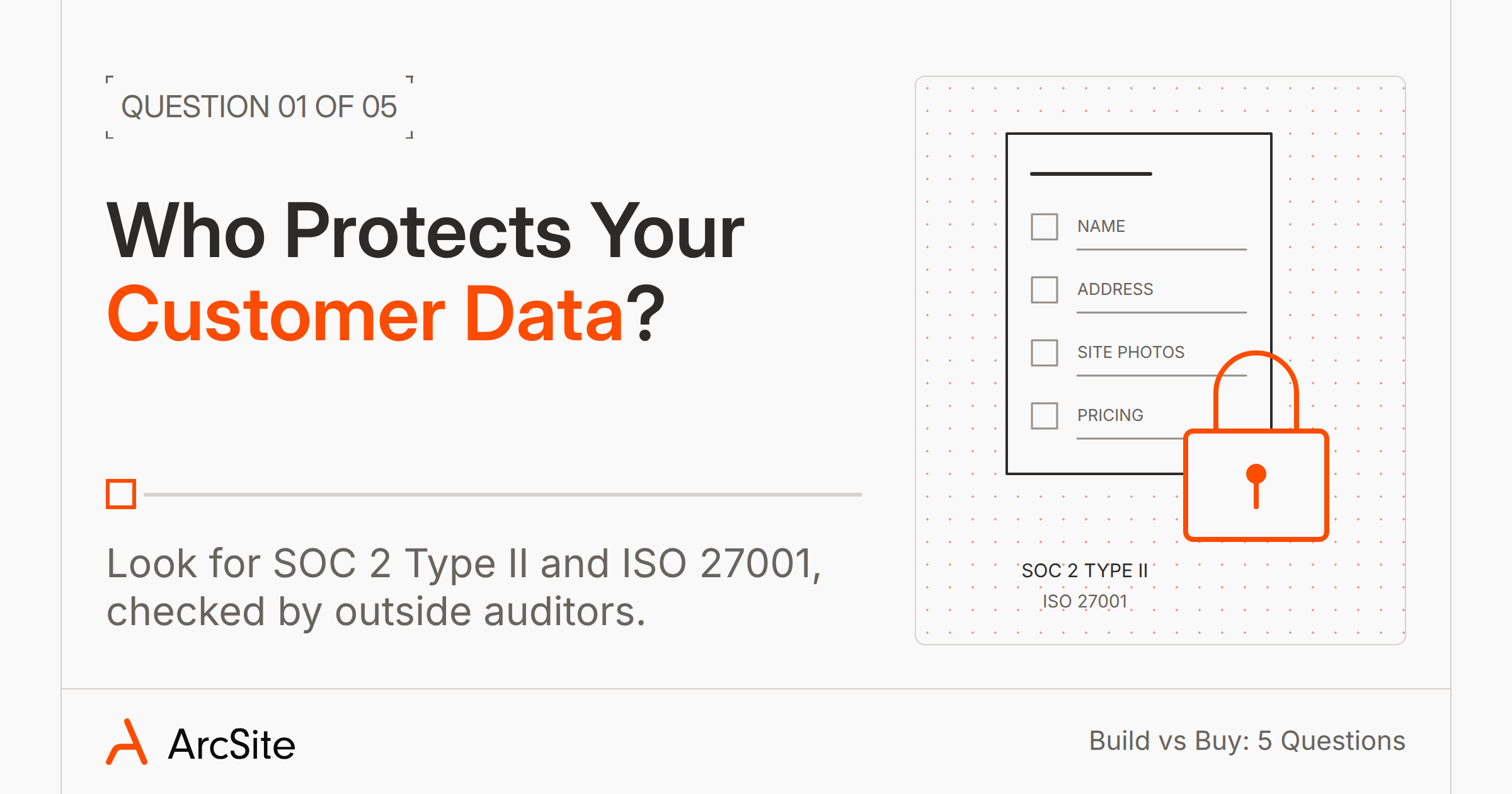
Your quoting tool holds more than prices. It holds homeowner names, addresses, site photos, and the pricing you spent years getting right. If that data leaks, you're the one calling customers to explain.
Ask the builder or the vendor one question: has an outside auditor checked how it's secured? A weekend build won't have that answer. Many new apps haven't gotten there yet either, since audits take time and money a young company tends to spend on features first.
Ask one more: is your data being used to train someone else's AI model? Plenty of contractors don't want their customer list and pricing feeding a model they don't control, and a weekend build rarely gives you a clear answer.
Look for two certifications: SOC 2 Type II and ISO 27001. Type II is the one to ask about by name. Auditors test the security controls across a stretch of time, so a passing report means the controls held up day to day, not only on audit day.
Where ArcSite stands: ArcSite holds SOC 2 Type II and ISO 27001. Independent auditors check our security, and the Type II report confirms the controls hold up over time.
2. Will the Numbers Be Right Every Time?
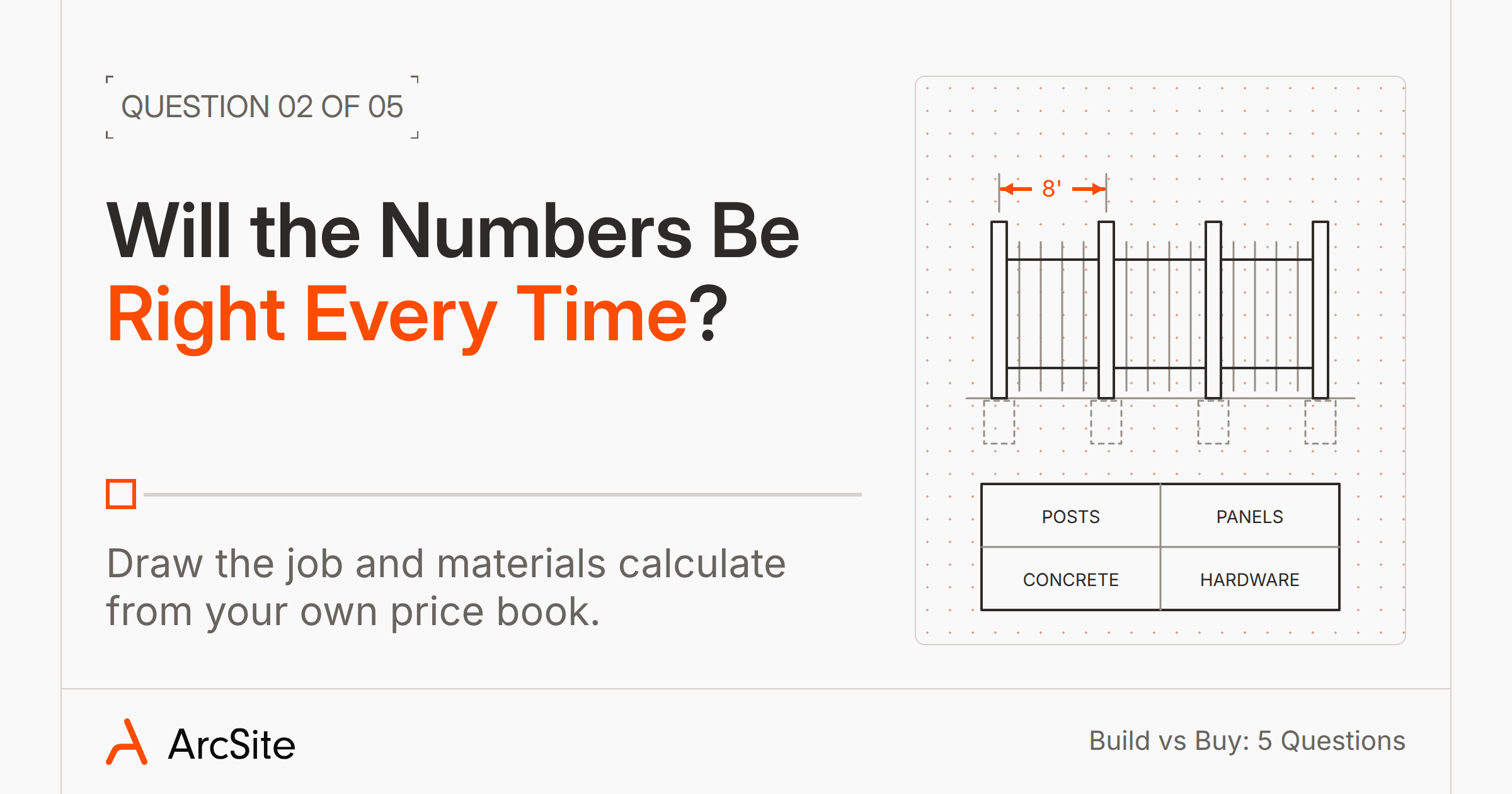
A takeoff is only as good as the formula behind it. One broken cell, a post spacing that didn't carry through, or a concrete count copied from the wrong row, and the mistake comes straight out of your margin. You may not catch it until the crew is on-site and short on material on install day.
Homegrown tools break this way because one person wrote the formulas, and they rarely get tested after the first few jobs. Ask how the tool calculates materials, where the prices come from, and what happens when you change a measurement halfway through a quote. Then open a takeoff you saved last week. When the crew rolls up to that job, the report should still be there, with the same numbers you sent the homeowner.
Where ArcSite stands: Draw the job and the posts, panels, concrete, and hardware calculate from your own price book. Change the spacing and the whole material list updates with it.
3. Who Fixes It on a Saturday?
Tools break at the worst time: mid-job, mid-season, with a homeowner waiting on a price. If you built it yourself, the fix waits on whoever built it. When that's a freelancer or the office manager who's good with spreadsheets, the fix might wait until Monday, and so does the proposal.
A new vendor isn't automatically safer. Before you sign, ask who answers when it breaks mid-job, whether that's a real person, and how fast they get back to you during your busy season.
Where ArcSite stands: A dedicated support and onboarding team handles the fixes, so your people stay in the field.
4. Will It Still Be Around Next Year?
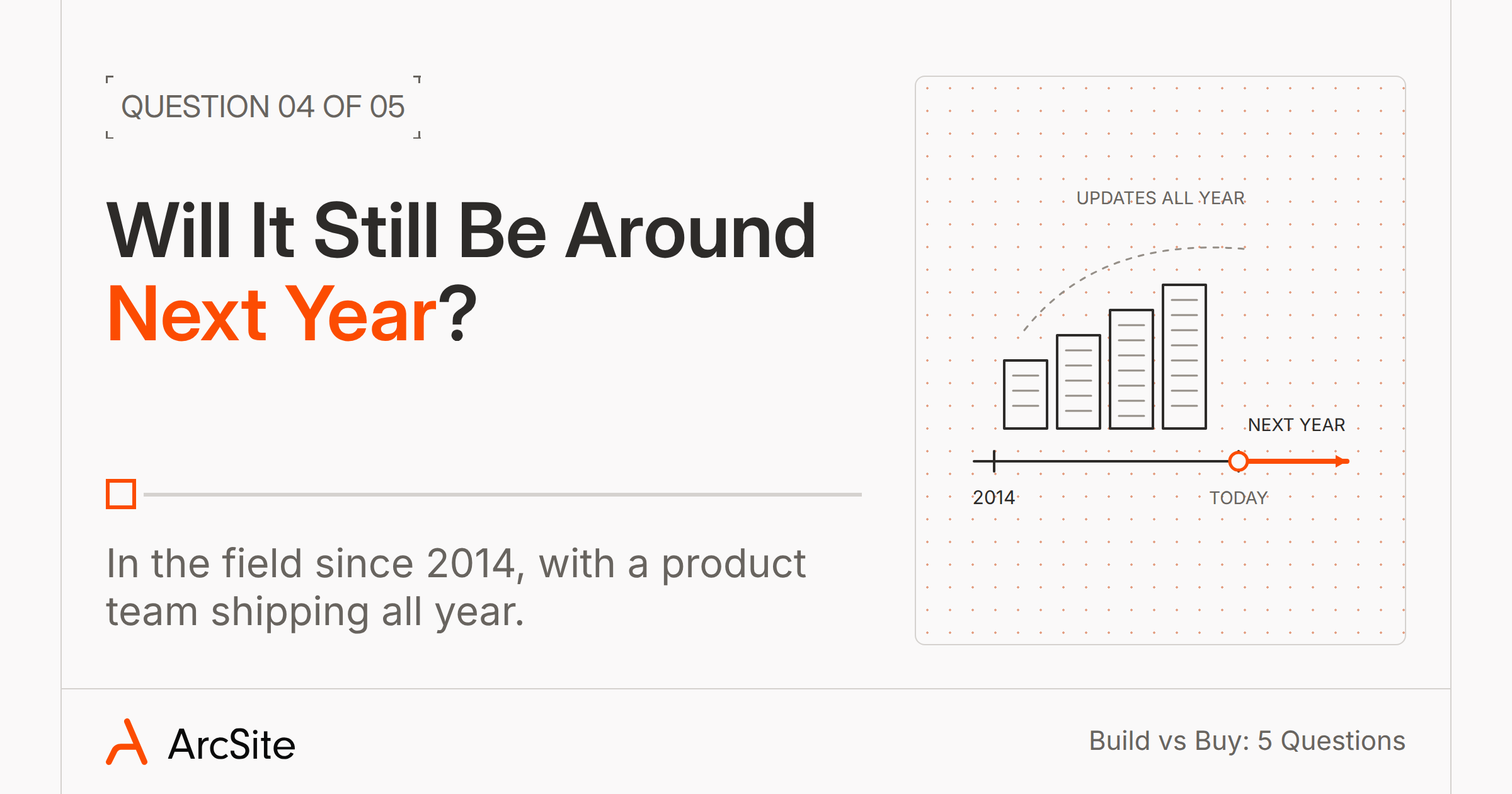
A homegrown tool lives in one person's head. When that person leaves, gets busy, or stops answering texts, the tool freezes where they left it. New apps carry a different risk: they come and go, and some of the booths at this year's show won't be there next year.
A weekend build carries one more dependency you can't see. It usually runs on one AI company's model and someone else's hosting. If that company changes its pricing, rewrites its terms, or cuts off access, your tool stops with it, along with every quote inside it.
Your business keeps moving either way. Suppliers change prices, products get discontinued, and the apps you connect to update on their own schedule. Someone has to keep the tool current with all of it, every season, or your quotes drift out of date.
Where ArcSite stands: ArcSite has been in the field since 2014, with a full product team shipping updates all year. Admins set pricing once, and every rep works from the same library.
5. Will It Hold Up When You Grow?
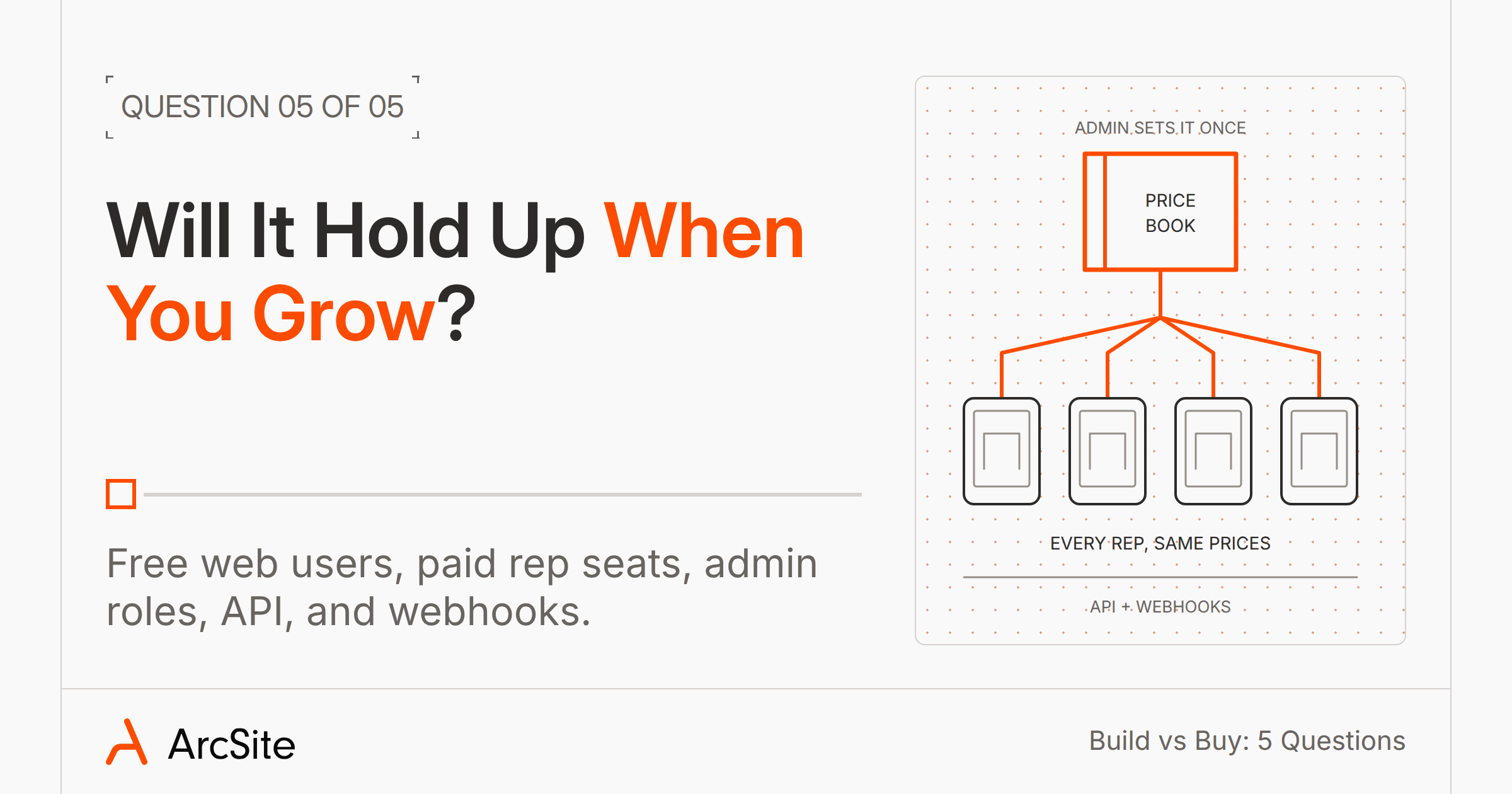
A tool that works for one estimator can fall apart at five. Ten reps quoting the same job ten different ways is how margin slips: one rounds up on posts, another forgets the gate hardware, a third works off last year's prices.
Ask how the tool handles more users, who controls pricing, and whether it connects to the software you already run. If the answer is "we'll add that later," you'll be the one holding the bag when you hire rep number six.
Where ArcSite stands: Web users are free, reps get paid seats, and managers get admin roles. API and webhooks connect ArcSite to the tools you already run.
Build What Sets You Apart. Hand Off the Rest.
Building your own tools can make sense. A custom tracker your crew lives in or a dashboard nobody else has? Build it. The drawing, the material math, and the proposal are different. A mistake there costs real money, and the security, support, and updates behind them don't take a season off.
You already know how this plays out from the other side of the job. A homeowner could buy the rock, crush it, and lay their own patio, or crawl into the attic with a YouTube video to fix the furnace. Most of them hire you, because they'd rather spend that time elsewhere and they want the job done right. Your software deserves the same call.
Let ArcSite handle the drawing, the math, and the proposal, and spend the time you get back on the work that grows your business. Billy Tatum, a foundation repair contractor in Texas, describes the difference:
"I didn't have to do pricing. I didn't have to hand draw things anymore. The detail, the professionalism, the look. And then no mistakes."
See It on Your Own Job
Book a demo and bring a real job. We'll draw it with you, and you can see the material list and the proposal come together before the call ends.
Categories
FAQs
Yes. AI coding tools can get you a working prototype in a weekend. The build is the fast part. The work starts after: keeping the formulas right, the data secure, and the tool running when prices, suppliers, and the AI tools underneath it change.
Build when the workflow is unique to your business, no software on the market does it, and someone on your team will own the upkeep. A custom tracker or an internal dashboard fits that bill. Drawings, takeoffs, and proposals carry your margin, so buy software a full team builds, tests, and supports for that work.
A weekend build usually runs on someone else's AI model and hosting. If that company changes its pricing, its terms, or shuts off access, your tool and your customer data go with it. Ask where the data lives, who backs it up, and whether it's being used to train someone else's model.
Ask how long they've been in business, whether an outside auditor has checked their security, who answers when it breaks mid-job, and whether they'll be around next year. A booth that can't answer those four questions is asking you to take the risk for them.
SOC 2 is an independent audit of how a company protects customer data. Type II means the auditors tested those controls across a stretch of time, so the report shows they held up day to day. ArcSite holds SOC 2 Type II and ISO 27001.
Related posts