[00:00]
One thing that we've seen that's been a tool to help a lot of contractors to be able to be less volatile in these types of environments, is expanding their structural repair offerings, so they can actually offer more holistic value add solutions. Awesome. So we'll get started. Nice and easy. Steve, can you just introduce yourself with your name and your title? Yeah, I'm Steve Andrews, co-founder at Structural Reinforcement Solutions. I wear a few different hats, so I guess they call me the business development manager. But I'm here sort of as a resource for contractors and a consultant at Structural Reinforcement Solutions. Awesome. So tell me a little bit about SRS. What do you all do? And just give us the sort of like elevator pitch? We are a company based on supporting contractors with structural repairs and primarily our our applications revolve around surface applied strengthening systems. So noninvasive approach to a lot of common structural repairs that contractors face and foundation repairs and commercial civil, industrial infrastructure repairs and things like that. Awesome. So tell me a little bit about your background. How did you get started in this industry, and then what led you on to found SRS? Well, I got my start in the construction industry from a pretty young age. I've been working in
[01:31]
the construction field and a lot of actually insurance restoration. So since I've been about 16 years old, I've been involved in this industry. So we rebuilt homes from fire, flood, catastrophic damage, and a lot of that revolved around structural repairs to to the property. So that's led me, you know, down the road that led me about ten or so years ago into the field of carbon fiber and using and implementing carbon fiber, teaching contractors to be able to utilize this material to to address a lot of common structural repairs that they're coming up against every day. So it was it was kind of a natural fit. We worked in a lot of basements and foundations. We saw different failures every day, and this was a real nice way when we discovered how many ways we could use carbon fiber and help contractors to be able to provide better value added solutions to their clients, it was it was a natural fit for us. So we formed Structural Reinforcement Solutions to be a support arm for for contractors and help them to be able to implement this kind of technology in their everyday use. That's awesome. So tell me a little bit more about the carbon fiber product. I was looking at your website a little bit, and it just seems so innovative with how people are able to use this. And like you said, the technology is miles leaps and bounds beyond what maybe they were using before. Yeah, carbon fiber has really been a game changer for a lot of contractors that have gravitated towards implementing this type of technology
[03:01]
into structural repairs. And more people are were more familiar with it for high performance auto parts or aerospace technology. But we're taking the 30 years of background where that carbon fiber has been used extensively for those fields, as well as in bridge infrastructure and bridge repair, which a lot of people aren't really familiar with. But it's been tried, tested and proven in that heavy industrial civil infrastructure repairs. So we've we've helped contractors to be able to to utilize it. And there's some real distinct advantages with carbon fiber versus some of the traditional strengthening methods which traditionally have been steel. So with steel it comes with some some setbacks. And obviously steel has its has its place in the industry. And sometimes that's what's needed. But with carbon fiber, it has some significant differences and differentiators to that which which have some real advantages, especially when we're getting into repairing foundations. It has a super low surface profile, so it's only it's less than a 16th of an inch thick. It doesn't add any unnecessary weight to a structure. So when we get into strengthening commercial buildings where we're adding additional stories, we don't have to add additional weight or make something bigger and heavier in order to to strengthen it. And it's a lot easier to install. It it's a lot less cumbersome than working with steel and things like that. So it's it's been a natural fit for contractors that have gravitated towards
[04:33]
implementing this type of technology. And now it's very widely accepted to use carbon fiber versus some of the more old school ways that have been used in the past. That's awesome. Obviously, another really important part of the business is the sort of like community support network that you have. You know, you're bringing contractors together, you're kind of offering this sort of like learning environment as well, where they can further develop their skill set and learn new techniques and stuff like that. So tell me a little bit more about that side of your business. Well, education has become a really big key for for our business, and it always has been. It's sort of been, you know, a foundation building block for Structural Reinforcement Solutions to be able to teach and educate contractors on the benefits so that they can, in turn, turn around and be able to educate their clients on on the value of, of implementing this technology and why it might be the best fit for this particular structural repair project that they're trying to address in the field. So education and awareness around all the different types of applications that are available to them. And what that's been, that's been really key for us is being able to teach contractors all of the not only the performance and how strong and amazing the material is to to address a lot of these common structural failures and repairs that we're doing, but just being able to teach them and educate them so that they're better prepared to be able to speak to this type of technology and be able to market it and and really grow that side of their business
[06:04]
so that it's become, you know, a key channel for them to be able to expand and and grow into, you know, a lot of different other structural repairs. You know, sometimes outside of the foundation repair industry. Definitely. What's the footprint of your organization like? Do you have a team that you work with or just give me the lay of the land a bit? SRS works with contractors from coast to coast, so we we work with a pretty vast network of contractors right across North America, including Canada. And those contractors, they lean on Structural Reinforcement Solutions every day as a resource and a support arm for them to be able to get on demand support in the field so that they can prepare bids and proposals and get preliminary designs so that they can prepare submittal packages to their clients, so that it's a nice, polished way for them to be able to use our engineering expertise and our understanding of the materials to get that real support, where they can actually educate their clients. What we talked about, as well as to be able to sell and market these types of repairs more in their respective markets. But we deal with a pretty vast spectrum of different types of repairs, and that is largely driven because we're working with contractors in very different environments. We could work with a contractor in South Florida that's repairing a seawall or something of that nature. And then we're working with contractors in the Midwest that are repairing bowed walls. And then in California, we might be working with a contractor
[07:35]
that's doing a parking garage or retaining wall or something of that nature. So it it really does vary by region, the types of repairs. But the common thread is that they're able to utilize carbon fiber and our materials and support to, to address a lot of these issues. Absolutely. The geography aspect is actually really interesting for the foundation repair industry, because it really almost changes the niche you work in, right? Like whether that's softer soils in the middle of the country or here in California, you're having to worry about like earthquake safety nets. And again, in Florida it's a completely different ballgame over there. So have you noticed that like some geographies or conditions are driving more work for foundation repair pros than others? And geography does play a big, a big role in the types of repairs that we see coming in. So, for instance, in California, on the West Coast, Washington, Oregon, we see a lot of seismic upgrades and where carbon fiber has been long utilized now for seismic retrofits and seismic upgrades to make structures stronger and safer and more resilient to earthquakes. And that really, we see the types of failures are very indicative of that environment. So in California, let's say, for instance, we get a lot of lateral stem wall cracks in foundations. And that's very unique to the California market as well as we see a bit of that in Arizona as well. When we get into the Midwest and other types of areas
[09:07]
like that new Jersey, we see expansive soil conditions where we have a lot of clay soil and expansive soil, where that puts a lot of pressure on CMU block walls. So in that particular part of of of North America and in the US, we see a lot of CMU block walls. And that's very, very common for that for that region. And then combine that with the soil conditions that we see in those areas. That really makes a recipe for for bowed walls, where we see that's majority of our of our strengthening. When we get onto the coastal regions, we see a lot more seawall strengthening and that type of thing. And a lot of the, you know, the metropolitan city areas, it comes down to a lot of commercial repairs where they're parking garages that are failing and areas of the country that have heavy salt use or extreme weather conditions. We see a lot of corrosion that that starts to prevail in a lot of these structures. So in those instances we see a lot more corrosion where they have a lot of sand or a lot of salt being used. In some instances in parts of the country, we see hurricane damage as that's part of part of the the common repairs that contractors are facing and damages from storms or building upgrades where, you know, let's say in Miami, Surfside, after that building collapse, a lot of, you know, a lot of big commercial buildings are now having to meet new code upgrades in, in their local market. So there we're able to be a resource
[10:37]
to help building owners and engineers be able to understand and utilize carbon fiber to upgrade their structures and make them more safer for their and their. Their the people that live in the trying to say. Definitely, I think, you know, when things like Surfside happen, like I think it really just calls attention to something that you maybe don't think about on the day to day, like you assume all buildings you go into or safe, or you assume that your home is built the way that it's supposed to, but it really exposes something, you know, a little bit more systematic in that area, right? Like if the code wasn't up to par in general, now it's like become a big push to just get everybody in that area operating on a more safe and controlled level in terms of new buildings and also repairs that are going up. I want to zoom out a little bit and talk about just how have you seen the industry evolve in the time that you've been working in it? Obviously, you've been doing this business for years now and you have a lot of experience in the industry. So what's one of the biggest shifts that you've seen over the course of your career? Well, we've seen a lot of the infusion of private equity come into the foundation repair market, where there's been a lot of consolidation of some of the top performing companies in each respective market, and with the introduction of private equity, where you might have one large private equity company that owns a dozen or more foundation repair companies across the board. So we've seen that and we've seen how it impacts some of the smaller contractors
[12:09]
that are competing against some of these larger conglomerates in each market. And we've seen the need for those smaller contractors, or not necessarily even smaller contractors, but privately owned contractors be able to actually have to lean on more technology and essentially kind of up their game to be able to compete with some of these larger, larger contractors. And that largely comes down to how how are they going to be able to creatively market and educate their their contract, their clients and their client base as to the value of dealing with independent contractors and, and being on a, on an even playing field so that they can compete against some of these more larger, national, larger national companies. We've also seen over this time a much greater adoption for carbon fiber within the engineering community. And that's been key for us. We our products are specified every day by engineers who understand the value of of carbon fiber. And they'll specify a carbon fiber repair in in a engineered design. And then the the contractors on on that end of it will receive that information from the engineer. So we've seen a lot more adoption in the engineering community to gravitate towards this type of technology. And I mean, the the benefits that we could speak to as to why, you know, the engineer is working on behalf of the client to find the best solutions for, for them and often the most cost effective way to do it.
[13:39]
And that's where we've seen, you know, our value proposition is repair versus replace. And we can keep structures standing safer for longer without having to tear them down or rebuild them. Which and in the case of a lot of asset holders, whether it's your residential property owner or you own a building with a parking garage and those those building owners are really trusted to to find something, a solution that's going to be able to work for them and keep that building safe for for everyone that's using it every single day. So we've seen a lot more adoption and acceptance to carbon fiber. And I think that just comes from just the awareness over time. And and speaking to the value of it, Definitely, I want to go back to what you just said about the private equity aspect of it. I think that is something that's going to really resonate with a lot of folks watching this. Like, if you're somebody who owns your own business and you're having to go up against this, you know, conglomerate that has basically unlimited cash and very, very deep pockets, you're really hard pressed to be able to stand out in your industry, in your market and be able to, like, go head to head with these kinds of folks. So if you had to give like three tips or like three recommendations based on your experience of what you could do if you were in those shoes, what would you say? And for any, any contractor that's competing against a large conglomerate or private equity owned contractor in their market. I think one of the key
[15:10]
key aspects to be able to compete effectively is to really sell yourself on the merit of your company, your history. What makes you really what makes your company special in that field? And for a lot of our contractors, they're multi-generational contractors. They've been in this space for, you know, sometimes 30, 40 years or more. That might be we might be working with the son now of the owner who's who's retired. And their legacy is very important to them in each of their and each of their markets. So I think when the contractor can really pride themselves on their credibility in that space and the fact that they're locally owned and they're able to actually, you know, walk through a neighborhood and speak to dozens of different projects that they've done over over time, and they have personal relationships with lots of people in that community that they're working in, and that money is actually reinvested back into those, those respective communities, which I think is, is very important to and also their reviews. I mean, those reviews speak for themselves. And when you can get into, you know, speaking to what your clients have to say about your types of repairs. I mean, I think when we deal with some of the real large private equity companies, you know, the reviews sometimes speak for themselves and they're less than savory for, for some of these, these large, these large companies. But again, I think another, another piece of advice that I would give to any
[16:41]
privately owned company is to be able to. And a lot of them do a very, very good job of this is not being pushy in the sales environment. And when it comes to selling foundation repair, a lot of these companies can be very pushy to sell a long list of products into into a project just because they're very they're incentivized to sell. And the commission structures and the compensation structures are really set up in such a way where I'd argue to say that they're not always looking for the best solution for the client. So for any privately owned, independent contractor, being able to sometimes even say, you know, there's actually nothing that really needs to be done here, your structure is actually or maybe it's something that can be addressed much more cost effectively than a proposal that they've gotten from one of these large companies that have come in. We've seen instances where $60,000 or more of work has been proposed to to repair a structure, and one of our contractors has gone there. And the solution is literally either a small repair or maybe it's carbon fiber or nothing at all. And we get that feedback as well. And the client is usually flabbergasted that, you know, they don't have to spend $60,000. And I think that builds the kind of trust and rapport up with these guys where they I mean, that's just irreplaceable. And, you know, maybe, maybe that job doesn't materialize into anything,
[18:12]
but you've done the right thing for the customer and you've put their needs, you know, ahead of your own in that, in that instance. Exactly, that level of trust and honesty, I think, is something that customers are really struggling to find and find really refreshing when they do come across it. Because, you know, maybe I didn't have a job for you right here and now, but now you've built my trust, you know, put a really good taste in my mouth for when I might need something down the line. And that's exactly who you're going to call up the next time. And it just speaks a lot to doing business the right way rather than having it be very, you know, incentive based, money based or kind of just trying to get the most out of the customer that you possibly can. I think consumers are smart and they definitely know when they've been, you know, kind of taken on for a ride there. I want to shift a little bit and talk about some of the macroeconomic challenges going on right now. There's labor shortages, gas prices are high. There's a lot of uncertainty right now overall in the in the industry. So how have you seen some of your contractors dealing with this? And do you have any advice for someone who's sort of going through those challenges right now? Well, I think in any kind of economy where there's going to be challenges, as far as I mean, we have surging fuel prices, I mean, the overheads and the operating expenses for any contractor right now are inevitably going to be increasing. And that's just something that we see right across the board. One thing that we've seen that's been a tool to help a lot of contractors to be able to be less volatile
[19:43]
in these types of environments, is expanding their structural repair offerings, so they can actually offer more holistic value add solutions. And maybe they were really dialed into one particular type of repair. And in these types of environments where we see contractors that they might only offer one, one, one solution for a particular, a particular repair that they market. Maybe it's piering. And those piering contractors, let's say, when they incorporate carbon fiber and chemical strengthening and other other solutions that are addressing some of the root underlying causes to these common structural repairs, it's really helped them to be able to expand their business and use the leads that they're getting to be able to offer more value add solutions where they're actually addressing more than, just maybe, what they were called out to address in the first place. There might be other underlying, you know, problems that are going on in that foundation, but now they have the tools to be able to actually address it and provide their clients with a more a we call it more of a holistic approach to to foundation strengthening and foundation repair. Maybe that foundation doesn't need underpinning. It actually needs to be stabilized in other ways. Maybe the the concrete condition is, is failing in such a way that it needs just chemical strengthening. But just having more tools in their arsenal helps them to be able to expand their business with the existing leads
[21:13]
that they're already generating. And lead cost is is going up right across the board. And I think that's going to be a pain point for a lot of contractors. And the cost to generate a traditional lead on using Google SEO right now is being driven up in every single market, and there's you know going back to some of the private equity companies they're driving that lead cost up in every single market. So it's even more important for contractors that are working independently to be able to take the leads that they are generating, and to really be able to offer a full value, holistic solution for their clients. Exactly. Another really big challenge is obviously like material costs, and the inputs are getting more expensive. The price of steel changes from day to day. The price of aluminum changes from day to day. And that's really hard to stomach as a smaller business owner, because you might have sold the job at price A, but and you thought your cost would be, you know, X, but then actually your costs are Y. So you really should have sold your job at price B, and that's really difficult to keep up with. How have you seen, you know again folks that you're working with like keep up with that and be able to still protect their margins and be profitable on the jobs that they're doing. For contractors. I think it's very important for them to be able to understand their true costs in those materials, and know that it's not going to be fluctuating on a week to week, month to month basis. Like a lot of commodities, steel is a great example of what we've seen, you know,
[22:44]
significant increases in I mean, we've seen those prices have, have, have gone up right across the board. But depending on the backlog of the contractor and how long into the future they've sold that particular project, it's even more important for them to understand their material price is secured for, you know, the following year. And I'll speak to Structural Reinforcement Solutions. We've stabilized our prices over several years where we're able to sell, you know, the same materials at a price that we were selling three years ago. And that really is is important for contractors to really understand their true cost in each of these projects. I mean, shipping costs and things like that are largely, you know, they're out of everyone's control with fuel prices and things like that. But with commodity prices, it's even more important for contractors to be able to source from suppliers that are also, you know, manufacturing domestically. And that's been a big thing for us is to be able when we started Structural Reinforcement Solutions, what was important is that we were able to control those costs by sourcing all of our materials and our manufacturing domestically. And that's really helped us to be able to not pass on any kind of price increases to our customers, because we're manufacturing here in the United States. And that's been that's been key for us where we're not, you know, at the mercy of different tariffs and shipping costs for driving material from from overseas. And that also,
[24:15]
in turn, helps to deliver a much more regulated, consistent quality for for all the products that we manufacture as well. There's a big a big difference in materials that we see coming from overseas versus manufactured domestically. Exactly. Having that predictability in your business is really important. And again, like you said, being able to maintain the same price for three years builds a lot of trust with your customers there, knowing that you're trying to do right by them and, you know, doing everything you possibly can to run your business in the right way so that you can serve them in the best possible way. Apart from commodity costs, another really big piece of the cost puzzle is workforce and labor shortages, which have a different kind of states across the country depending on what market you're in. But again, how have you found that? Are folks being able to find the labor that they need and find it at a cost that makes sense for their business? I think with the labor, the labor landscape currently, there's obviously a big rush to AI, and a lot of people have gravitated towards those types of things. And I think there is some volatility in the job market where people are wondering if their their role is going to be replaced with AI, you know, going down the road. And I think with, with carbon fiber and with structural repairs and chemical strengthening and the things that we see every day with the surface supplied strengthening, it requires a skill set that is very teachable, it's very trainable, and it's also something
[25:45]
that isn't going to be replaced by AI in any, anywhere in the near future. I'd like to see an AI driven robot go out and install carbon fiber on a foundation, or do some of the repairs that we see. So for the labor side of it, it's very straightforward repairs. And most of our contractors that are engaged in foundation repair, the skill set required to train an employee on carbon fiber is is really not a steep learning curve. So contractors have really gravitated toward it because it's a lot easier on manpower, tools, equipment, trucks, all those types of things. And it can usually be simply taught online. We do we do in-person training sessions. We we, we host regular trainings at our facility there in Ohio. But I think most importantly is that it's something that's trainable, repeatable, and we could take someone right out of the field who's never touched surface applied strengthening or carbon fiber before, and we can bring them right up to speed so that they're competent and they're able to confidently install carbon fiber in a pretty vast spectrum of structural repairs. I mean, we've taken guys that have never, never seen the material before. And in a very short period of time, they're not only strengthening foundations, we've helped them and taught them how to repair bridges. And that's the same crew that we're using to, you know, stabilize a bowed wall. So the same materials and the same manpower can be used to do a pretty broad spectrum
[27:18]
of, of different structural repairs. So I would say for our particular industry the the learning curve is very short, but I think there's going to be a high demand for this type of repair. And we've only seen that increase over time. So for any young person that's thinking about getting into the trades, I can speak from myself personally. That was the best thing I could have ever done, is actually learned hands on physical skills. To be able to work with my hands and be able to actually do something practical in the field, and I think that is going to speak volumes to job security. For anyone that's thinking about getting into the structural repair industry, there's so many opportunities for not only the contractors, but for for young people or anyone that wants to get involved with this. Right now. I think the there's there's a very bright future for this type of work. Exactly. I think that's that's very well said. And I think that's something that has on the minds of a lot of folks going into the workforce right now, because you've sort of been in this era where you were told, like, you should learn to code and you should go into like tech, or you should go into this like white collar profession and the way that like high school, college is sort of set up. It's sort of like channels you into that. And that's sort of the messaging you receive all the time. So being able to actually say like, know the labor market looks different today in 2026, when it did even ten years ago, and being able to have programs that offer training and education, to be able to have access to those things is really important. I want to go back to something that you said about how it's like very quick and easy
[28:49]
to get somebody up to speed on using the carbon fiber product and implementing that on jobs. Can you just quickly walk me through like what that training or teaching looks like for you guys? Typically, if we're going to train a contractor on how to utilize carbon fiber and chemical strengthening, surface applied strengthening methods into their into their business, we usually start with a discovery session with them where we're going to help. We're going to understand a bit more about their business, the types of repairs that they come up against most frequently in their market. And then we'll go to to a training session. Typically that's going to be about an hour long, and we're going to go through the various different types of applications, installation techniques, best practices. And this can typically be done online in about an hour. And we usually encourage, you know, as many people from the company to to join as possible, especially the, the, the, the project managers and the the field managers who are going to be this is sort of a train the trainer so that those, those long standing employees are going to be there and a staple for that company to be able to train our these methods to, to any new personnel that are going to be coming on board. But typically a one hour training session, we can go through everything. And if they want increased education down the road where available as a resource, and we do refresher courses for new crew members and people that are coming on board if they want to, to understand
[30:20]
a bit more about it. We also do tailored training specific to, you know, the types of repairs that they're doing. And sometimes that means, you know, we're going to be preparing an engineered design which encompasses material layout and how it needs to be installed. So we'll schedule a specific a specific meeting to be able to help them to, you know, really specifically address this repair that they're going after and make sure that everything is is, you know, all the I's are dotted and T's are crossed so that they have a thorough understanding of the material behavior, how it works. And, you know, so they're really set up for success in the field. That's amazing. I think being able to put that knowledge right into the hands of the people that are going to be using it also empower them to like, share their knowledge as they go on. It just creates like a really nice, like circle of education, right? Because everyone's been empowered to teach the things that they've just learned, sort of going back to the like, business operations part of things. Where do you think pros are leaving money on the table operationally today? I would say foundation repair contractors and the professionals in this field leave money on the table when they're not up to speed and they're not educated on what's available to them to address very common problems that they're coming up against. And what we see is if they're not if they're not confident in different applications and materials and solutions that are available to them,
[31:50]
they'll gravitate to what they're most comfortable with and what they've been selling for years. So if they put themselves out there a little bit and maybe go through an online training session where they can be exposed to some of the solutions that we're teaching other contractors, once they see what some of the top performing contractors are doing and how they're utilizing technology and materials to really address some of the things that they're leaving on the table. It really is kind of a light bulb moment for a lot of these guys where they can see, oh, I've never actually even addressed that before, or they don't speak to it. When they're out on doing a client consultation, they're going to gravitate typically to the things that they understand. And that's a normal, you know, that's going to be normal human behavior is that you're going to speak to what you're most knowledgeable about. And I think the consumer behavior has changed a lot to over the years now, where the consumer is much more educated. We see we see the consumers now will come to us and they'll they'll learn up on, you know, all the different technology and repairs. So some of that heavy lifting is already done prior to the contractor even visiting the home. So they're the consumer. And to their credit, I say the consumer that's sourcing a contractor for foundation repair is a lot more savvy and up to speed on some of the solutions. So if the contractor isn't going to speak to some of the things that the client is already versed in and understand, then I think, you know, that doesn't bode well for the contractor at that point. You know, if you have to rely on the homeowner to say, well,
[33:21]
why aren't you going to use carbon fiber for this? Or why can't you use some of the chemical strengthening? So I think to, you know, to any contractor, my advice would be to get as educated as possible on everything that's available to you so that you can offer a complete holistic solution. I mean, these guys are the expert. They're being called to the to the property to really give a professional assessment. It's not just to give a price on on whatever you're called out for. You know, consumers are after a lot more than that now when they call a foundation repair contractor up. Exactly. If the homeowner is giving you the vibe that they know more than you do, then that's that's not the good luck. That's not what you want to be doing going into somebody's home. And part of that professionalism is obviously like making sure that your business, like, operates on technology. That's like in line with how it is in 2026. And what I mean by that is a lot of companies that are, like you said, sort of like generational companies that have been passed down for the last 40, 50 years might still run on pen and paper or spreadsheets or an Excel document. Can you talk a little bit about why it's important to sort of make sure your digital processes are brought into the era of 2026? Well, I think technology plays a very important role for any foundation repair contractor now in the current competitive landscape. And I think the more information that we have, I mean, we're drowning in information now at this point. So being able to distill that information
[34:54]
and make it palatable and understandable for the end user, which is their client, I mean, we're we're doing our part to try and educate consumers on the value of all of these different technologies and things, but the contractors that can be able to distill that and explain it in such a way, and there's a lot of different tools that contractors have. I mean, we have contractors in various parts of the country that that utilize technology to understand exactly the soil type, and they've basically pinned every single project that they've done over 20, 30 years, and they understand exactly the soil type and the conditions in every single neighborhood that they're working in. And then to be able to take that information, put it into their design, draw software, and be able to speak very as to exactly the conditions that are going on in their specific area, because they have all of this history logged into, into the technology that they're using for this, so that they can provide a real clear roadmap to not only the repair that they're doing, but actually as to, hey, this is why this is happening in your area. This is why we've fixed a job down the road where your neighbors had a very similar type of of repair that we did a few years ago. And here's the soil conditions that we see in this in this area. And I think to, you know, when it comes to, to technology, there's lots of different ways they can implement it. I think capturing reviews, being able to actually tell your story
[36:25]
as, as a foundation repair contractor and, and I think the ones that do that very well, you know, incorporate that into, into their whole sales process as well as well as their drawings and their proposals for a lot of these projects. And the more polish that looks, you know, the more that's going to bode well for you to landing that project. And if you're if you're missing key aspects of the project because you haven't captured it, or the contractors been in too much of a rush to get in and out and close that sale, then you know, they're really missing. They're missing the boat on that. But when we get drawings from contractors, we see we see contractors that have done a fantastic job of really capturing all of that information. They're doing their level surveys, and they're doing a great job of actually telling the the full story as to what's going on in, in their particular project. And there's some amazing tools that can scan foundations. Now, we can understand exactly what's going on underneath that foundation. We can identify voids and all kinds of things like that. So some of the technology is is very, very beneficial. And the more contractors that can implement it, they're definitely setting themselves up for for more success. And it also automates this whole process to and helps to be able to turn around a bit faster and more efficiently and, and leverage that. I mean, that's just on the kind of software side of things, but on, you know, as far as our products and things like that go, I mean, that technology has been out for
[37:56]
for a long time, but now it's just being, you know, more recently utilized for foundation repair contractors. So the more they can do to be able to incorporate that, the explanations and the solutions into their proposals, I think they're going to have much higher. They have much higher closing rates. Exactly. That's what, you know, partly why ArcSite is in business. Right. Like we kind of have been finding with a lot of our customers, like whether they go from pen and paper or a spreadsheet or some sort of like slightly wrote process over to ArcSite, they're able to, like, really present themselves with the level of knowledge and depth and intelligence that they already have. Right? They already have the institutional knowledge. They're already experts in their fields, they're already really well respected. And it's just about showing up as you are rather than, you know, here's a drawing I did on paper and here's what I'm going to do for you. But actually the quality of my work is like stellar. It's just the presentation is not quite there. But that's one of the things we really like to see with our customers is being able to, like, show up with the depth and expertise that you actually have. Gone are the days of being able to do a, you know, a little sketch on the washing machine in the customer's laundry room and, you know, just scribble down a price and say, you know, here you go. Do you want to do you want to do this or not? I mean, now, I mean, the playing field is such where, you know, most contractors have to really up their game. And the more polished and the more complete their proposal is going to look, the better that's going to be, you know, not only for the customer to be able to understand exactly what's going on.
[39:26]
But, I mean, they're they're going to really stand out from the crowd if they're able to actually put a nice a nice submittal together. Exactly. Looking forward now, what is one trend or challenge that you're going to be watching really closely over the next 1 to 2 years? That's a good question. I think some of the biggest challenges that we're going to see is more than likely the the deterioration of structures. I mean, that's not that's not going anywhere. And I think we're going to see code increases as they have. We're going to see building codes change in such a way where especially in the commercial sector, building codes are I mean, they're mandatory in so many areas where they need to be upgraded. So if you're if you're working on the West Coast, seismic building upgrades in residential and commercial infrastructure, that is only getting stricter. So that's a that's, you know, it's a it's an industry challenge that we have to step up and and meet. And then I think we've also got the, you know, this labor shortage of of people that, you know, need to really we need to really be able to educate more young people to be able to come into this industry and gravitate towards the construction industry. I've got a friend of mine that he's actually traveling right across Canada right now. Manny Nebs and his whole initiative is to be able to really understand the pain points of contractors
[40:56]
and coast to coast. And he's he's done a fantastic job of being able to try and recruit more young people into the construction field, because I think one of the most imminent things that we're going to face is finding qualified people to really be able to actually get out in the field and carry these repairs out. And I think they're going to be some of the most highest paying jobs in the country. And for especially for any young person that's thinking about getting into the field. So I think the labor shortage is definitely going to be come into play. And then also the competitive landscape is changing. So contractors that are competing in markets where it's heavily competitive, they might have a sea of foundation repair contractors that they're going up against. Being able to differentiate themselves in a very competitive landscape is going to be an ever increasing need for them to really up their game, up their marketing, up their education, be able to implement, you know, solutions and products that are really going to address needs in the field and help them to stand out. And kind of a sea of of competitors. Absolutely. On the labor shortage front, what is something that you think foundation repair companies should do today to make sure they are able to attract and retain that younger talent?
[42:14]
I think for younger talent to attract them into the foundation repair industry and for contractors to be able to attract them into, into their business, there's a lot of places where they could start. I mean, there's job fairs where they can go and really get out in front of a lot of these young people who are getting out into the labor force and contemplating what field or area of study that they're going to go into, but also compensating these people for, you know, accordingly for, for this work that they're doing. I mean, some of the foundation repair tasks that they're entrusted to do, they're not easy. I mean, some guys are out there digging holes for for piers. I mean, some of this is, is is pretty labor intensive work, but with the compensation that can come along with it, I think that's going to be a real a real big thing. And I think for for young people that are really they have that question mark there as to what fields are going to be consumed by AI. Is that job even going to be there waiting for them at the end of their degree that they're getting, you know, university or college degree? Is there a job waiting for them at the end? So for contractors, that would be something I would be doing at a at a high school level and getting getting young people interested in coming into the, into the construction field. And I mean, that was that was key for myself. I was attracted by the fact that this is this is pretty, you know, relatively easy to get into. I was I never went to university or college. That was something I didn't do. I just got right onto the tools
[43:45]
and got real world experience. And that was my path. I'm not saying it's for everybody, but for myself. That's that's my story and I wouldn't change it for the world. I love, you know, jumping right in and getting that real, that real experience. And if you, you know, if you can pair up with a contractor that's willing to train you and educate you, and we have a lot of contractors that will take us up on on ongoing education. We'll go out to their company, train their staff and, you know, get them, get their team really up to speed and confident. There's there's, you know, young guys that we started working with now, you know, right out of high school that are coming up to their 30s. And you see that they've developed and some of them have started their own companies. And you know, they're they're feeding their families off of this skill set that we've taught them, you know, ten years ago, which is which is fantastic. And I think that's really what we want to do, is really help promote more people to get into this field because there's such a need. It's not going anywhere. Buildings aren't getting any younger. Obviously. We're we're building new construction. But I mean, even in new construction, we see failures all the time where things get messed, things get overlooked, things need to be corrected. So I would say the the need to get into this business and find, you know, fresh young blood to to come in and grab this by the reins is going to be an ever increasing need. The only thing I was curious about for my own sake is how did you end up finding ArcSite? I was just curious how the the connection came about.
[45:16]
We found ArcSite actually through an industry event. I believe it was. It might have been the Basement Health Association or one of these industry events where we cross paths, and it was a natural fit because, I mean, so many of our contractors are using ArcSite and the software to be able to put designs and proposals together. So the easier that we could make it for our contractors to be able to select the right product for the problem to address, you know, to address common foundation problems, and then actually put a nice proposal together. And then that helps us too, because then we're able to get better clear information to help them to be able to diagnose what it is specifically going on. And, I mean, we love to see contractors put more polished proposals and have more accurate information in their in their client estimates and quotes and things like that. So it really was a natural fit for us. I mean, the nice big upgrade to getting the the chicken scratch on on grid paper where we see little markups and things and we're trying to decipher it. So when we saw ArcSite and the technology, it really made sense for us to be able to partner with a company that had the ability to be able to help contractors to select products and put a nice, clear, polished drawing together so that they look more professional and our products are going to be better represented out in the field. Absolutely. And then I guess, how have you found that? Like, how have you found the adoption of Arcsite for the contractors that you work with?
[46:46]
Is it like easy enough for them to like get used to using the software, especially if they're coming from like paper or pen or some sort of other tool? Well, I think with the with the software, I believe it's, you know, it's really changed and upgraded itself over, well it hasn't upgraded itself. I mean, obviously there's a team behind it that's making it better, but making it more intuitive and easier for for contractors to be able to use. I mean, we've got contractors that are, you know, these are some some good old boys. There might not be they might be, you know, 60 plus years old and not necessarily used to, you know, some of the new technology, but the more intuitive it's become and the easier it's become to use and do a drawing on an iPad and do it out in the field. We've seen those turnovers on bids. It really helps expediate that whole process where, you know, there's a lot there's a lot of steps that are consolidated so that they can turn a proposal around in a matter of minutes, as opposed to having to go back to the office, write everything all out, put everything. They're able to capture that information in the field, put the drawing together, and then everything is clear and in one place so that it really packages the whole proposal up concisely. Exactly. And it's a nicer experience for the customer, too, because you're not getting some random person coming to your house and then waiting three days before they tell you how much it's going to be. You're able to be like, all right, this is the price. This is what I'm quoting you at. And you can kind of say yes or no right then and there, which is awesome for both the customer experience but also for the contractor, like you said,
[48:16]
to be able to win more bids. Some of the big some of the most missed opportunities we've seen are bids and proposals that go in. And, you know, there's just a few line items with no explanation behind it as to how these products work or how they fit. So being able to actually have all of that content and information, as you say, I mean, I think for the client, that's that's how I would want to receive the information. It's going to be a lot easier to digest and understand and really position the contractor, you know, it's going to elevate him above the crowd that typically they're going to be getting 2 to 3 estimates for most of these repairs. So if you're comparing one to the next it really is going to bode well if they're going to have the most thorough proposal.
Steve Andrews didn't start in a boardroom. He started at 16, doing insurance restoration — rebuilding homes after fire, flood, and structural failure. That hands-on background eventually led him to carbon fiber technology and, ultimately, to co-founding Structural Reinforcement Solutions
(SRS), where he now trains and equips contractors across the country to implement advanced structural repair systems in the field.
After nearly a decade working directly alongside foundation repair contractors, Andrews has a ground-level view of what separates the businesses that thrive from the ones that stall — and it's rarely what people expect.
The foundation repair industry has a trust problem. It's not a new one. But in a tighter economy, where fuel costs are up, leads are more expensive, and homeowners are doing their homework, it's becoming a competitive separator.
Steve Andrews has spent his career in and around structural repairs, starting in insurance restoration at 16 years old, rebuilding homes from fire, flood, and catastrophic damage. About a decade ago, that path led him to carbon fiber — and eventually to co-founding Structural Reinforcement Solutions (SRS). SRS trains and supports contractors to implement carbon fiber and chemical strengthening technology in the field.
Andrews sees that the contractors winning right now aren't necessarily the ones with the most trucks or the biggest marketing budgets. They're the ones who show up prepared to solve the whole problem — not just the one they were called about.

When market conditions get harder, contractors who built their business around one type of repair feel it first.
"One thing that we've seen that's been a tool to help a lot of contractors to be less volatile in these types of environments is expanding their structural repair offerings," Andrews says, "so they can actually offer more holistic value-add solutions."
The logic is straightforward. Lead costs are rising, driven up in part by private equity-backed competitors with aggressive SEO and ad spend. When it costs more to get a homeowner on the phone, you need to be able to offer more once you're standing in their basement. A contractor who can only quote one style of fix is leaving money on the table when the problem calls for something else.
Adding carbon fiber and chemical strengthening to their toolkit has helped many of SRS's contractor partners expand what they can address on a single visit: wall stabilization, concrete strengthening, and structural repairs that don't require excavation or heavy equipment. It allows contractors to go into the same job, solve their problem, and deliver more value.
Large franchise-style foundation repair companies dominate ad spend in most markets. But their size comes with a drawback - they don’t always have the homeowners’ best interest in mind.
"Their commission structures and compensation structures are really set up in such a way where I'd argue to say that they're not always looking for the best solution for the client," Andrews says.
He's seen cases where a homeowner received a $60,000 proposal from one of these companies, only to have an SRS-trained contractor assess the same structure and find that the actual solution was a fraction of the cost — or in some cases, nothing at all.
"The client is usually flabbergasted that they don't have to spend $60,000."
That kind of honesty doesn't always generate immediate revenue. But Andrews is direct about what it does generate: referrals, repeat business, and a priceless reputation.
"You've done the right thing for the customer, and you've put their needs ahead of your own. And that's exactly who they're going to call up the next time."
For independent contractors competing against well-capitalized competitors, this isn't just a values play. It's a strategic one.

1. They treat the job site as a diagnostic visit, not a quoting call.
The best contractors Andrews works with go into a property prepared to assess everything — not just what they were called for. A cracked wall might be the presenting issue, but bowing, moisture intrusion, and concrete degradation may all be contributing factors. If a contractor can only speak to one solution, they'll miss the rest — and increasingly, the homeowner already knows enough to notice.
"Consumers are after a lot more than that now when they call a foundation repair contractor," says Andrews.

2. They stay educated as the bar rises. Consumer knowledge has changed. Homeowners are researching carbon fiber, chemical strengthening, and piering methods before the first site visit. If a contractor arrives knowing less than the person who called them, it shows.
"My advice would be to get as educated as possible on everything that's available to you so that you can offer a complete holistic solution."

3. They focus on professionalism as well as technical know-how
Technology isn't just a back-office efficiency play. It affects how a contractor is perceived at the moment of truth: the estimate.
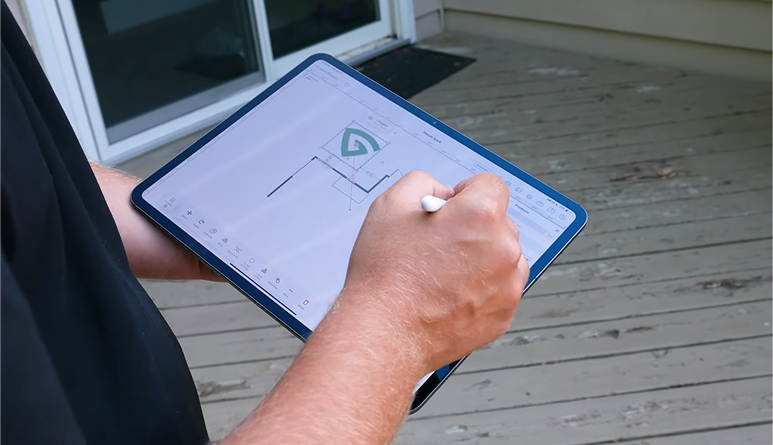
Andrews and his SRS partner contractors adopted ArcSite specifically because proposals assembled in the field — with clear drawings, selected products, and organized line items — do something that a rough sketch or a verbal number can't. They tell the homeowner that the contractor running the job is the kind of business they want to trust with their foundation.
"It really packages the whole proposal up concisely. It's going to be a lot easier to digest and understand, and really position the contractor. It's going to elevate them above the crowd."
When a homeowner is comparing two or three estimates, the one that looks thorough, clear, and professionally assembled wins more often than the cheapest one.
The contractors who've been winging it with thin offerings, aggressive sales tactics, and paper-based processes are getting squeezed. The ones who built well are finding that when the market tightens, there's more room for them.
The combination of capability, integrity, and professionalism doesn't disappear when the economy gets uncomfortable. If anything, it becomes the only thing that matters.
Curious how ArcSite helps foundation repair contractors present more professional proposals in the field? Click here to chat with our team.