Sanica Apte (00:01.166)
All right, Matt, so thank you so much for joining me today. We'll start off nice and easy. Can you just introduce yourself with your name and what you do?
Matt Chiaradonna (00:07.619)
Yeah, absolutely. My name is Matt Cheradonna. I am the president of the Northeast Chapter of the American Fence Association, and then I own a few fence type businesses in the fence space.
Sanica Apte (00:18.894)
Perfect. So tell me about the Northeast chapter of the AFA. How big is your organization and what does the organization do?
Matt Chiaradonna (00:25.667)
Yeah, so we cover the New England area for I know a lot of America they just see us as that little grouping of states up there in the Northeast, but it's Maine, Vermont, Rhode Island, Connecticut, Massachusetts and New Hampshire. So we cover a little bit of area, but a lot of states would say that we just had our most recent chapter event. It was like kind of like a mini fence tech and we had just around 500 people come.
in the 10. So we get a good group, not as big as national, but we definitely represent a good portion of the area.
Sanica Apte (01:00.354)
Perfect. So tell me a little bit about your background. I was doing some research before we talked and I saw one of your interviews you said that your family's been in the industry for like 50 years. Is that correct?
Matt Chiaradonna (01:09.323)
Yeah, yeah, exactly. So my family started a fence company in 1972. So we're up over 50 years now. My grandfather started it. grandfather sold to my dad. My dad had the business for a couple of decades. And then I stepped into the business in 2004. My dad got in a bit of an accident. And so I stepped up to take it from there. So yeah, I've been doing it for about 22 years. But the company's been around for over 50.
Sanica Apte (01:37.742)
Wow, what a story. That's amazing. So how'd you get to be like head of the AFA chapter?
Matt Chiaradonna (01:43.651)
I would say sometime around my 30s, not to date myself, I was really interested in the chapter. I knew the AFA, I had been in two events as a child and so I knew what it was all about and the education and kind of networking that could come along with it. And so I was trying to get in for a while, finally, scratch the surface, got on the board and one of my mentors that was on the presidency at the time kind of tapped me on the shoulders at an event and
didn't really quite ask more told me like, hey, you're the next president. I was like, okay, you say so. So yeah, kind of shoved upon me. But I've been past, I was vice president for two years, this will be my second term as president. So now, you know, kind of being in it for a while, it's awesome. It's really good to be a part of and give back.
Sanica Apte (02:30.178)
Love it. Yeah, I had to step up to the plate and now you're making it happen. I love it. So let's talk about sort of like, you know, the way that the fence industry has changed over years. Obviously you've been in the business a long time. So like, what are maybe like the three biggest changes you've seen over the course of your career?
Matt Chiaradonna (02:33.044)
Yeah
Matt Chiaradonna (02:45.194)
I would say the first biggest change is really just like a change in the way that people view the company culture, especially from the Northeast. But I think, you know, now getting to know people from across the country, it's a very old school trait. It's definitely been behind in catching up with business type of ethics and business running, know, bringing in entrepreneurial operating style of it's old, right? Like people
would like pick you up and throw you out to fire you right no HR so we've come a long way I think and since I was a kid to now of the way that we treat team members the way that we try to build structure and culture the way that we are trying to actually treat our companies like companies and not just a you know family business that we can kind of yell at everybody so it's come a long way from what I've seen in the old style structure of business to to now for sure I would say like technology
Back in the day, everybody was piece of paper. You were kind of considered technologically sound if you had carbon copy paper and you could draw on one and it made three copies for you. That was sort of like the leading tech. Now, obviously, people are using all different types of softwares to do lots of different things. So that's definitely brought the ability to run a fence company up a whole level. And I would say third is really like the camaraderie, right? Being part of the AFA. Yes, when I was a child, the AFA was there. And yes, there were
connections, but you are more limited to like a local area. And people were more safeguarded with their secrets. They didn't want to tell anybody else what they did like they had some secret sauce. But recently with social media, with more of a kind of national reach out, people are way more open to sharing ideas, sharing strategies, sharing, you know, successes, which is really helping the industry to move forward faster than it did when people were much more safeguarded and more
locally biased.
Sanica Apte (04:39.48)
Definitely, definitely. And another thing that's interesting about the fence industry is that it's almost like a bunch of little industries that you can niche down into lots of different specific categories. So tell me a little bit about that from your POV, what ones of those subcategories are growing? Which ones do you think are kind of declining in the market? Any sort of trends you're seeing there?
Matt Chiaradonna (04:47.297)
yeah. Yeah.
Matt Chiaradonna (04:59.946)
Yeah, definitely. So during COVID, you saw a big burst onto the scene of like small micro companies, people who worked for other companies before, but they were decent at the trade, they were good at putting fence up. And during COVID and after COVID, there was such a large demand for fencing, because people were home and spending more time in their backyard space that it allowed a big push of small companies to form. And there was a lot of demand at the time. So was good these last two to three years. It's very market
you know, different, right? Not everybody's feeling it the same way. But there is an overall pulse that the market isn't as strong that it is starting to slow down. Everyone watches the news and we're real time here March 27. So we know there's a lot of financial burden now on the consumer with gas and things like that groceries. It has shrunk. And so you're seeing a lot less of them. So while that was the trend, you're seeing them kind of fall off and get back into the mid size to large size companies that are out there running things. Now, you're seeing a big growth in commercial
when the residential consumer can't spend money, you kind of see more companies twist into the commercial market because there's still money being spent there. So that's kind of been the trend here over the last two to three years, specifically in the Northeast. But I also think kind of spread out through the nation. You're not seeing huge, huge growth pockets in established places. I'm sure there's still companies growing fast in new territory, new building. But the overall pulse is more towards the midsize to large size companies.
Sanica Apte (06:25.964)
Definitely. think that consumer feeling across the economy just plays into everything, right? Like if people are very much going to be more careful with their hard earned dollars, if they're insecure or worried about where the economy is going, if they feel like their incomes are not going to be 100 % stable, that all trickles back down. Is there a particular market that you feel is over-served or underserved within the overall subcategories that we're talking about?
Matt Chiaradonna (06:31.298)
Mm-hmm.
Matt Chiaradonna (06:43.23)
Absolutely.
Matt Chiaradonna (06:51.97)
I mean, again, I would gather that it's probably very market specific. I would say that at least for us in the Northeast, I think everything is pretty well served. I don't think that there's like a massive need that if a lot of new companies came into the market that they would be filling some void that's left behind. I feel like the companies that are out there are servicing well. There's not a client desire or need for better or more. Of course, we can always do better and strive to get better and do things better. no, I don't think at least in our area. Now, again, there might be
markets where there's a lot of new construction. We're in the Northeast, a very old area of the country. Land is very hard to come by, so you're not seeing these massive new construction areas. Now, you know, I've heard in the Ohio's and some places down south, that's not the case, right? There's developments being built with hundreds of homes. So potentially in some of those markets, there's still a void. But up here where we are, no, I'd say it's well served, well covered.
Sanica Apte (07:45.366)
Yeah, I guess that makes it sort of tricky for like a newcomer, Like what two cents would you have for somebody who maybe wants to split off from where they're at now and like start up their own organization?
Matt Chiaradonna (07:56.363)
Yeah, I'd say the big advice I give is like, don't go into it thinking that you can treat it like a job for yourself, that's just going to pay you as much or more than your job did before. You have to go into it expecting to treat it like a business. If you're not pricing for the growth that you want for the place that you want to take the business, then as soon as a downturn like this happens, you're out of the industry pretty quickly because you didn't set aside those extra three months, you know, you're you're giving quotes out or prices out to win the day to make your paycheck.
but you can't run a business off of just making your paycheck. And so that's kind of the advice to make sure you're planning ahead for the next steps and your prices indicate that direction so that if it does slow down, you're not relying upon that next job at a cut price to get it to stay afloat because you're going to go down quick. So yeah, that'd be the advice.
Sanica Apte (08:43.436)
Yeah, absolutely. Very good advice. Margins are everything when running a business. Do you have like, I guess a recommendation on like what a target margin would be or like what you think is like healthy to be able to have that like long-term sustainability in a business?
Matt Chiaradonna (08:57.824)
Yeah, so I mean, I told you I own other businesses to one of them also a software company like your own and I find myself in daily conversations with companies about well, how do I input my product and should I put it in at cost or should I put it in a sales price and how much should I mark it up and it's such a loaded question, right, because no two companies should have the same answer. Every company just really needs to be able to understand what their numbers are. Right. And so how much should I make is dependent upon my
costs and what is my goal is my goal just to pay myself I hope not but if it is then my margins don't have to be that much but what if I want to grow and hire someone to sell what if I want to grow and hire someone to manage a couple of crews instead of just me being you know all those jobs well your margin has to be what it takes for you to put aside you know three months salary for those two positions or you can't afford to get them and so I don't think that there's like a loaded
you know, silver bullet to take down the answer. But I really do think it's important if you're going to go into new business to say, what are my goals? Where do I want to be? What will it take to get there? Now here are my costs. What do I need to make to get to that? Right. And that answers the question for you. And I find in the space that like that's really a lot of people's downfalls is they don't really take the time to do that. They're just trying to replace their job. You know, just how do I get myself out of working for him?
Sanica Apte (10:18.122)
Exactly, exactly. There's a lot of like, I there's like a trend around being an entrepreneur. I feel like in the last five years, like a lot of people kind of hear that on social media of like, just go out and make your own do your own business. Don't stop working for the man or whatever. But I think there's a lot of like, thinking like you just said, that needs to go into it a lot of consideration, like not everybody is cut out to run a business. I know I wouldn't be right. Like I like having that stability. And it's actually really hard to strike out on your own and have to manage everything for yourself, especially because
Matt Chiaradonna (10:28.018)
Next.
Matt Chiaradonna (10:39.179)
Sure.
Sanica Apte (10:48.217)
There's no handbook on it. You have to do a lot of learning to be able to then get up to speed. So it's a tricky business being an entrepreneur.
Matt Chiaradonna (10:49.865)
No. Yeah.
Matt Chiaradonna (10:55.774)
It is. Yeah, it's fun. It has its ups. It has its downs. But yeah, for sure. There's definitely a lot. And you know, you don't start off knowing everything. I wouldn't say to people don't do it because it is awesome. Just know that you've got to continue to grow and get better. The first eight years that I owned the company, I had no idea what I was doing. I was just flying by the seat of my pants like my gut told me do this. Let's go. What's the price is going to be? I don't know. Maybe more. You know, I didn't know. I had no idea. It wasn't until
Sanica Apte (11:15.96)
you
Matt Chiaradonna (11:23.042)
So I got the company right before 2007, 2008. There was a nice recession back then. so I kind of had to learn through that. Oh, boy, I can't just wing it. I kind of have to know what's going on here. So it kind of forces your hand. So yeah, as long as you're willing to get there at some point, wouldn't discourage somebody new to try.
Sanica Apte (11:28.504)
Mm-hmm.
Sanica Apte (11:34.702)
Yeah.
Sanica Apte (11:41.612)
Definitely, gotta cut your teeth and make spring to happen. What would you say are the three biggest challenges that fence pros are facing right now?
Matt Chiaradonna (11:44.118)
Yep.
Matt Chiaradonna (11:50.508)
Right now the three biggest challenges are definitely the market itself, right? We're currently sitting here again at around six or greater a dollar.
gallon for diesel gas, right? So not knowing how much it's going to cost to get your vehicles to and from jobs, not knowing if you're going to get surcharges or delivery charges because of these gas prices, knowing probably that the prices that you're giving out today can't really be good for a couple of weeks because who knows what increases are coming, you know, here shortly. That's really tough. It makes it a really hard market.
The second biggest challenge probably is, is that consumer, right? So if the consumer's feeling those things, how do we win the consumer over to think, you know, we're worth the money to, to spend that's that's their hard earned money, like you said, so then last, I'd say it's, it's probably the always it's, we're traditionally a blue collar, hiring industry. And when you're hiring blue collar, you're not always hiring people who have growth mindsets and
excellent core values and so you're really trying to hold that culture, build that culture, grow within your team to be able to have leaders and I think that's hard, That's really hard. It's probably not just the fence industry but for sure in our industry again lagging a little bit behind with HR, lagging a little bit behind with the way that we've built structure in organizations. I think that's a big challenge you see with companies trying to scale is where do they go to find those new leaders and give them a stable environment to lead so that they can grow.
Sanica Apte (13:20.334)
Exactly. mean, every business at the end of the day is a people business. You're serving the people that are your consumers, but also your staff and your workforce is one of the biggest things that you need to cultivate in order for your business to be successful. So what do you think the people who are doing it right today in terms of building that culture and cultivating their staff, what do you think those key takeaways are that would be advice for someone else who's trying to make that happen?
Matt Chiaradonna (13:23.553)
Mm-hmm.
Matt Chiaradonna (13:45.313)
Yeah, it's a good question. I mean, I think everybody kind of starts off being their own culture, you know, ambassador, right? So like the energy you bring the hard work that you put in, you don't have to do every single job, but just how you behave and how you deal with problems and the patients that you bring. think that's like the ground up level, right? Because you're the first person they see you sign their check, they look up to you, you employ them. And so when you're getting to a certain ceiling of business, you can do that. And you have to be great at that. think like when you graduate out of that, it's finding someone else.
kind of knowing like you were able to get it to a certain point and you know that was what you were good at but it does get to a point where as an owner you shouldn't be in the trenches doing all these things and the first person that they see and loading their truck and at the end of the day being their consular you need to really find somebody at some point as step B that can be that person for you so you can elevate up and you know kind of lead the vision of the company and so I think it's hard for
founders and owner operators to let go of that reign when the time comes. They kind of want to hang on longer. And so I'd say that's probably step one and step two of my advice of how to keep the culture. Build it and set the tone yourself, but then know when to let go and it's someone else's turn to take it from there.
Sanica Apte (14:56.334)
Exactly. It all comes down from the top. Like that goes for any organization, whether you're a Fortune 500 or a multi-million dollar fence business or just starting out, right? It's the leader that sets the tone and kind of the buck stops with them, right? That's just how it goes. You mentioned gas prices a minute ago as one of the like volatile things that people are having to price. Material shortages and costs have also been really volatile the past few months. So what's your advice to folks dealing with that? And like, like you said, not being able to put out a quote that might be good two weeks from
Matt Chiaradonna (15:04.534)
Yep. Mm-hmm. Yeah. Yep.
Sanica Apte (15:26.298)
now.
Matt Chiaradonna (15:27.01)
Yeah, I mean, it's having fail stops in place myself using a software, we're going to have the ability on our quotation templates to set a expiration date on a quote, you know, we're tightening up the leash on that right now. So the software is not going to let a customer sign and accept a quote that's beyond that date, they're going to have to reach out to us, let us know, it's going to give us the opportunity to hit that reprice button and, you know, give them another shot. So have good open communication upfront with customers. Honesty is the best policy all the time. And most of our customers are educated enough to know what's going on. So it's
telling them in the quote that, prices are volatile and this quote is only good for 10 days. This is not a sales pitch. I'm not trying to get you to rush. I'm trying to be open and honest with you that, hey, look, we all know what's happening right now. And then being able to kind of stand true to that when the time comes that they're ready to move forward. If they go beyond that date, have honesty and integrity. And if it didn't go up, great, that's awesome. Everybody's happy. But if it did, we have that ability to pull that trigger and catch ourselves because that's tough. The other thing that I've
find companies do a lot is they trap deposits. So they'll get deposits to pay for the materials, but they know that their lead time is long, especially small companies. Well, I've already booked 10 jobs. So I don't want to go buy the material because I don't need it for eight weeks. Yeah, but right now if you don't go buy that material at today's price, when you go to buy it in eight weeks, you might have just lost all your margin. And so you've got to be really, really careful whether you're small or big to make sure that you're
kind of, if I'm taking money for a job at a price, I need to buy it at the price while I've got it before it has the chance to go up on me. And I'd say those are two good fail proofs. If you're doing that, you can catch yourself before you fall.
Sanica Apte (17:04.706)
Yeah, exactly. That's really good advice. got to just kind of like be on top of it in a way that maybe you could get away with it before, but really in this climate is just one thing you have to be right there with.
Matt Chiaradonna (17:12.192)
Yeah, it's too risky. Yeah.
Sanica Apte (17:16.214)
I want to talk about seasonality because obviously you're in a cold region. Don't look at my window. I'm in California, but where you are up in the Northeast, it's seasonal, right? You guys get a lot of snow. So how do you deal with seasonality or how should folks deal with seasonality in their business? Whether that's, you know, really hustling in the warmer months to be able to like carry themselves through or even like offering other services.
Matt Chiaradonna (17:21.954)
Hehehe.
Matt Chiaradonna (17:39.031)
Yeah, absolutely. So it's a great question. And it's an awesome question for northern companies. It's a big part of that, like changing the way we behave. When I grew up, no one cared. It was just lay them off and let them go. And it was seasonal help. And you didn't keep people. And the next year, you had a whole new batch of people. But you never grew more than three trucks because you never had anybody long enough to be good enough to lead anybody to get to six or nine or 12 trucks. And that really stunk. so getting that culture into the company and getting that idea.
was expensive. And we had to do things like health insurance. And we had to do things like guarantee 52 weeks and give vacation and start doing retirement plans for people right man, it's it's expensive. So yeah, what do you do? You can't just not put fence up obviously budgeting during the summer, knowing that you're going to be off on the winter means you know, you can be prepared, you can have some, you know, nuts whirled away, but then you have bad years like the last couple of years, and they don't go as good and you can't. So that's when we started building, you know,
offshoots of it. So we're big in the snow removal business up my way. And so we're going to be out plowing in the snowstorm salting in the ice and snow storms and you know, kind of doing a little bit of snow removal and movement after it's not a lot enough to make you a lot of money, but it's enough to keep the guys on all winter and to cover those costs so that maybe we're losing a little bit of money, but we're not giving it all the way. And you know, I've heard of companies out there doing Christmas lights. It's a great idea, right? If you're interested in that not afraid of heights, which is bad for me because I'm afraid of heights. So
I can't do it, but yeah, know, these people out there, they're leasing the Christmas lights over a winter period. They're getting a set up fee and a take down fee. And then every winter they're going back and doing that, right? So there's a lot of different little things that you can do that do have seasonality that can help out. yeah, that's sort of what we do and heard of all kinds of cool things outside of it.
Sanica Apte (19:24.748)
Yeah, getting really creative with it, which is awesome. Honestly, Christmas lights are a business. Some people go ham and it's kind of great.
Matt Chiaradonna (19:29.002)
Okay, yeah, right exactly. You're in the right neighborhood. They want to outshine their neighbors. You got the price going up every house you go to.
Sanica Apte (19:37.134)
Yeah, it's amazing. On the consumer side of things, how you think customer expectations have changed in the 20, 30, 40, 50 years you've been doing this?
Matt Chiaradonna (19:47.415)
Yeah, that's a good question. I would say a lot of the customer expectation is in communication now more than it was before. Doing the old rotary dial phone or even picking up the wireless, right, and making a call to a customer. You'd kind of talk to them when they gave you the deposit and then you might not talk to them for a few weeks in between. And now with technology and follow ups and automation and the way things are, they need to be touched a little bit more than they used to be. They're used to buying things on Amazon and getting it two days later and that instant gratification.
fence, especially in busy areas isn't as quickly gratifying, you know, it can take a week or two after the quote has been confirmed to get the materials into your yard. And you might have jobs in front of them that are a couple of weeks away. And before you know it, it's a month before you've actually gone to do a job that you've gotten it and before I don't think people minded not being communicated with as much but now you can feel them to be a little bit more antsy. They're more in the emails, they're more in the calls checking in finding out when things are and so
It's kind of like trying to adapt to that. Like what's our communication like when we change our, our stage of the installation process? How can we communicate with them to let them know kind of where they're at so that they don't need to reach out to us? You know, we're just proactively doing it. I would say that's probably a big one. And another one that I actually stumbled upon today is you used to have somebody home. There used to be usually a working person and a non-working person. And so at least the wife would be home. Someone was home. There was someone to
confide in talk to ask questions throughout the way make sure you were doing it right for them and then at the end kind of walk it with them. Now both parents are working and no one's home and so you're kind of doing this job off of what the estimator talked to you about in the morning and what they talked to the customer about a month ago and like, and it used to be kind of nice, you know, sometimes there was downsides, they'd be out there watching everything you did with a magnifying glass, but it was nice to be able to kind of have the people around now you lose that little bit of communication, you know, so
Yeah, those types of things. I'd say that's the big fade. You used to do a quote in a customer's dining room table with them asking you questions and asking if you wanted coffee. And now they're like, get the info, get out of here, get me the quote as quick as you can. I would say those are the types of things that have changed a lot with the consumer since I was a kid to know.
Sanica Apte (22:02.358)
Yeah, exactly. Bring back the coffee when people come over. That's a fun time.
Matt Chiaradonna (22:04.606)
Yeah, it was nice. I learned so many things like I learned Greek people if you come in a door, you have to leave that door. So I would like come in the front, then go out the back to like look at the job. And then I'd want to go out the gate to go back to my car to leave and they would be like, No, you can't you have to come back through the house and go out the front door. You don't ever leave through a different door than the one you came in. I'm like, okay. Yeah, I learned things like that when you're in people's
Sanica Apte (22:11.341)
Yeah.
Sanica Apte (22:24.322)
Good to know. Nice.
Yeah, I always heard like you shouldn't, when someone comes to your house, you shouldn't shut the door until they're completely out of your eyeline. Because then it's like you're, you know, shutting them out of your life. It's giving them high fives. Anyways.
Matt Chiaradonna (22:35.988)
Okay.
Yeah, yeah, yeah, yeah. Just the good vibes. My grandparents used to always wave to me until they couldn't see me anymore when I left their house.
Sanica Apte (22:44.118)
Yes, exactly. All way down the road. Speaking about technology, talk to me about how you think people should be using technology today, because that's such a broad question, right? And there's so many ways you can integrate it in every part of your workflow. So where do you think it's most effective for France Press today?
Matt Chiaradonna (22:56.087)
Yeah.
Matt Chiaradonna (23:02.538)
It just keeps getting better and better every day, right? If you're not using AI in some path of your life right now, you're missing out big time. So I really see it in as many ways as you can imagine from personal assisting you, keeping organized and track of things, getting faster data, you know, analyzed for making quick decisions, researching anything that you're doing, you know, I really hope that there's some form of AI that's next to you at all times that you have at your
disposal. Obviously, the CRM side of running a business is massive. If you're still using filing cabinets to run a company, how big can you grow? You know, I can be anywhere in the world that has internet and I can see everything happening within my fence company. So you really should be using some form of customer relation management to companies and software is like yourself in mind that have the ability to help you with breakdowns, right, like be able to draw a really professional sketch to be able to
have taught that system what that means for you for cost and for lists of material. Why are we still doing that manually when there are perfectly good solutions out there that can really make that process go faster? Automations and follow ups again through CRM, like calling somebody back is great. And I love that, right? That's really good personal touch that people are missing, but the software can still back you up and do so many things for you and communication. yeah, it's no ends, right?
It's all the way from front to back, they should be able to digitally pay you deposits and balances without them having to call you for a credit card or send you a check. There's so many things you can do that can make cash flow go better and, you know, getting reviews, right? Like what all these things that we can do with technology. So yeah, I hope and I think it's really far behind for the fence industry. You know, it really is we're trying to catch up. We're trying to get in the game, but we're nowhere near some of these other industries with how well they use it. I hope that the fence industry will jump on board and
and take the ride because it's powerful.
Sanica Apte (24:57.558)
Yeah, exactly. And actually, why do think that is? Why do you think a lot of people are like attached to the old way of doing things in the pen and paper?
Matt Chiaradonna (25:04.0)
it's what they know and it's what they feel comfortable with and again we kind of hit on this too and this is no slight to people that don't fence businesses because there's brilliant people out there in all different ways you know the MacGyver's that can put up a fence that no one else could put up it's a lot of the people that run companies they're not coming from running another company they're not coming from working in a company that was run well they're coming in and starting a mom-and-pop fence company not having ever ran a company before so they know what they see and they know what they're comfortable with and they're not comfortable yet with
And I think it will change as the generations change. some of the people who run fence companies, they didn't have cell phones growing up. I didn't have one until I was like a senior in high school, right? But some of these guys didn't, they had a nextel and they beep beeped people, right? Or so getting them to use a computer and to do the tasks that they are used to doing on paper, it's a big culture shock to them. It's a big change. They're not comfortable with it. They feel slow. They feel like they're faster with the paper, you know.
And that's why they won't get out of their own way. Now, if they were to take the six months to learn it, they would never be able to go back to that again, because what they get to but it's that change, right? And people, as you know, they hate change. And you see a lot of that in the fence industry that this is what they were brought into. This is what they know. And it's going to take a change of generation, you know, before it can really dive in. But now you see the younger kids 21s to, you know, 28s coming into the fence industry, taking over their fathers.
fence company having to fight with him does he want technology? No, that's stupid. But the kid does right. But I think that as we start to get into this next generation of owners will really bridge the gap.
Sanica Apte (26:39.06)
Absolutely, it just comes with the times, you know, whether you're a younger millennial or older Gen Z or whatever it is, like you've grown up with a phone in your pocket, you may be not known an age before the digital age. So I think that's just gonna happen naturally. For some of those maybe like older folks or veteran fence pros, where do you think they're leaving money on the table in terms of the fence process? If you have to just say like, one part of the process, you just should digitize, what would that be?
Matt Chiaradonna (26:41.42)
Yep.
Matt Chiaradonna (26:47.874)
Mm-hmm.
Yes, yep, yep, exactly.
Matt Chiaradonna (27:06.146)
It's sales, right? It's sales all day. It's just not efficient to do your pricing and your knowledge of cost and your assemblies for what makes up, you know, they'll say, okay, it's $12 per foot for this fence. Well, how did you arrive at that? Well, I don't know, I know what I want to charge. So just added my materials and labor all into one number. And I gave him a number, they're leaving so much on the board. And when a picket changes its cost. Now they have to go back to every single product and freak out about how much more am I going to add? Like,
The sales process and the products process is where everyone's leaving money on the table. Spending the upfront energy and time to build your products and teach them what they're made of so that you can update costs of component parts and let them filter out and change everywhere. It makes you so much more powerful, so much less likely to lose money. And then when you're doing the quote, you don't have to stop later to find out what you needed for materials because you built that into the front end process.
That's where people are losing their share because their estimators are supposed to be out estimating, but they're not because they need to build a list of materials for the job that they sold that they looked at three months ago that they don't remember anything about. And so you're losing so much efficiency in sales because you didn't take the time to set the right system up on the front end.
Sanica Apte (28:20.76)
Exactly. It's a little bit more work up front, once you do that, once you put in the time, you're set. Like, you have a workflow. You're able to just be.
Matt Chiaradonna (28:27.274)
Yeah, and scaling is easier now now the next person that you hire doesn't have to be that fence guru that knows that they sold 320 feet of six foot privacy and three gates but down needs to figure out how many pickets and rails and nails and hinges and latches and extra rails for cross braces and not everybody knows that and so you know you can't really scale greatly if your system doesn't know that for you right so a lot easier to hire an estimator if they don't need to know that
Sanica Apte (28:54.932)
Exactly. And that goes back to the culture question, right? You're able to hire folks, train them up, and really give them, you know, they're able to be like the master of their own destiny. They're able to just learn and be able to pull themselves up the career ladder, so to speak. For AI is obviously a loaded question, but what part of the fence workflow do you think benefits the most from what AI can do?
Matt Chiaradonna (29:02.857)
Exactly.
Matt Chiaradonna (29:07.102)
Yep, exactly.
Matt Chiaradonna (29:17.622)
I think it'll probably get better. It's already part of it now, but I think it will get better of being able to be taught basic questions that customers ask and being able to scan an email to be able to kind of like build you a draft, right? I'm not saying it should send the email, but if it can read it and write a draft for you, it's 90 % of the process and it could cut down a lot on that customer communication type of stuff. I believe that in the
process as well depending on what you're using you could be using AI taking a picture of your drawing to help you build bills of material if you taught it some stuff right so it's not the efficient way because it forgets and then you have to reteach the bot or whatever right but it could be done you could use it there a lot of what I'm doing with it outside of software itself just in the day-to-day is being my assistant being my editor right I'm putting my
emails through it, making sure that it's grammatically correct and makes sense. And we all get that customer that we just want to snap back at and scream at and tell them the truth. But we put it through chat GPT first, and it makes it acceptable and we don't get in trouble and lose a client. a lot of that type of stuff. So PS systems rights like take me all day to hand write out an SOP, but I can just throw a bunch of stuff that this guy does into chat GPT and it can build me an S marketing right great for marketing throw some
images and ideas added and it'll make you flyers and brochures and things for Facebook posts. So those types of things you could very easily be already getting without much knowledge of AI at all.
Sanica Apte (30:55.374)
Absolutely. In terms of like software and tools, like how have you seen like some of the most common tools that are used in the industry like adopt AI and like what do think has been like really useful for fans of ours?
Matt Chiaradonna (31:07.426)
In the fence space, I'll be honest with you, I don't see AI like dominating. There's a software out there called Fence GPT. It's one of the first like specifically named AI modules for fencing. He's doing it for educational purposes and the ability to like solve issues in real time in the field. I think that's awesome. Having that and having the capability of your estimators and installers be able to have that handy in their software to be able to ask questions that they would normally bother you with.
and get accurate answers, that's really cool. Beyond that, I've heard of people using it in the office space, like an AI person to answer the phone and do enough to take off the burden of a person. Again, in emails, to read emails and kind of queue up some drafts. I don't think it's being widely used, but I think that's where it's starting to scratch the surface first. But I think sky's the limit with what it can do with setting up softwares and coding.
products into software. mean, it's crazy what will happen. But for now, that's where I'm seeing it.
Sanica Apte (32:09.098)
Absolutely. Now to shift gears a tiny bit, I want to talk about how to have longevity in your friends' business. What do you think is the difference between being genuinely profitable and growing versus just being busy all the time?
Matt Chiaradonna (32:24.554)
It's knowing your numbers, you know, it all comes back circle to that first conversation that we had about how do we know the margins, it's knowing your numbers, those things change, it's like different on every day and you can't just get complacent with it. So longevity is knowing your situation, knowing your numbers and being able to make sure that you're tracking. If you're getting enough leads, if you convert at that rate enough for that to work for you, that you're closing jobs with, you know, proper margins on it and you know,
That's it. That's the key to longevity. Watching those numbers, seeing those numbers, and not like reporting on it on a profit and loss a month after it's done like, we had a bad month last month. No, like reporting on them in real time and seeing them weekly so that you can pivot and make adjustments. That's the key to lasting.
Sanica Apte (33:11.22)
Exactly. And to bring it full circle, in terms of the AFA and all of the resources it provides, why is it important for contractors in the FENS industry to be having a resource like the AFA? Like what all does it provide to them for those that might be curious?
Matt Chiaradonna (33:27.83)
Yeah, I mean, it's kind of that whole, you're the equal of the five people you hang out with the most, right? And if you're in the AFA community, and you're around these people at all of these events, you're probably with people that do the same thing as you. It's a good start. And a lot of them that are there have already gone through and done the things that you're about to do. And they failed and had to take the lesson the hard way. And you having them around you to be able to talk to and
get experience shares from what they've already done for where you want to go. That's invaluable. know, people pay 10s of 1000s of dollars to go to college to get education. This is a, you know, small annual fee to be able to go there and get that education arguably for free. And so that's the biggest benefit of, you know, a company being able to be a part of a thing like that you get out what you put in if you don't show up, and you don't go, you're not going to get anything out of it. But if you put yourself out there, your network
Everyone's going to talk to you. Everyone's going to be friendly with you. They're going to hear your stories. They're going to have experience shares on things just like it and the value is unquantified.
Sanica Apte (34:32.75)
Absolutely. Is there like a place that you wish like members or potential members were like more engaged or would lean in a bit more on?
Matt Chiaradonna (34:41.34)
that's a good question.
I think it's again, here we go again, but it's like, again, market driven, all these different AFA chapters are all in all these different markets. You see some crushing it with like, out in the field service projects. I kind of wish a few more places would lean in on that, but some are doing it. But take that lead and do it. It's great to give back to the community. Great to help these different causes. I would love to see more of that. And we are seeing that. So if you're part of the AFA and you're watching the last few years, our service project numbers across the nation.
are like quadrupling every year because of this charge to help and give back. So I'd love to see that continue to go. you know, I guess the other thing in the the lean in thing is more chapter events, more chapter education. Historically, the education is destination based, and you kind of have to go somewhere outside of your area to get there. The FAA is making a huge push to give power to the chapters to be able to bring the education to their local area to kind of like make it closer and more reachable to the
local public that couldn't afford to go out. So I want to keep seeing that. I want to keep seeing local education pop up so it's more accessible to people in the area.
Sanica Apte (35:54.03)
Absolutely, it just builds into the community more and more, which is awesome. I guess looking forward into the next one to two years, what's the number one trend or shift that you're gonna be watching the most closely?
Matt Chiaradonna (36:06.978)
Going in through the next couple of years. I think that the biggest trend has to happen from AI. It's gonna be how companies utilize everything happening with AI whether it's the fact that when you're searching on Google It's Gemini searching for you and not Google search and now you have to market a different way or it's who's gonna be able to use a bot to dig a hole or you know, I don't know right I don't know what's going to come but I really do think that it's AI leads the charge here for the next two to five years in the industry and the people that
get their procedures and both the office space, the accounting space, the installation space wrapped around what comes out of this charge. They're gonna be the ones that kind of lead the next charge into the future.
Sanica Apte (36:49.428)
Absolutely. And then lastly, where can people find you if they want to talk to you, get in touch with you, pick your brain for more advice?
Matt Chiaradonna (36:56.022)
Yeah, absolutely. I have social media out there, Instagram, probably the easiest. It's at JCFenceNorthshore.com. I'm always scanning my software email. So shameless plug, but elitetechniqueatoutlook.com. I'm scanning that email every day as we're running business. And so either of those two places, I'm very easily accessible and happy to answer questions or just network.
Sanica Apte (37:20.288)
it. Matt, this was awesome. You're a wealth of knowledge. Is there anything else that we didn't talk about that we should touch on?
Matt Chiaradonna (37:23.519)
you
No, I appreciate you asking me on. really love what you guys are doing. You've always been a good beacon for the industry. You've always been at the fence industry giving education and not trying to push it back on your company. And I've always respected your company for the way that it conducts itself, these types of interviews to bring knowledge to the industry, just awesome stuff. So keep it up, keep up the good work and thank you for including me.
Sanica Apte (37:48.782)
Love it, thanks so much, I really appreciate it. I guess like off the record, I will edit this into a like the 30 minute video for social, basically our conversation in full. And then I'll also give you some like vertical social cut downs, like little 30, 60 second clips that you can use however you like. If you want me to brand them with your logo and stuff, I can totally do that. And also do like a little write up on our website that will kind of just summarize the conversation and have it in like written format. So look out for those assets probably in the next like two-ish weeks, just in terms of like my editing queue.
Matt Chiaradonna (38:01.399)
Perfect.
appreciate that.
Matt Chiaradonna (38:14.57)
So.
Sanica Apte (38:18.896)
and you'll get to review everything obviously before it goes out.
Matt Chiaradonna (38:22.21)
You're the best. This was awesome. I will, once you get the emails over to me that you're ready, I'll have the team send over some branding stuff and you can work your magic. I appreciate you.
Sanica Apte (38:31.746)
Perfect. Thanks so much, Matt. Well, have a good weekend and I'll talk to you soon.
Matt Chiaradonna (38:34.036)
Yeah, it was a pleasure to meet you. You ever going to be at the fence events or you're not really in the fence side of things? You're just more in the marketing side? Okay. All right.
Sanica Apte (38:39.552)
marketing side, sometimes I might get to go, sometimes they need a marketing person, but all of our banners and stuff, that's me. that's yeah, I'm like there in spirit with all the designs.
Matt Chiaradonna (38:45.581)
Okay.
Sanica Apte (38:52.11)
Yeah, I hope we meet in person soon. All right, take care. Bye.
Matt Chiaradonna is the president of the AFA Northeast Chapter and owner of several businesses in the fence space, including JC Fence and Elite Technique.
The fence industry is being hit hard when it comes to dollars and cents. Diesel is hovering around six dollars a gallon. Grocery bills are climbing. Consumers are watching every dollar.
Matt Chiaradonna, president of the American Fence Association's Northeast Chapter and a second-generation fence contractor with over 50 years of family history in the trade, has seen this film before, he didn’t like the ending. But, he knows exactly which companies make it to the end.

"You're seeing a lot less of them," he says of the post-COVID micro-companies that surged when demand was high and the market was forgiving. "They're kind of falling off and getting back into the midsize to large size companies that are out there running things."
When Chiaradonna took over his family's business in 2004, his father had just been in an accident, and he stepped up fast.
"The first eight years that I owned the company, I had no idea what I was doing," he admits. "I was just flying by the seat of my pants."
Then 2008 hit. And suddenly winging it wasn't an option anymore.
That recession forced him to confront what a lot of contractors still haven't: the difference between being busy and being profitable. Between having jobs and running a business. The contractors surviving today's slowdown aren't necessarily the ones with the most work — they're the ones who built systems when times were good.
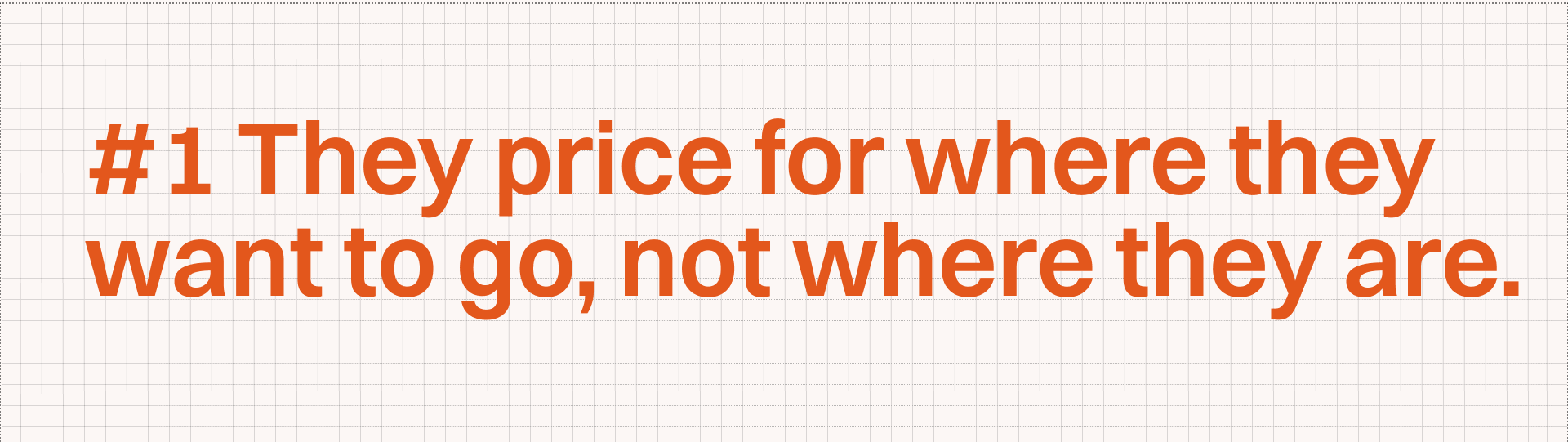
1. They price for where they want to go, not where they are.
One of the most common traps Chiaradonna sees: contractors setting prices just high enough to replace their old paycheck. It feels smart until demand softens.
"If you're not pricing for the growth that you want, for the place that you want to take the business, then as soon as a downturn like this happens, you're out of the industry pretty quickly — because you didn't set aside those extra three months."
Margins aren't a fixed number. They're a function of your goals. Want to hire a sales rep? Promote a crew lead? Build a second truck? The margin has to carry that weight before you need it — not after.
2. They treat quotes like contracts with an expiration date.
In a volatile materials market, a quote that's good indefinitely is a liability. Chiaradonna's team now sets expiration dates directly in their software — and when a quote goes past that date, the system won't let a customer sign without triggering a reprice.
"This is not a sales pitch. I'm not trying to get you to rush. I'm trying to be open and honest with you that — hey, look, we all know what's happening right now."
Customers respect the transparency. And the business stops absorbing margin hits it never saw coming.
3. They buy materials at the price they quoted, not when they feel like it.
This one costs companies quietly. A contractor books ten jobs, collects deposits, and figures they'll buy materials when they're ready to install. Eight weeks later, prices have moved — and so has their profit.
"If I'm taking money for a job at a price, I need to buy it at that price while I've got it, before it has the chance to go up on me."
It's a discipline thing. And it's the kind of habit that doesn't matter in a boom, until suddenly it's the only thing that does.
The contractors who are still standing after multiple cycles — 2008, Covid, today — share something beyond hustle. They watch their numbers in real time, not in the rearview.
"Longevity is knowing your situation, knowing your numbers, and being able to make sure that you're tracking, not reporting on a profit and loss a month after it's done. Reporting on them weekly so that you can pivot and make adjustments." says Chiaradonna.
He has watched brilliant tradespeople, even the savviest builders who can put up a fence nobody else could, build companies that plateau at two or three trucks forever. Not because they weren't talented but because they never made the shift from tradesperson to business owner.
The market slowdown is uncomfortable and downright scary. These businesses are people’s livelihoods, and put food on the table for families of the owners & staff.
The ones that will survive the shift are the ones that have built real systems around pricing, estimating, materials, culture. It’s also an opportunity that have built well. when the field thins out, there's more room for the ones who did the work.
Curious how ArcSite can help you run your business more efficiently? Click here to chat with our team.