

Field-Tested Tips for Closing Concrete Jobs Faster
See how the right concrete foundation estimating software helps you build accurate takeoffs on-site, turn around professional proposals in minutes, and win profitable jobs faster.
Most concrete foundation jobs are won or lost long before you pour the first yard of mud. They are decided in that short window between the site walk and the homeowner, GC, or developer reviewing your proposal. If your estimate is slow, unclear, or full of allowances, someone else will close the job before you.
At ArcSite, we work with concrete contractors who were tired of sketching on graph paper, doing math on the tailgate, and then spending late nights back at the office turning those notes into a bid. Below are practical, field-tested ways to speed that whole process up using mobile CAD, takeoff, and estimating tools built specifically for concrete.
Why concrete jobs slip away: common pain points
Before we talk solutions, it helps to understand where time and money are leaking out of your estimating process.
1. Slow, manual takeoffs
On many jobs, the process still looks like this:
- Sketch by hand during the walkthrough
- Take lots of photos and rough measurements
- Drive back to the office
- Redraw the plan and calculate square footage, linear footage, and volumes
- Plug numbers into a spreadsheet or estimating template
Every one of those steps takes time and introduces chances for errors and missed items - especially with complex footing layouts, thickened slabs, stem walls, step-downs, and dowel schedules.
2. Guesswork in materials and labor
Without standardized assemblies and pricing, each estimator does things a little differently. You might:
- Forget a thickened slab edge or pier
- Miss rebar laps or hooks on a wall
- Underestimate forming or stripping time
- Ignore mobilizations, pump minimums, or small-load charges
The result is inconsistent bids and tight margins. You either overbid and lose work, or underbid and work for free.
3. Proposals that do not sell the value
Even a perfectly calculated estimate can lose if the proposal is hard to read or looks unprofessional. If the client cannot visualize what you are building, they focus only on the price, not the scope or quality.
Especially in residential and light commercial work, the contractor who explains the project clearly, shows the layout, and looks most organized is usually the one who wins.
How ArcSite changes the way you estimate concrete foundations
ArcSite combines mobile CAD sketching, automated takeoff, and estimating in one app that runs on your tablet or phone. The goal is simple: do the design, measurements, and pricing once - right there on-site - and walk away with an accurate, ready-to-send proposal.
Draw once, calculate automatically
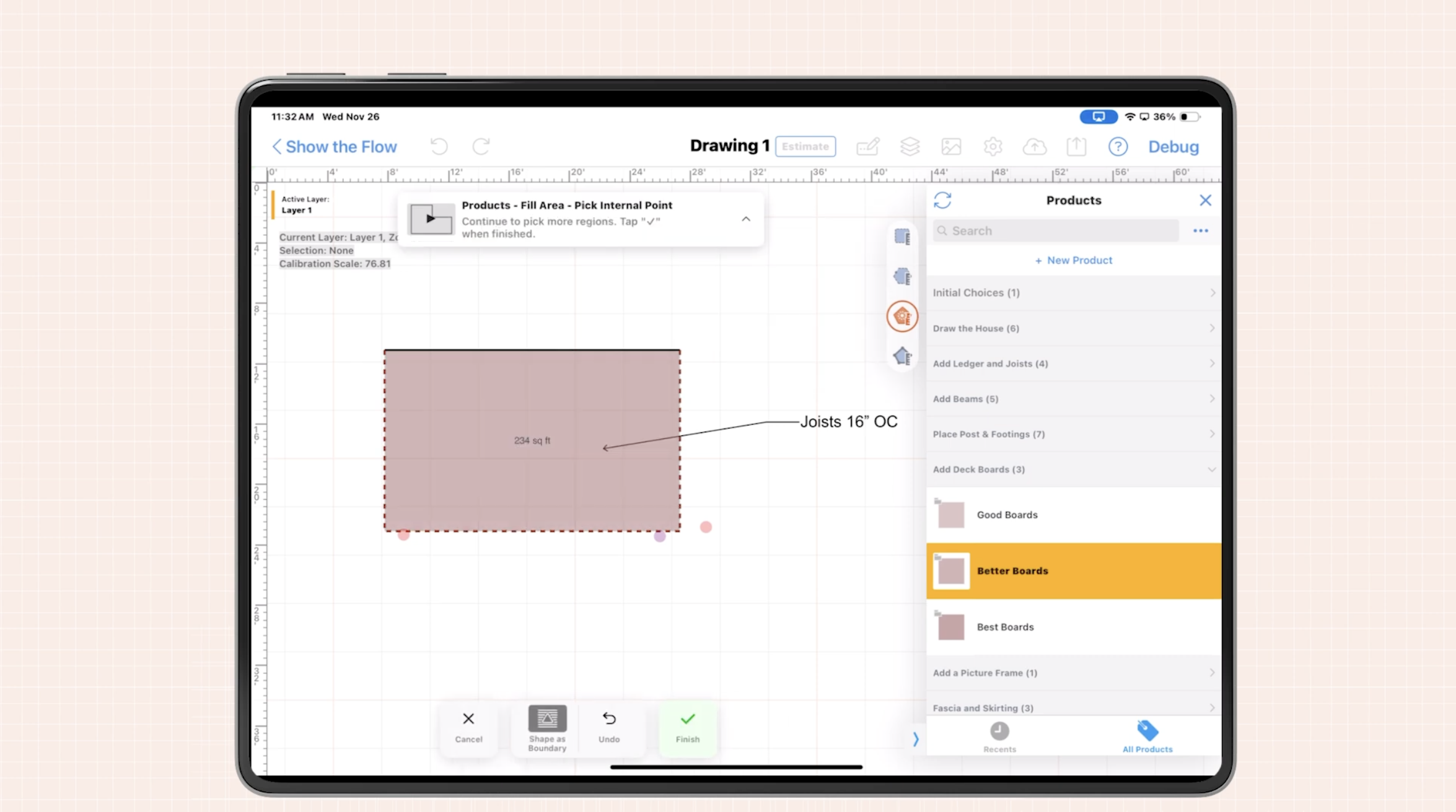
Instead of sketching on paper, you draw the slab, footings, and walls directly in the app during the walkthrough. As you draw, ArcSite calculates:
- Slab square footage and thickness for concrete volume
- Continuous and isolated footing lengths and sizes
- Wall lengths, heights, and thicknesses
- Perimeter for formwork and edgeboard
When the drawing is done, your quantities are already done. No double data entry. No trying to read your own handwriting later.
Standardized assemblies for accuracy and speed
Every contractor has a standard way they pour a 4 in garage slab, a 6 in driveway, or a 10 in x 20 in footing. In ArcSite, you can build those standards into reusable assemblies that automatically include:
- Concrete mix and waste factors
- Rebar size, spacing, laps, and dowels
- Vapor barrier, wire mesh, or fiber reinforcement
- Expansion joints and control joint allowances
- Labor hours for forming, pouring, and finishing
Once these are set up, you tap to apply them to the areas and lines in your drawing. The software then rolls everything into a complete takeoff and cost breakdown, based on your own production rates and pricing.
Professional proposals straight from the field
Because the quantities and pricing are tied directly to the drawing, you can generate a clean, branded, line-item proposal before you leave the property. Include:
- A plan view of the slab and foundation layout
- A clear scope of work, inclusions, and exclusions
- Alternates for thicker slabs, higher-strength concrete, or upgraded finishes
- Deposit terms and schedule assumptions
Many ArcSite users email or text the proposal to the client while they are still on-site, when interest is highest and competing bids are still days away.
Field-tested workflows that close concrete jobs faster
Here are practical tips we see top-performing concrete contractors using every day.
1. Preload common foundation templates
Most of your projects fall into a few standard patterns: garage slab, basement foundation, monolithic slab with thickened edges, stem wall with interior pads, and so on. Build templates for these in ArcSite so you never start from a blank screen.
On site, you simply:
- Open the closest template
- Adjust dimensions to fit the actual project
- Add or remove walls, piers, or thickened sections
- Apply the correct assemblies for rebar and mix designs
What used to take an hour of sketching and measuring becomes a 10-minute process.
2. Capture photos and notes directly on the plan
Instead of separate photo albums and notebooks, attach site photos and key notes to the drawing itself. Mark:
- Access issues for pump trucks or ready-mix deliveries
- Existing structures or utilities to protect
- Areas needing extra excavation, fill, or compaction
- Cold joints, blockouts, or sleeves that impact formwork
This helps your crew understand the job the same way you saw it, and supports change orders later if site conditions differ from what was expected.
3. Use alternates to upsell quality, not just price
Clients usually ask, "How can we save money?" Instead of discounting your base price, prebuild alternates into your estimating system that change value, not margin, such as:
- Alternate 1 - Higher-strength mix for heavy loads or vehicles
- Alternate 2 - Thicker slab or additional reinforcement in key areas
- Alternate 3 - Better finish (broom, stamped, stained) in exposed areas
With a few taps, you can show side-by-side pricing in your proposal. This positions you as a consultant, not just a low-bid contractor.
4. Lock in assumptions to prevent scope creep
Every experienced concrete contractor has been burned by unspoken assumptions: soft subgrade that needs extra base, last-minute layout changes, or schedule delays from other trades. In ArcSite, you can add standardized note blocks that clearly state:
- Who is responsible for excavation and backfill
- How many mobilizations are included
- What is assumed about access and staging
- How long your price is valid
Turning these into a reusable template cuts down on misunderstandings and protects your margins. It also shows the client that you’ve done this before — and have thought through the details that others might overlook.
ArcSite: The Concrete Estimating Software That Works Like You Do
Concrete work is hands-on, fast-paced, and often full of variables. ArcSite was built with that in mind. You don’t have time to draw something twice, double back to the office, or explain your value with a generic quote. With ArcSite, everything is connected:
- Drawings tied to takeoffs
- Takeoffs tied to your pricing
- Pricing tied to a polished proposal
And it all happens while you're still on-site.
If you’re ready to stop chasing jobs and start closing them faster — with fewer errors, clearer quotes, and more confidence — ArcSite can help.
Book a Demo Today
See how ArcSite fits into your concrete estimating workflow. Whether you're bidding garages, basements, slabs, or custom foundations, we’ll show you how to:
- Sketch directly on your iPad or phone
- Build smart, reusable concrete assemblies
- Generate proposals that win the work
👉 Book a Free Demo and start closing more jobs with less guesswork.
Categories
FAQs
Common pain points include slow manual takeoffs, guesswork in materials and labor, and proposals that do not clearly convey the project value.
ArcSite integrates mobile CAD sketching, automated takeoff, and estimating to perform design, measurements, and pricing on-site with accurate, ready-to-send proposals.
Standardized assemblies ensure accuracy and speed by including consistent concrete mixes, reinforcement details, and labor hours that can be applied quickly to drawings.
Contractors preload common foundation templates to speed drawing and capture site photos and notes directly on plans to communicate conditions clearly and support change orders.
Prebuilding alternates into estimates that offer higher quality options, like stronger mixes or better finishes, allows contractors to show side-by-side pricing and position themselves as consultants.
Related posts