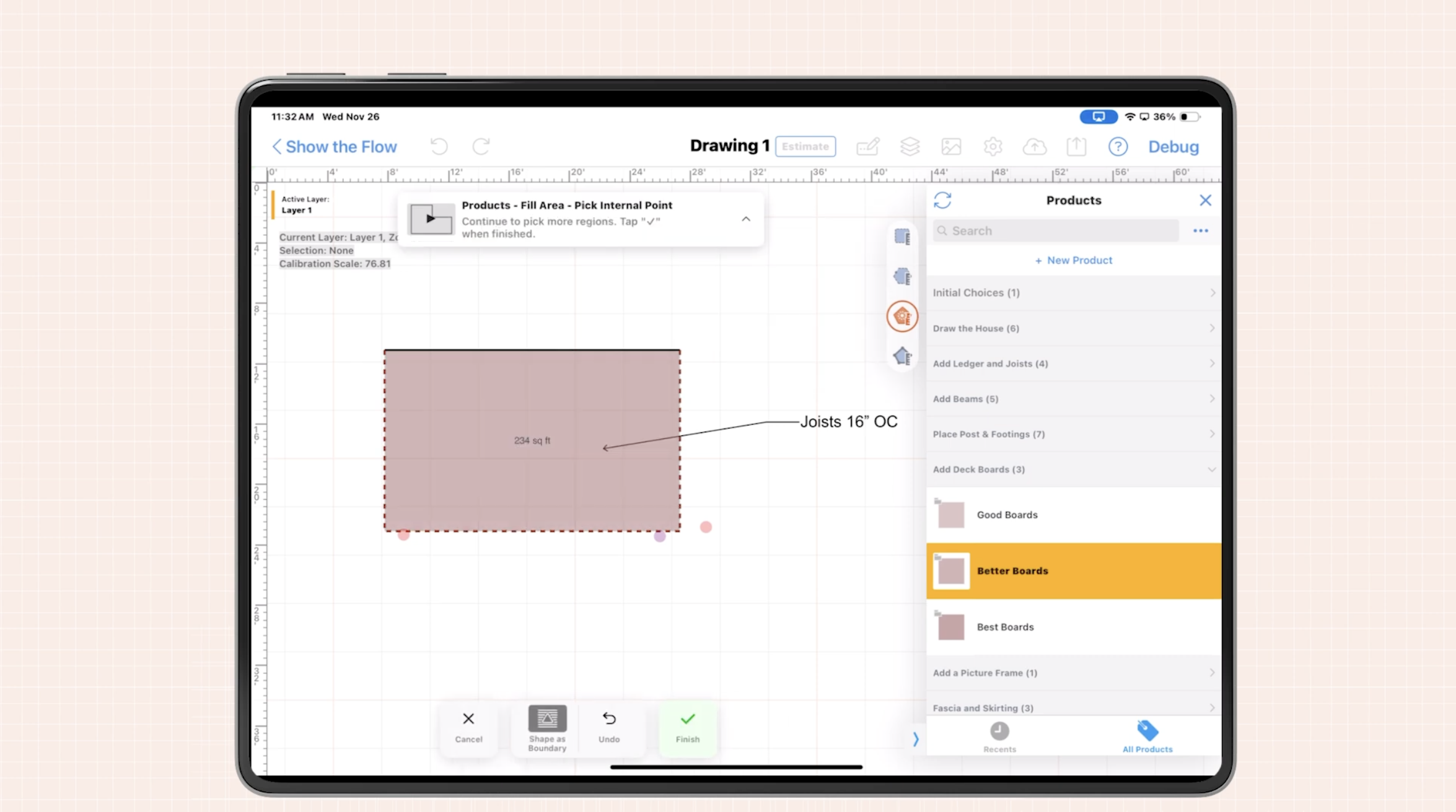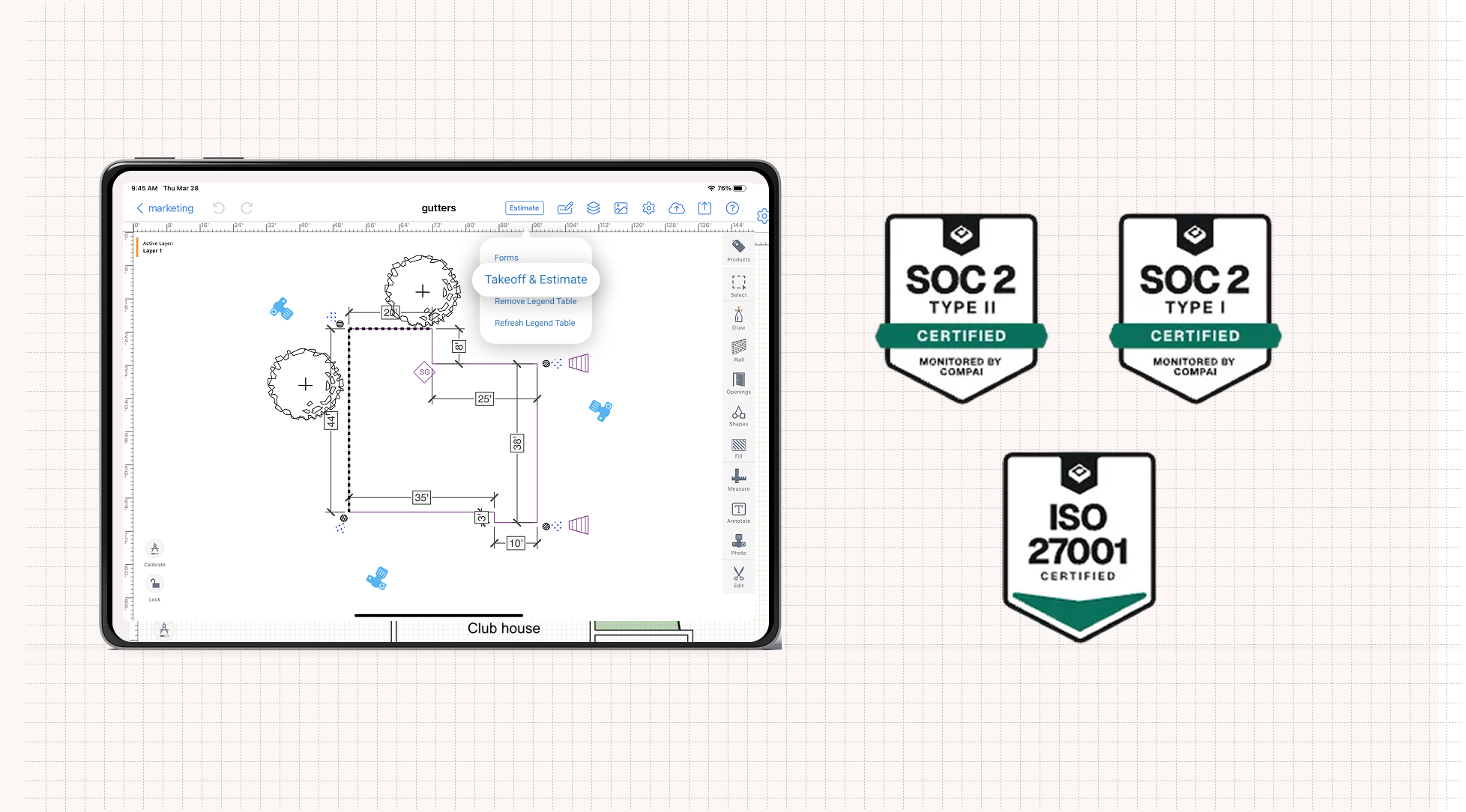

Key Takeaways
- Bluebeam and ArcSite are tools built for very different environments: the office vs. in the field
- Choose Bluebeam Revu if your team's primary work is reviewing and marking up existing construction documents like RFIs, submittals, and permit sets
- Choose ArcSite if your team is selling in the field, drawing job sites, calculating materials, and producing proposals.
ArcSite vs Bluebeam at a glance
Choosing the right field software for your business is a big decision. You have to build a business case for it. Your boss needs to see results from it. Your field techs need to like using it. If any one of those pieces falls apart, you end up looking…bad.
Bluebeam Revu has been around since 2014. Architects trust it, engineers use it daily. For teams that spend their time annotating existing PDFs on a desktop, it does the job well.
ArcSite has also been around since 2014. Contractors across fencing, decking, pest control, foundation repair, and inspections use it to create high-fidelity drawings, takeoffs, and proposals on site for their customers.
What's the difference between ArcSite and Bluebeam?
On the surface, they look kind of similar. Both tools involve drawings, measurements, and live somewhere in a construction workflow. The difference is where in that workflow, and who's holding the device.
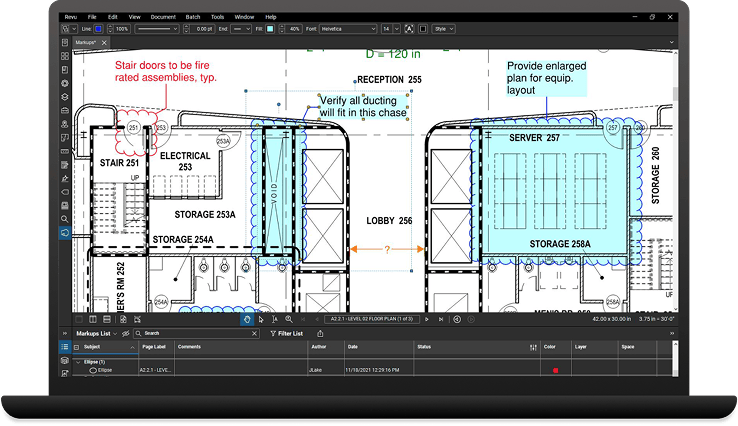
Bluebeam is built for the office.
Its flagship product (Revu) is a Windows desktop application.
You annotate existing plans or mark up PDFs. You collaborate on documents that are already put together. The mobile version exists, but it's a reduced feature set; the tool's power is at a desk, with a keyboard and a monitor.
But what if your contractors aren't annotating existing PDFs? If your team has workflows that require creating drawings from scratch, on-site or away from the office, you need a different tool.
While Bluebeam Revue has a mobile app, its development still needs significant improvement. Reviews highlight that the rollout had gaps in the editing experience due to how Bluebeam structured its mobile and web development process.
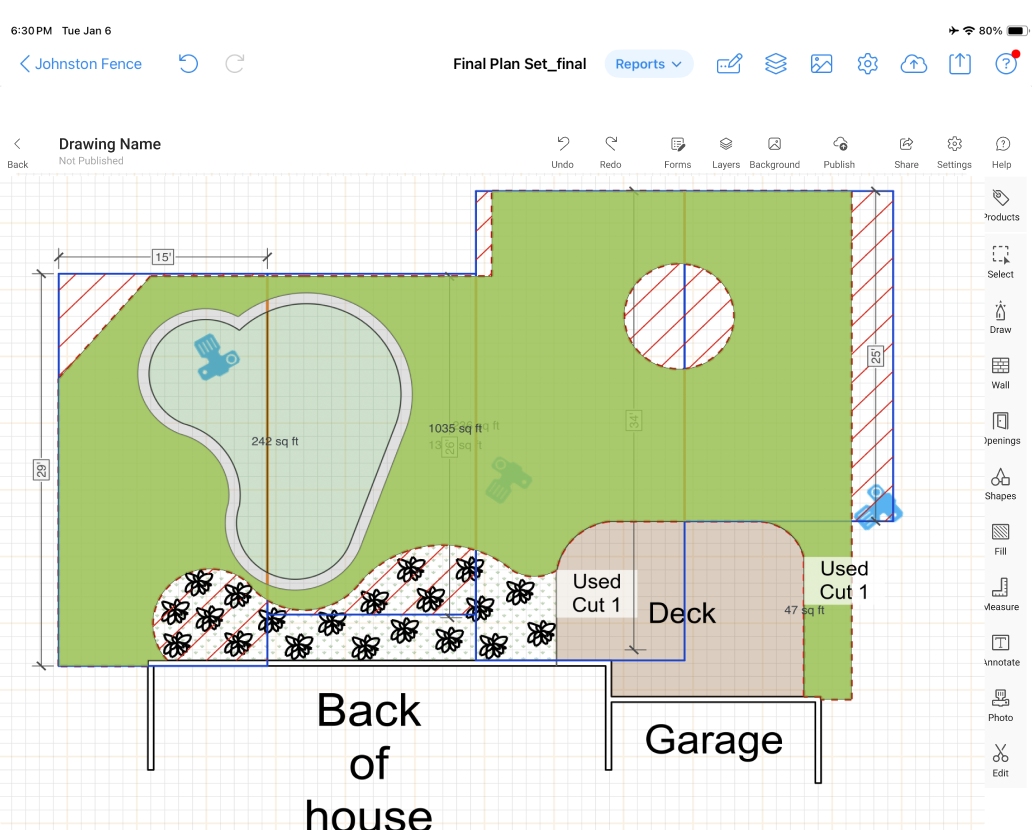
ArcSite, on the other hand, is built for the field.
It runs on iPad, Android, and Windows. You create the drawing from scratch at the job site. The takeoff generates automatically from the drawing. So does the proposal. You can close the job before you get back to the truck.
And that’s kind of the whole difference - Bluebeam works for teams that spend time behind desks, and ArcSite works for both - the office admins keeping the show running and the contractors in the field.
What contractors say about ArcSite
On G2, ArcSite users describe a tool that changed how they sell:
"This is my first time using this type of software. I'm a design specialist and my job entails me drawing full footprint for homes and concrete in order to bid jobs — and the software has made it very simple and easy to complete my job while looking very professional for customers."
"I am overall very pleased with ArcSite and couldn't imagine my job without it. It provides a very professional look for estimates and is very accurate for design and implementation."
The through-line in ArcSite reviews isn't features. It's what the tool makes possible in front of the customer. If you need a tool that makes you look more professional, helps you bid faster, and get home, then it’s the tool for you. See ArcSite in action →
Where Bluebeam wins
Bluebeam's G2 reviewers tell a different story. Common complaints include a steep learning curve for new features and pricing that feels steep for smaller teams.
However, Bluebeam earns its reputation in document-heavy environments. For architects, engineers, and project managers working from existing plans, it's a capable PDF markup and collaboration tool — and its integrations with platforms like Procore and Autodesk make it a natural fit for teams already in that ecosystem.
"Intuitive Markups and Smooth Collaboration for Faster Drawing Reviews"
5/5
What do you like best about Bluebeam?
What I like most about Bluebeam Revu is how easy it makes reviewing and marking up drawings. The tools are very intuitive, and collaboration with team members is smooth, especially when working on construction or design documents. It really helps save time and keeps everything organized in one place.
Review collected by and hosted on G2.com.
What do you dislike about Bluebeam?
One thing I don’t like about Bluebeam Revu is that it can feel a bit complex at the beginning, especially for new users. Some features take time to learn, and the software can occasionally lag with large files. Also, the pricing can be on the higher side for smaller teams
Is ArcSite a good Bluebeam alternative?
If your workflow is primarily office-side, like reviewing submittals, marking up permit sets, and managing document control across a large project then Bluebeam handles that well.
ArcSite doesn't try to. It doesn't manage existing PDF libraries, it isn't built for multi-party document collaboration on complex commercial projects, and it won't replace the tools architects and engineers already depend on. It's built for a different job entirely.
Should you choose ArcSite or Bluebeam?
Choose Bluebeam Revu if...
If your team's primary work is reviewing and marking up existing construction documents like RFIs, submittals, permit sets, then Bluebeam is a solid tool for that. It integrates with platforms like Procore and Autodesk, which matters if you're already in that ecosystem. For an office-based estimator or project manager working from existing plans, it covers a lot of ground.
Choose ArcSite if…
If your team is selling in the field, drawing job sites, calculating materials, and producing proposals, then ArcSite is built for that specific need. The drawing is the takeoff & the takeoff is the proposal. The whole workflow runs from one device, wherever the job is.
These tools both solve different problems for different moments in the workflow. The question is which moment matters most to your business.
If the answer is: the moment your rep is on-site with a customer, and the sale depends on what they can put in front of them before they leave — that's ArcSite's territory.
See what ArcSite looks like in the field. Start a free trial →
Categories
INDUSTRY


FAQs
Not exactly. They solve different problems at different points in a workflow. Bluebeam is built for office-side document review — marking up existing PDFs, collaborating on plans, managing construction docs. ArcSite is built for the field — creating drawings from scratch on-site, generating takeoffs automatically, and producing a proposal before you leave the job. If your team lives in the field, ArcSite isn't a replacement for Bluebeam. It's the tool Bluebeam was never built to be.
Yes. ArcSite runs on iPad, Android, and Windows — and it's designed to work that way. The mobile experience isn't a trimmed-down version of the desktop tool; it's the whole product. Bluebeam Revu is Windows-only on desktop, and its mobile app offers a reduced feature set. For teams working across devices, that's a meaningful difference.
No — and that's by design. ArcSite doesn't annotate existing PDFs. It creates drawings from scratch, ties those drawings directly to material takeoffs, and generates proposals from the same workflow. If your primary need is marking up existing plans and collaborating on documents, Bluebeam is the better fit. If your primary need is building the drawing yourself in the field, ArcSite is.
Most users are productive with the core features quickly. G2 reviewers consistently note that the basics are easy to pick up — even for people who've never used CAD software before. More advanced features take some time, but the learning curve is generally described as manageable. Bluebeam reviewers, by comparison, more frequently flag complexity and a steeper onboarding experience.
Depends on the type of contractor. If your team works primarily from existing plans — reviewing documents, running takeoffs from blueprints, collaborating with architects or engineers — Bluebeam is a capable tool for that. If your team is in the field creating drawings, estimating on-site, and closing jobs in front of the customer, ArcSite is built for that workflow specifically. Most contractors in trades like fencing, decking, foundation repair, or landscaping find ArcSite fits their day-to-day better.